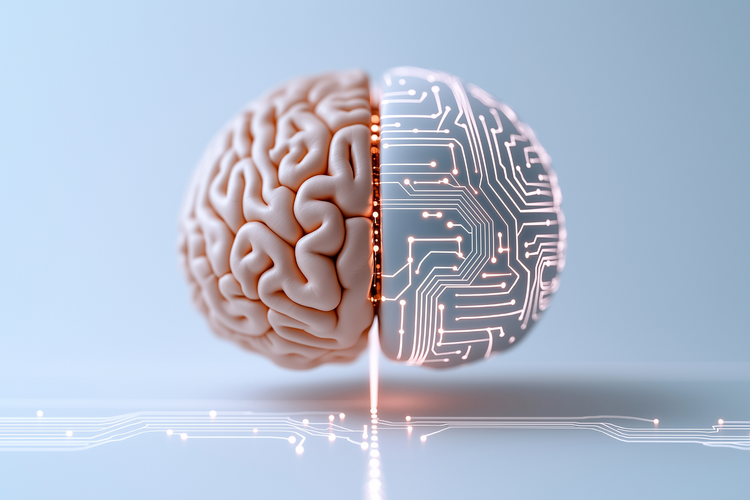
What Do We Mean by “AI Ethics”? A Plain-Language Guide
What Do We Mean by “AI Ethics”? A Plain-Language Guide
AI ethics sounds like something that belongs in a university seminar with impossible chairs and one person named Theo asking a “two-part question.” But the idea is much simpler and more practical: how do we build, buy, use, and govern AI systems in ways that reduce harm, protect people, respect rights, distribute benefits fairly, and keep humans accountable? This plain-language guide breaks down what AI ethics actually means, why it matters, and how to think about it without needing a philosophy degree or a panic room.

What You'll Learn
By the end of this guide
Quick Answer
What does “AI ethics” mean?
AI ethics means thinking carefully about how artificial intelligence affects people, communities, organizations, and society, then making decisions that reduce harm and increase responsible benefit. It asks whether AI systems are fair, safe, transparent, accountable, privacy-respecting, human-centered, and appropriate for the context where they are used.
AI ethics is not only about what the model does. It is about the choices humans make around the model: what data is used, who is represented, who is excluded, what goals are optimized, what risks are accepted, who has control, who is harmed, who benefits, and who is responsible when things go wrong.
The plain-language version: AI ethics is the practice of asking, “Should we build or use this AI system, how could it hurt people, how do we prevent that, and who is accountable if it still does?” Tiny question. Giant consequences. Excellent little monster.
Why AI Ethics Matters
AI systems are not neutral simply because they use math, data, or code. They reflect human choices: what data was collected, what was ignored, what outcome was optimized, what risks were tolerated, what incentives shaped the product, and what safeguards were skipped because someone wanted to launch before the quarter ended.
AI ethics matters because these systems increasingly influence hiring, lending, education, healthcare, policing, content moderation, advertising, insurance, customer service, workplace monitoring, public benefits, creative work, security, and access to information. When AI is used badly, harm can scale quickly. One biased policy becomes thousands of decisions. One bad model becomes a product feature. One vague vendor claim becomes a compliance headache with a login screen.
The point of AI ethics is not to stop innovation. It is to make innovation less careless. The future does not need fewer tools. It needs fewer tools that treat people like training data with shoes.
Core principle: AI ethics is about consequences. The question is not only “Can this system work?” It is “Who could this affect, how could it fail, and what responsibility do we have before and after deployment?”
AI Ethics Table: The Core Ideas in Plain English
Most AI ethics conversations circle around the same major themes. The language can get academic, but the underlying questions are practical.
| Ethics Principle | Plain-Language Meaning | Main Risk | What Good Practice Looks Like |
|---|---|---|---|
| Fairness | Does the system treat people or groups unfairly? | Bias, discrimination, exclusion, unequal outcomes | Bias testing, subgroup analysis, human review, appeal paths |
| Privacy | Does the system respect personal data, consent, and boundaries? | Surveillance, data misuse, unauthorized training, exposure | Data minimization, consent, deletion, access controls |
| Transparency | Do people know AI is being used and understand the basics of how? | Hidden automation, manipulation, confusion, lack of trust | Plain-language notices, documentation, explanations |
| Accountability | Who is responsible when the AI causes harm or makes a mistake? | Everyone blames the tool, vendor, model, or “system” | Clear owners, audit logs, escalation, incident response |
| Safety | Does the system behave reliably and avoid foreseeable harm? | Errors, hallucinations, unsafe recommendations, system failure | Testing, monitoring, guardrails, fallback plans |
| Human control | Can humans review, challenge, override, or appeal AI decisions? | Automation bias, rubber-stamping, no recourse | Meaningful oversight, appeal rights, override authority |
| Power | Who benefits from AI, who controls it, and who bears the cost? | Concentrated power, exploitation, exclusion, dependency | Access, competition, labor protections, public accountability |
The Core Principles of AI Ethics
Definition
AI ethics is about responsible choices around AI
It is not just about the model. It is about data, design, deployment, power, people, and consequences.
AI ethics is the field and practice of evaluating whether AI systems are built and used responsibly. It looks at how AI affects real people, not just whether the technology is impressive.
This includes the full lifecycle: data collection, model design, training, testing, deployment, monitoring, updates, governance, user education, vendor management, and incident response. In other words, ethics is not a press release paragraph. It is the plumbing.
AI ethics asks questions like
- Who could be harmed by this system?
- Who benefits, and who is left out?
- What data is being used, and was it collected fairly?
- Could the system create biased or discriminatory outcomes?
- Can people understand, challenge, or appeal AI-assisted decisions?
- Who is accountable when the system fails?
Ethics rule: AI ethics is not about slowing everything down. It is about preventing speed from becoming an excuse for avoidable harm.
Fairness
Fairness means checking whether AI treats people unequally
AI can reproduce bias from data, design choices, historical decisions, and unequal social systems.
Fairness in AI means asking whether a system produces unequal, discriminatory, or unjust outcomes across people or groups. This is especially important when AI affects employment, credit, housing, education, healthcare, insurance, policing, public services, pricing, or access to opportunities.
Bias can enter AI through training data, labels, proxies, missing data, design decisions, optimization goals, human feedback, deployment context, or user behavior. It does not need to be intentional. Unintentional bias still cashes the check.
Fairness risks include
- Models trained on historically biased decisions
- Using proxies that correlate with protected or sensitive traits
- Underperformance for certain groups or languages
- Automated screening that excludes nontraditional candidates
- Risk scores that reflect unequal policing or access patterns
- No appeal path for people affected by AI-assisted decisions
Privacy
Privacy means AI should not treat personal data like free confetti
AI systems often depend on data, which makes consent, minimization, retention, and control essential.
Privacy in AI means people should have reasonable control over how their data is collected, used, stored, shared, analyzed, and reused. It also means organizations should not collect more data than they need, keep it longer than necessary, or use it in ways people would not reasonably expect.
AI can make privacy risk worse because it can infer sensitive information, combine data from many sources, generate profiles, monitor behavior, or train on data that people never expected would become model fuel.
Privacy risks include
- Using personal data without meaningful consent
- Training models on sensitive or copyrighted material without clear permission
- Uploading confidential information into public AI tools
- Inferring sensitive traits from behavior or metadata
- Workplace surveillance through productivity or monitoring tools
- No clear deletion, opt-out, or data access process
Privacy rule: Just because data exists does not mean it is ethically available. “We found it” is not a moral framework.
Transparency
Transparency means people should know when AI is involved
People need enough information to understand, question, and respond to AI-assisted systems.
Transparency means people should know when AI is being used in meaningful ways, especially when it affects decisions about them. It also means organizations should be able to explain what the system does, what data it uses, what its limits are, and how people can challenge or correct outcomes.
Transparency does not always mean revealing every technical detail. But it does mean avoiding hidden automation, vague claims, black-box decisions, and “the algorithm decided” fog machines.
Transparency risks include
- People do not know AI is being used
- Users cannot tell whether content is AI-generated
- Organizations cannot explain AI-assisted decisions
- Vendors hide limitations behind marketing language
- People cannot find out what data influenced an outcome
- AI systems are deployed without documentation or notice
Accountability
Accountability means someone must own the consequences
When AI causes harm, responsibility should not vanish into a vendor contract, dashboard, or shrug.
Accountability means organizations and people must be responsible for the AI systems they build, buy, deploy, and rely on. If an AI system denies someone access, produces a harmful recommendation, leaks data, discriminates, misleads, or causes operational damage, there needs to be a clear path for review, correction, and remedy.
AI can blur responsibility because many parties are involved: developers, vendors, buyers, data providers, deployers, managers, users, regulators, and affected people. But complexity is not a permission slip. It is a reason to define ownership earlier.
Accountability requires
- Clear owners for AI systems and decisions
- Audit logs and documentation
- Incident reporting and response plans
- Appeal and correction processes for affected people
- Vendor due diligence and contracts
- Monitoring after deployment
Accountability rule: “The AI did it” is not an answer. It is a sentence that should immediately summon governance.
Safety
Safety means AI should be reliable enough for the job it is given
AI should be tested for foreseeable failures, misuse, hallucinations, edge cases, and deployment risk.
Safety in AI means the system should behave reliably, predictably, and appropriately for its use case. The higher the stakes, the more rigorous the testing and monitoring should be.
Safety includes more than physical harm. It includes misinformation, bad advice, cyber risk, hallucinations, unsafe automation, emotional manipulation, privacy leaks, discriminatory outputs, brittle workflows, and overreliance.
Safety risks include
- Hallucinated facts, citations, or recommendations
- Unsafe advice in medical, legal, financial, or technical contexts
- AI agents taking unintended actions
- Models failing in unfamiliar conditions
- Security vulnerabilities like prompt injection
- No fallback plan when the system fails
Human Impact
AI ethics asks whether people are being respected, not just processed
People should not lose dignity, autonomy, opportunity, or recourse because a system is convenient.
AI ethics is ultimately about people. It asks whether AI systems respect human dignity, autonomy, rights, safety, opportunity, creativity, labor, privacy, and agency. A system can be technically clever and still treat people badly.
This matters when AI is used to monitor workers, screen applicants, rank students, predict risk, automate discipline, influence voters, personalize prices, moderate speech, recommend care, or generate creative work from people’s labor.
Human impact questions include
- Does this system reduce people to scores or categories?
- Can people understand and challenge decisions?
- Could this system manipulate behavior or limit autonomy?
- Does it exploit creative, emotional, or labor inputs?
- Does it disproportionately affect vulnerable groups?
- Does it preserve human judgment where judgment matters?
Human rule: The fact that AI can automate a decision does not mean the decision should be treated like a spreadsheet chore.
Power
AI ethics includes who controls AI and who benefits from it
Ethics is not only about individual harms. It is also about power, access, labor, competition, and public accountability.
AI ethics also looks at systemic power. Who owns the models? Who controls the data? Who can afford the compute? Who sets the rules? Who gets replaced, monitored, augmented, or excluded? Who profits from creative work, user data, public information, and labor?
AI can concentrate power in a small number of companies with access to infrastructure, data, talent, and capital. It can also widen gaps between organizations and people who can use AI well and those who cannot.
Power risks include
- Big Tech dominance over models, cloud infrastructure, and compute
- Smaller companies and public institutions falling behind
- Workers being monitored or displaced without meaningful voice
- Artists and creators losing control over their work
- Public data turned into private profit without accountability
- AI benefits concentrated while harms are distributed
Practice
AI ethics only matters if it changes real decisions
Principles are nice. Governance, testing, accountability, and restraint are where the rent gets paid.
Many organizations publish AI principles. Fewer build the processes needed to enforce them. Real AI ethics shows up in procurement reviews, product decisions, model evaluations, launch gates, vendor questions, data policies, user notices, audit logs, incident response, and the willingness to say no.
Ethics that never changes a deadline, feature, dataset, vendor, workflow, or metric is not ethics. It is branding with a conscience filter.
Ethics in practice includes
- Reviewing AI use cases before deployment
- Testing for bias, safety, privacy, and misuse
- Documenting data sources and limitations
- Giving users notice and meaningful control
- Creating appeal and correction paths
- Monitoring real-world impact after launch
What AI Ethics Means for Businesses
For businesses, AI ethics is not just a moral conversation. It is also a trust, legal, product, brand, operational, and risk-management issue. Companies that use AI carelessly can expose themselves to discrimination claims, privacy violations, customer backlash, regulatory scrutiny, security incidents, employee distrust, and reputational damage.
But AI ethics should not be treated as a department that says no to fun. Good ethics makes AI adoption stronger. It forces teams to clarify use cases, improve data quality, define accountability, test outputs, protect users, and choose tools that can be trusted in real workflows.
The companies that do this well will not simply say “we use responsible AI.” They will show how: approved use cases, vendor reviews, data policies, human oversight, audit logs, monitoring, training, escalation, and clear standards for what should not be automated.
Practical Framework
The BuildAIQ Ethical AI Review Framework
Use this framework before building, buying, launching, or relying on an AI system, especially when it affects people, sensitive data, high-stakes decisions, public trust, or workplace power.
Common Mistakes
What people get wrong about AI ethics
Quick Checklist
Before calling an AI system ethical
Ready-to-Use Prompts for AI Ethics Review
AI ethics review prompt
Prompt
Act as an AI ethics reviewer. Evaluate this AI system or use case: [DESCRIPTION]. Identify ethical risks related to fairness, bias, privacy, consent, transparency, accountability, safety, human oversight, affected people, and power dynamics. Recommend safeguards before deployment.
Affected people prompt
Prompt
Map who is affected by this AI system: [SYSTEM]. Identify direct users, people judged or influenced by the system, vulnerable groups, communities that may be indirectly affected, who benefits, who bears risk, and what feedback or appeal paths are needed.
Fairness and bias prompt
Prompt
Review this AI use case for fairness and bias: [USE CASE]. Identify possible biased data, proxy variables, unequal performance, discriminatory outcomes, missing groups, and safeguards such as subgroup testing, human review, and appeal paths.
Privacy and consent prompt
Prompt
Evaluate privacy and consent risks for this AI system: [SYSTEM]. Identify what data is collected, whether it is sensitive, whether consent is meaningful, how data is stored or reused, retention risks, opt-out needs, and data minimization recommendations.
Transparency prompt
Prompt
Create a plain-language transparency notice for this AI system: [SYSTEM]. Explain what the AI does, what data it uses, what decisions it influences, what its limitations are, how users can get human review, and how they can challenge or correct an outcome.
Ethics launch gate prompt
Prompt
Create an ethical AI launch checklist for this product or workflow: [PRODUCT/WORKFLOW]. Include purpose, affected people, data review, bias testing, privacy review, safety testing, human oversight, appeal paths, monitoring, accountability, and go/no-go criteria.
Recommended Resource
Download the AI Ethics Review Checklist
Use this placeholder for a free checklist that helps teams evaluate AI systems for fairness, privacy, transparency, accountability, safety, human oversight, affected people, and responsible deployment.
Get the Free ChecklistFAQ
What does AI ethics mean in simple terms?
AI ethics means making sure AI systems are designed and used in ways that reduce harm, respect people, protect rights, support fairness, preserve privacy, and keep humans accountable.
Is AI ethics only about bias?
No. Bias is a major issue, but AI ethics also includes privacy, transparency, accountability, safety, consent, labor impact, human rights, surveillance, misinformation, environmental impact, and concentration of power.
Why is AI ethics important?
AI ethics is important because AI systems increasingly influence decisions about people’s jobs, money, health, education, rights, opportunities, information, and daily lives.
Who is responsible for AI ethics?
Responsibility can involve developers, vendors, companies, leaders, product teams, data teams, policymakers, users, and regulators. But organizations deploying AI should not hide behind the tool or vendor when harm occurs.
What is an ethical AI system?
An ethical AI system is one designed and used with appropriate safeguards for fairness, privacy, transparency, accountability, safety, human oversight, and real-world impact.
Can AI ever be completely ethical?
No system is perfectly ethical in every context. Ethical AI is an ongoing practice of evaluating risks, making tradeoffs explicit, reducing harm, monitoring outcomes, and improving over time.
What is the difference between AI ethics and AI safety?
AI safety focuses on making AI systems reliable, controlled, and unlikely to cause harm. AI ethics is broader and includes fairness, rights, privacy, power, accountability, consent, labor, and social impact.
How can a company apply AI ethics?
A company can apply AI ethics through use-case reviews, vendor due diligence, data governance, bias testing, privacy controls, transparency notices, human oversight, appeal paths, monitoring, and incident response.
What is the main takeaway?
The main takeaway is that AI ethics is not abstract. It is a practical way to ask better questions before AI affects real people at real scale.