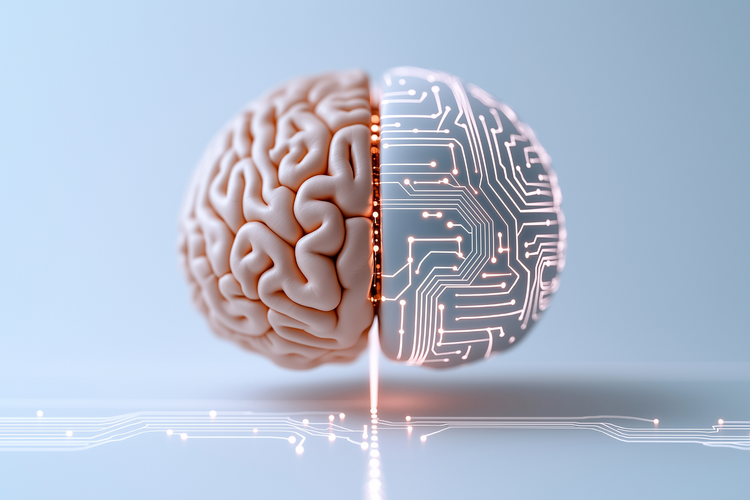
AI and Quantum Computing: What Happens When the Two Most Powerful Technologies Merge
AI and Quantum Computing: What Happens When the Two Most Powerful Technologies Merge
AI is learning to predict, generate, classify, optimize, and automate. Quantum computing is trying to process certain kinds of complexity in ways classical computers cannot. Put them together and you get one of the most fascinating technology frontiers on the planet: quantum machine learning, quantum-enhanced optimization, faster materials research, better simulations, new cybersecurity risks, and enough hype to power a conference center. This guide explains what happens when AI and quantum computing merge, what is real now, what is still experimental, and why the future is exciting without needing to turn your brain into soup.

What You'll Learn
By the end of this guide
Quick Answer
What happens when AI and quantum computing merge?
When AI and quantum computing merge, two things can happen. First, AI can help improve quantum computing by optimizing hardware control, error correction, circuit design, experiment planning, and quantum system calibration. Second, quantum computers may eventually help AI by solving certain optimization, simulation, sampling, and data-processing problems more efficiently than classical computers.
The keyword is eventually. Today, most quantum AI work is still experimental. Quantum computers are promising, but current systems are limited by noise, error rates, hardware scale, and the difficulty of proving practical advantage over classical methods.
The plain-language version: AI is useful now. Quantum computing is powerful but still growing into its shoes. Quantum AI is the frontier where today’s machine learning meets tomorrow’s weirdest hardware.
Why AI and Quantum Computing Matter Together
AI is already transforming how we work with data, language, images, code, science, and automation. Quantum computing is a different kind of computing that may eventually solve certain classes of problems that classical computers struggle with, especially in simulation, optimization, cryptography, and complex systems.
The reason people care about the combination is simple: many of the hardest problems in science and industry are too complex for straightforward brute-force computing. Drug discovery, materials design, protein interactions, supply chains, energy grids, financial risk, climate modeling, and cryptography all involve huge possibility spaces.
AI helps search those spaces. Quantum computing could someday change the shape of the search itself. That does not mean every AI model will suddenly become quantum-powered. The future will be more specific, more hybrid, and more practical than the sci-fi confetti suggests.
Core principle: Quantum AI is not about replacing classical AI. It is about using quantum systems for the specific parts of computation where quantum behavior may offer an advantage.
AI + Quantum Computing Table
The relationship between AI and quantum computing runs in both directions. AI can improve quantum systems, and quantum systems may eventually improve certain AI workflows.
| Area | How AI Helps Quantum | How Quantum May Help AI | Current Reality |
|---|---|---|---|
| Optimization | AI helps tune quantum systems and optimize circuits | Quantum algorithms may help solve certain complex optimization problems | Promising, but many applications are still experimental |
| Simulation | AI helps interpret experimental results and guide simulations | Quantum computers may simulate molecules, materials, and physical systems better | One of the strongest long-term use cases |
| Machine learning | AI helps design and evaluate quantum ML models | Quantum ML may improve sampling, kernels, or model training in specific cases | Early research stage |
| Error correction | AI can help detect patterns in noise and optimize correction strategies | Better quantum systems could make larger AI-related quantum workloads possible | Critical bottleneck |
| Cybersecurity | AI can help inventory cryptographic systems and monitor risk | Quantum computers could threaten vulnerable public-key cryptography | Post-quantum migration is already relevant |
| Drug discovery | AI helps predict molecules, proteins, targets, and trial strategy | Quantum simulation could improve molecular modeling | Hybrid AI + quantum approaches are emerging |
The Main Ways AI and Quantum Computing Could Work Together
Definition
Quantum AI means using quantum computing and machine learning together
The phrase can mean AI that helps quantum systems, quantum systems that help AI, or hybrid workflows that use both.
Quantum AI is a broad term. Sometimes it refers to quantum machine learning, where quantum algorithms are used for machine learning tasks. Sometimes it refers to using AI to improve quantum hardware and quantum algorithms. Sometimes it means hybrid workflows where classical AI, high-performance computing, and quantum processors work together.
This distinction matters because “AI plus quantum” sounds like someone poured two buzzwords into a blender and charged enterprise pricing. But underneath the glitter, there are real research directions.
Quantum AI can mean
- Using AI to optimize quantum hardware and experiments
- Using machine learning to improve quantum error correction
- Using quantum computers for parts of AI training or inference
- Using quantum algorithms for optimization and sampling
- Combining AI, quantum, and classical high-performance computing
- Applying quantum simulation to biology, chemistry, and materials
Quantum AI rule: The useful future is probably hybrid. Classical computers, AI systems, and quantum processors will work together instead of one dramatically replacing the others.
Basics
Quantum computers process information differently from classical computers
Quantum computing uses qubits and quantum behavior to approach certain problems in fundamentally different ways.
Classical computers use bits, which represent information as 0s and 1s. Quantum computers use qubits, which can behave in ways that allow certain calculations to explore complex mathematical possibilities differently.
The key phrase is certain calculations. Quantum computers are not simply faster laptops from another dimension. They are specialized machines that may offer advantages for specific problems, especially those involving quantum physics, complex optimization, and certain mathematical structures.
Important quantum ideas include
- Qubits, the basic units of quantum information
- Superposition, where quantum states can encode richer possibilities
- Entanglement, where quantum states become linked in non-classical ways
- Interference, which helps amplify useful answers and suppress others
- Noise, which makes quantum systems fragile and error-prone
- Error correction, which is needed for reliable large-scale quantum computing
AI Helps Quantum
AI can help make quantum computers more usable
Machine learning can help optimize, calibrate, control, and debug quantum systems.
One of the most practical near-term intersections is using AI to improve quantum computing itself. Quantum systems are delicate. They need careful calibration, control, error detection, and optimization. Machine learning can help find patterns in noise, tune hardware, improve circuits, and plan experiments more efficiently.
This is less glamorous than “quantum AI will become a cosmic superbrain,” but it is more useful. Before quantum computers can transform everything, they need to become more reliable. AI can help with the unglamorous parts that make the glamorous parts possible.
AI can help quantum by
- Optimizing quantum circuit design
- Calibrating qubits and control systems
- Detecting patterns in hardware noise
- Improving quantum error correction strategies
- Planning experiments and interpreting results
- Reducing the cost of trial-and-error tuning
Practical rule: In the near term, AI may be more useful for building better quantum computers than quantum computers are for building better AI.
Quantum Helps AI
Quantum computers may eventually improve certain AI workloads
The dream is not universal speed. The dream is advantage on specific hard problems.
Quantum computing may eventually help AI with certain tasks involving optimization, sampling, linear algebra, kernels, probability distributions, and simulation. These are areas where some machine learning systems already struggle with complexity.
But this does not mean quantum computers will automatically make all AI models faster or smarter. Modern AI is already heavily optimized on GPUs and specialized chips. Any quantum advantage has to beat very strong classical systems, not a calculator from 1998.
Quantum may help AI with
- Optimization problems with huge search spaces
- Sampling from complex probability distributions
- Quantum kernels for certain classification problems
- Simulation-generated data for scientific AI
- Hybrid quantum-classical model training
- Specialized workflows in chemistry, materials, and physics
Optimization
Quantum AI could change how we solve massive optimization problems
Optimization is one of the most discussed areas where quantum and AI may intersect.
Optimization is about finding the best answer among many possible choices. This shows up in supply chains, route planning, energy grids, financial portfolios, drug design, chip design, manufacturing, scheduling, and machine learning itself.
Quantum computing may eventually help with certain hard optimization problems. AI can also help formulate those problems, generate candidate solutions, and interpret results. Together, they could become powerful tools for complex decision systems.
Potential optimization use cases include
- Supply chain routing and inventory planning
- Energy grid balancing and resource allocation
- Financial portfolio optimization
- Drug candidate search and molecular optimization
- Factory scheduling and logistics
- AI model architecture and training optimization
Optimization rule: Quantum computing will matter most where the number of possible answers explodes faster than classical systems can search gracefully.
Simulation
Quantum simulation may become the biggest scientific breakthrough
Quantum computers are naturally suited to modeling quantum systems, which matters for chemistry, materials, and biology.
Some of the strongest arguments for quantum computing involve simulation. Molecules, materials, and chemical reactions are quantum systems. Classical computers can simulate many of these systems, but the complexity can become enormous.
If quantum computers can simulate these systems more accurately or efficiently, AI could use that data to improve drug discovery, materials science, battery design, catalysts, climate technologies, and advanced manufacturing.
Quantum simulation could help with
- Drug discovery and molecular interactions
- Protein-ligand binding analysis
- Battery chemistry and energy storage
- New materials for electronics and manufacturing
- Catalysts for cleaner industrial processes
- Physics-based data generation for scientific AI models
Quantum ML
Quantum machine learning is promising, but still early
Researchers are exploring whether quantum systems can improve specific machine learning methods.
Quantum machine learning, often called QML, explores whether quantum algorithms can help with machine learning tasks such as classification, clustering, sampling, generative modeling, optimization, and kernel methods.
The field is exciting but not yet a general replacement for deep learning. Many QML approaches are still theoretical, small-scale, or hard to benchmark against strong classical methods. Translation: fascinating frontier, not your company’s Monday morning automation plan.
Quantum machine learning explores
- Quantum kernels for classification
- Quantum-enhanced optimization for model training
- Quantum generative models
- Quantum sampling techniques
- Hybrid quantum-classical neural networks
- Quantum data representations
QML rule: The question is not whether quantum machine learning sounds powerful. It does. The question is where it beats the best classical method in a useful, repeatable, scalable way.
Security
Quantum computing changes the cybersecurity conversation
Powerful quantum computers could threaten some encryption systems, which is why post-quantum cryptography matters now.
One of the most important quantum risks is cybersecurity. A sufficiently powerful fault-tolerant quantum computer could break some public-key cryptography systems used today. That does not mean every password explodes tomorrow, but it does mean organizations need to prepare.
This is especially important because of “harvest now, decrypt later” risk: attackers may collect encrypted data today and wait for future quantum capabilities to decrypt it later. Sensitive data with a long shelf life needs attention before quantum computers mature.
Quantum security risks include
- Public-key cryptography becoming vulnerable in the future
- Long-lived sensitive data being harvested now
- Organizations not knowing where vulnerable cryptography is used
- AI systems depending on insecure data pipelines or APIs
- Quantum hype creating confusion about real timelines
- Slow migration to quantum-resistant standards
Reality Check
Quantum AI is powerful, but not ready to solve everything
The biggest mistake is assuming “quantum” automatically means faster, better, cheaper, or commercially useful.
Quantum computing is advancing, but the field still faces hard technical challenges. Qubits are fragile. Noise is difficult. Error correction is expensive. Scaling hardware is hard. Proving practical advantage over classical computing is not trivial.
For AI, this means quantum will likely matter first in specialized domains, especially scientific simulation, optimization, and cryptography-adjacent workflows. It is not likely to replace GPUs for everyday AI training in the near term.
Current limitations include
- Noisy quantum hardware
- Limited qubit counts and circuit depth
- Difficult error correction
- Unclear advantage for many machine learning tasks
- Hard comparisons against improving classical systems
- Commercial timelines that vary wildly by use case
Reality rule: Quantum computing is not a speed button. It is a specialized tool for specific problem structures. Anyone selling it as universal magic is probably also charging for the fog machine.
What This Means for Businesses and Careers
For most businesses, quantum AI is not a near-term replacement for current AI strategy. Companies should not pause practical AI adoption while waiting for quantum systems to mature. That would be like refusing to use electricity because fusion might get spicy later.
The smarter move is to understand where quantum could eventually matter: optimization-heavy industries, pharmaceuticals, materials, energy, logistics, finance, cybersecurity, aerospace, advanced manufacturing, and scientific research.
Career-wise, the opportunity is not only becoming a quantum physicist. There will be growing demand for people who can translate between AI, quantum computing, business strategy, security, cloud infrastructure, data science, and domain-specific problems. The future belongs to the translators, not just the lab-coat sorcerers.
Practical Framework
The BuildAIQ Quantum AI Review Framework
Use this framework to evaluate quantum AI claims, vendors, research announcements, product pitches, and strategic investments.
Common Mistakes
What people get wrong about AI and quantum computing
Quick Checklist
Before trusting a quantum AI claim
Ready-to-Use Prompts for Understanding Quantum AI
Quantum AI explainer prompt
Prompt
Explain quantum AI in beginner-friendly language. Cover how AI can help quantum computing, how quantum computing may help AI, what is realistic today, what is still experimental, and which industries may be affected first.
Quantum AI claim review prompt
Prompt
Evaluate this quantum AI claim: [CLAIM]. Identify the actual use case, whether quantum computing is necessary, what classical baseline it should be compared against, what evidence supports it, what hardware assumptions it depends on, and what may be hype.
Business strategy prompt
Prompt
Act as an AI and quantum strategy advisor for [INDUSTRY]. Identify where quantum computing could eventually matter, where classical AI is more practical today, what skills the organization should build, and what risks to monitor over the next 3 to 10 years.
Cybersecurity prompt
Prompt
Create a post-quantum cybersecurity readiness checklist for [ORGANIZATION]. Include cryptographic inventory, sensitive long-lived data, vendor dependencies, migration planning, post-quantum standards, risk prioritization, and executive communication.
Quantum optimization prompt
Prompt
Review this optimization problem for possible quantum relevance: [PROBLEM]. Explain whether it may benefit from quantum computing, what classical approaches should be tried first, what data is needed, and what evidence would prove practical advantage.
Quantum simulation prompt
Prompt
Explain how quantum simulation could affect this scientific problem: [PROBLEM]. Cover what makes the problem hard for classical computers, how quantum computing may help, how AI could use the results, and what validation would still be required.
Recommended Resource
Download the Quantum AI Claim-Check Checklist
Use this placeholder for a free checklist that helps readers evaluate quantum AI claims by separating research, pilot projects, true advantage, hardware assumptions, security risk, and commercial readiness.
Get the Free ChecklistFAQ
What is quantum AI?
Quantum AI refers to the intersection of quantum computing and artificial intelligence. It can mean using AI to improve quantum computers, using quantum computers for machine learning tasks, or combining quantum, AI, and classical computing in hybrid workflows.
Will quantum computing make AI more powerful?
Possibly for specific tasks, especially optimization, simulation, sampling, and scientific modeling. But quantum computing is not expected to replace classical AI hardware for most everyday AI tasks in the near term.
Is quantum machine learning real?
Yes, quantum machine learning is a real research field. However, many applications are still experimental and need clearer evidence of practical advantage over strong classical methods.
How can AI help quantum computing?
AI can help optimize quantum circuits, calibrate hardware, analyze noise, improve error correction, guide experiments, and interpret quantum system behavior.
What industries could benefit from quantum AI?
Potential industries include pharmaceuticals, materials science, energy, finance, logistics, aerospace, cybersecurity, advanced manufacturing, and scientific research.
What is quantum advantage?
Quantum advantage means a quantum computer performs a useful task better than a classical computer can. The exact meaning depends on whether the task is practical, repeatable, and compared against strong classical methods.
What is the cybersecurity risk from quantum computing?
A sufficiently powerful fault-tolerant quantum computer could break some public-key encryption systems used today. That is why organizations are preparing for post-quantum cryptography.
Should businesses invest in quantum AI now?
Most businesses should monitor quantum AI, build literacy, assess cybersecurity exposure, and identify future use cases. Heavy investment makes the most sense for industries with complex simulation, optimization, or security needs.
What is the main takeaway?
The main takeaway is that AI and quantum computing could become a powerful combination, but the near-term value is likely to be specialized, hybrid, and research-driven rather than instant universal superintelligence.