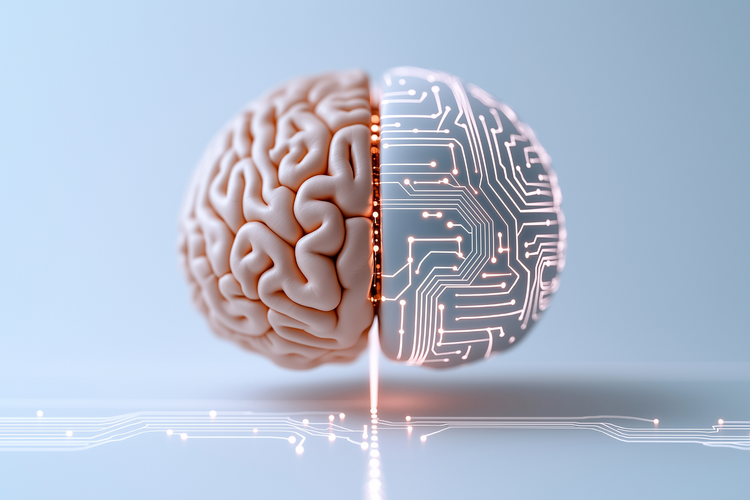
The Role of Data in Artificial Intelligence
The Role of Data in Artificial Intelligence
Data is what AI learns from. The quality, quantity, structure, and fairness of that data shape what an AI system can do, how well it performs, and where it can fail.

Optional image caption goes here.
Key Takeaways
- Data is the foundation of AI because models learn patterns from examples rather than understanding the world directly.
- AI systems can learn from many types of data, including text, images, audio, video, numbers, transactions, behavior, and documents.
- Data quality matters as much as data quantity because biased, incomplete, outdated, or inaccurate data can lead to flawed AI outputs.
- Understanding data helps explain why AI can be powerful, why it can be wrong, and why human oversight is still necessary.
Data is one of the most important ingredients in artificial intelligence.
AI systems do not learn by experiencing the world the way humans do. They do not grow up, ask questions, make memories, feel consequences, or develop judgment from lived experience. Instead, most modern AI systems learn by analyzing data.
That data can include text, images, audio, video, numbers, transactions, medical scans, customer behavior, documents, code, sensor readings, product reviews, search activity, and many other kinds of information.
The model looks for patterns in that data. Then it uses those patterns to make predictions, generate outputs, classify information, recommend options, recognize images, summarize text, or respond to prompts.
This is why data matters so much.
If the data is relevant, accurate, diverse, and well-structured, the AI system has a better chance of producing useful results. If the data is incomplete, biased, outdated, inaccurate, or poorly labeled, the system can learn flawed patterns and produce bad outputs.
AI may feel like intelligence from the outside, but underneath, it is deeply dependent on the data it learns from.
Understanding the role of data helps explain why AI can be powerful, why it can be wrong, and why human oversight still matters.
AI does not learn from reality directly. It learns from data, and that data carries the quality, gaps, assumptions, and bias of the world that produced it.
Why Data Matters in AI
Data matters because AI systems use it to learn patterns.
A machine learning model cannot magically know what spam looks like, what a cat looks like, what customers are likely to buy, what traffic may look like at 5 p.m., or what words are likely to come next in a sentence. It has to learn from examples.
Those examples come from data.
- A spam detection model learns from emails.
- A recommendation system learns from user behavior.
- A fraud detection model learns from transactions.
- An image recognition model learns from labeled images.
- A large language model learns from huge amounts of text and other data.
- A medical imaging model may learn from scans labeled by clinicians.
The model studies the data and identifies statistical relationships.
For example, a fraud detection system may learn that certain transaction patterns are more likely to be suspicious. A shopping platform may learn that customers who buy one product often buy another. A language model may learn that certain words, phrases, formats, and ideas often appear together.
Data gives AI something to learn from.
Without data, most modern AI systems would have no foundation. The model would not know what patterns to detect, what outputs to generate, or what predictions to make.
That is why data is often described as the fuel of AI. But that phrase can be a little too neat. Data is not just fuel. It is also the instruction manual, the history book, the mirror, and sometimes the bad witness.
AI learns from what the data shows, including the parts that are messy, biased, missing, or wrong.
What Is Data in Artificial Intelligence?
In artificial intelligence, data is any information used to train, test, evaluate, or operate an AI system.
That information can come in many forms.
Data can be numbers in a spreadsheet. It can be text from books, articles, websites, reports, or conversations. It can be images, videos, audio clips, medical scans, GPS signals, financial transactions, product reviews, customer support tickets, code repositories, or sensor readings from machines.
Data can be simple or complex.
- A row in a sales spreadsheet is data.
- A photo of a stop sign is data.
- A transcript of a meeting is data.
- A customer’s purchase history is data.
- A medical scan is data.
- A paragraph of text is data.
- A click, scroll, pause, like, or search query can also become data.
AI systems use data differently depending on the goal.
A predictive model may use historical sales data to forecast demand. A computer vision model may use images to recognize objects. A language model may use text to generate responses. A recommendation model may use behavior data to suggest products or content.
Data is the raw material.
The AI model is trained to find useful patterns in that raw material.
But data by itself is not intelligence. It becomes useful only when it is collected, cleaned, labeled, structured, interpreted, and used appropriately.
How AI Learns From Data
AI learns from data by identifying patterns.
The process depends on the type of AI system, but most machine learning follows a general flow.
First, data is collected. This might be a dataset of images, emails, transactions, documents, customer records, or text.
Second, the data is prepared. This may involve cleaning errors, removing duplicates, labeling examples, organizing fields, formatting files, or filtering irrelevant information.
Third, the model is trained. During training, the model analyzes examples and adjusts its internal settings so it can perform better on the task.
Fourth, the model is tested. It is evaluated on data it has not seen before to see whether it can apply what it learned to new examples.
Finally, the model is used in the real world. This is called inference. During inference, the trained model receives new input and produces an output.
For example, a spam detection model may be trained on emails labeled as spam or not spam. During training, it learns patterns associated with each category. During inference, it evaluates a new incoming email and predicts whether it belongs in the inbox or spam folder.
A language model is trained on large amounts of text. It learns patterns in language, structure, facts, writing styles, and instructions. When you enter a prompt, the model uses those patterns to generate a response.
The important point is this: AI does not learn by understanding meaning the way humans do.
It learns by finding patterns in data.
That is powerful. It is also where many limitations begin.
The Difference Between Data and Knowledge
Data and knowledge are not the same thing.
Data is information. Knowledge is understanding.
An AI system can process enormous amounts of data without truly understanding the world behind it. A model may learn that certain words often appear together, that certain image patterns resemble a dog, or that certain customer behaviors predict a purchase. But that does not mean the model understands language, animals, customers, or business strategy the way a person does.
This distinction matters because AI can sound knowledgeable without having human judgment.
A large language model can generate an explanation of a legal concept, but it is not a lawyer. It can summarize medical information, but it is not a doctor. It can analyze sales data, but it does not understand the lived reality of customers, market pressure, brand trust, or internal business politics unless those details are provided and interpreted by humans.
Data can support knowledge. It does not replace it.
Humans bring context, judgment, ethics, experience, accountability, and purpose. AI brings speed, scale, pattern recognition, and generation.
The best AI use happens when those strengths work together.
AI can help process information faster. Humans still need to decide what the information means and what should be done with it.
Types of Data Used in AI
AI systems can use many different types of data.
Text data
Text data includes books, articles, websites, emails, transcripts, documents, chats, reports, product reviews, social posts, code, and other written material.
Large language models rely heavily on text data to learn how language works and how to generate responses.
Image data
Image data includes photos, medical scans, satellite images, product images, security footage, diagrams, and screenshots.
Computer vision systems use image data to recognize objects, detect defects, interpret scenes, or analyze visual patterns.
Audio data
Audio data includes speech recordings, music, sound effects, calls, voice notes, and environmental sounds.
AI systems use audio data for speech recognition, transcription, voice assistants, translation, music generation, and sound classification.
Video data
Video data includes moving images over time. It can be used for activity recognition, autonomous vehicles, security analysis, sports analytics, video generation, and training systems that need to understand motion.
Numerical data
Numerical data includes prices, dates, sales numbers, measurements, ratings, financial records, sensor readings, and performance metrics.
Predictive models often use numerical data for forecasting, scoring, optimization, and trend analysis.
Behavioral data
Behavioral data includes clicks, searches, views, purchases, likes, pauses, scrolls, skips, routes, app usage, and customer interactions.
Recommendation systems, personalization engines, and marketing models often rely on behavioral data.
Sensor data
Sensor data comes from devices, machines, vehicles, wearables, factories, smart homes, medical devices, and Internet of Things systems.
AI can use sensor data to detect patterns, predict failures, monitor health indicators, or optimize operations.
Different AI systems use different kinds of data depending on what they are built to do.
Structured vs. Unstructured Data
One of the most important distinctions in AI is the difference between structured and unstructured data.
Structured data
Structured data is organized in a clear format.
It usually lives in tables, databases, spreadsheets, or forms. Each piece of information has a defined place.
Examples include:
- Sales reports
- Customer databases
- Financial records
- Product inventories
- Survey ratings
- Employee records
- Transaction histories
- CRM fields
- Website analytics
Structured data is easier for computers to process because it is organized into rows, columns, categories, or fields.
For example, a spreadsheet with columns for customer name, purchase date, product, price, and location is structured data.
Unstructured data
Unstructured data does not follow a neat table format.
Examples include:
- Emails
- PDFs
- Articles
- Images
- Videos
- Audio recordings
- Meeting transcripts
- Social media posts
- Customer reviews
- Support tickets
- Presentations
- Chat logs
Unstructured data is more difficult to process because it is messier, more varied, and less predictable.
Modern AI has become especially important because it can work with unstructured data better than traditional software could.
A language model can summarize a document. A computer vision model can analyze an image. A speech model can transcribe audio. A multimodal model can work across text, images, files, and other formats.
Much of the world’s information is unstructured, which is why AI’s ability to process it is such a big deal.
Training Data, Testing Data, and Validation Data
AI development often separates data into different groups.
The three most common are training data, validation data, and testing data.
Training data
Training data is the data the model learns from.
During training, the model studies this data, identifies patterns, and adjusts its internal settings to improve performance.
For example, a model learning to detect spam may train on many emails labeled as spam or not spam.
Validation data
Validation data is used during development to fine-tune the model and check how it is performing.
It helps developers adjust settings, compare model versions, and avoid problems like overfitting.
Overfitting happens when a model performs well on training data but poorly on new data because it learned the examples too narrowly instead of learning patterns that generalize.
Testing data
Testing data is used to evaluate the model after training.
This data should be separate from the training data so developers can see how well the model performs on examples it has not already learned from.
This matters because the real test of an AI model is not whether it can perform well on data it has already seen. The real test is whether it can handle new inputs.
A model that performs well during training but fails in the real world is not useful.
That is why data separation, evaluation, and monitoring are essential in AI development.
Why Data Quality Matters
Data quality is one of the biggest factors in AI performance.
Better data usually leads to better models. Poor data can lead to unreliable, biased, or misleading outputs.
High-quality data is usually:
- Accurate
- Relevant
- Complete
- Current
- Representative
- Consistent
- Properly labeled
- Free from unnecessary duplication
- Appropriate for the task
Low-quality data can include:
- Errors
- Missing values
- Duplicates
- Outdated information
- Inconsistent labels
- Biased examples
- Irrelevant records
- Poor formatting
- Unrepresentative samples
For example, if a medical AI system is trained mostly on data from one population, it may perform poorly for other populations. If a hiring model is trained on historical hiring decisions that reflect bias, it may learn biased patterns. If a product recommendation system is trained on incomplete behavior data, its suggestions may be weak.
Data quality matters because AI systems do not automatically know what information is wrong, unfair, or incomplete.
They learn from what they are given.
This is why data cleaning, labeling, auditing, and evaluation are critical parts of AI work.
The model may get the attention, but the data often decides whether the system is useful.
How Bias Enters AI Data
Bias can enter AI through data in many ways.
AI systems learn from examples, and those examples often reflect the world as it has been, not necessarily the world as it should be.
Bias can come from:
- Historical inequality
- Unrepresentative datasets
- Missing groups or perspectives
- Biased human decisions
- Flawed labels
- Poor data collection methods
- Overreliance on proxy variables
- Unequal access to digital systems
- Cultural assumptions
- Product design choices
For example, if a company trains a hiring model on past employee data from a workforce that was not diverse, the model may learn patterns that favor candidates similar to those historically hired.
If a facial recognition system is trained mostly on images of lighter-skinned faces, it may perform worse on darker-skinned faces.
If a credit model uses data shaped by historical inequities, it may reinforce unequal access to financial services.
Bias does not always look obvious.
A model may not include race, gender, or age directly but may use other variables that act as proxies. ZIP code, school, employment history, income, device type, or browsing behavior can sometimes reflect social patterns that create unfair outcomes.
This is why AI fairness is not only a technical issue. It is a social and ethical issue.
The question is not just whether the data is large. The question is whether the data is fair, relevant, representative, and appropriate for the decision being made.
Why More Data Is Not Always Better
More data can help AI systems perform better, but more data is not always better.
Quality matters.
A huge dataset filled with errors, bias, outdated information, duplicates, or irrelevant examples can create a weaker model than a smaller, cleaner, more relevant dataset.
More data can also create more complexity.
If the data includes too much noise, the model may learn patterns that do not matter. If the dataset includes harmful or biased content, the model may reproduce those patterns. If the data is poorly labeled, the model may learn inaccurate relationships.
More data can also create privacy and consent concerns.
Just because data can be collected does not mean it should be used. AI development raises serious questions about what data is gathered, who owns it, whether people consented, how long it is stored, and what rights individuals have to opt out.
This is especially important when data includes personal information, creative work, medical records, workplace activity, customer behavior, location data, or private communications.
The better question is not “How much data do we have?”
The better question is:
Is this data accurate, relevant, lawful, representative, ethical, and appropriate for this use?
AI does not need endless data. It needs the right data.
How Data Affects AI Accuracy
Data directly affects AI accuracy.
If the data reflects the task well, the model has a better chance of performing well. If the data is poor or mismatched, the model may struggle.
For example, a model trained to recognize road signs in clear daylight may perform poorly at night, in heavy rain, or in countries with different sign designs. A customer service model trained only on simple requests may struggle with complex complaints. A medical model trained on one hospital’s data may not perform as well in another hospital with different equipment, patients, or procedures.
AI accuracy depends on whether the training data matches the real-world situations where the model will be used.
This is called generalization.
A model generalizes well when it performs accurately on new data, not just the data it was trained on.
Poor generalization can lead to errors.
The model may work well in a demo but fail in production. It may perform well for one group but poorly for another. It may be accurate under normal conditions but unreliable when circumstances change.
This is why AI systems need ongoing monitoring.
The world changes. User behavior changes. Fraud patterns change. Language changes. Markets change. Data changes.
A model that was accurate last year may not stay accurate forever.
Good AI systems require maintenance, evaluation, and updates.
Data Privacy and AI
Data privacy is one of the most important issues in AI.
AI systems often rely on large amounts of information, and some of that information can be personal, sensitive, confidential, or proprietary.
Privacy concerns can involve:
- Personal identifying information
- Health records
- Financial data
- Location data
- Workplace documents
- Customer data
- Employee information
- Private messages
- Legal documents
- Biometric data
- Children’s data
- Creative work
- Business strategy
- Source code
Users and organizations need to understand what data is being collected, how it is stored, whether it is used for training, who can access it, and whether it can be deleted.
This matters for both individuals and businesses.
An individual should be careful about pasting private information into AI tools. A company should be careful about uploading confidential documents, customer records, employee data, or proprietary information into systems that are not approved for that use.
Privacy is also an issue in AI training.
Many debates around generative AI involve whether models were trained on copyrighted work, personal data, scraped web content, or information people did not knowingly provide for AI development.
Responsible AI use requires clear rules around data collection, consent, security, access, retention, and transparency.
Data is powerful. That is exactly why it needs protection.
What Data Means for Everyday AI Users
For everyday AI users, data may sound like a behind-the-scenes technical issue.
It is not.
Data affects the tools you use every day.
It affects whether an AI answer is accurate. It affects whether a recommendation is useful. It affects whether a system treats people fairly. It affects whether your private information is protected. It affects whether AI-generated content reflects strong sources or weak patterns.
Understanding data helps you become a smarter AI user.
When using AI, ask:
- What information does this tool have access to?
- Is the answer based on reliable data?
- Does the AI have current information?
- Did I provide enough context?
- Could the output reflect bias?
- Does this need verification?
- Am I sharing sensitive information?
- Is this tool approved for the kind of data I am using?
These questions matter whether you are using AI for work, school, business, research, writing, or everyday life.
For example, if you ask an AI tool to summarize a document, the quality of the answer depends on whether the tool can actually access the full document. If you ask for current information, the answer depends on whether the tool has access to up-to-date sources. If you ask for advice based on your situation, the answer depends on the context you provide.
AI output is shaped by input.
That includes the model’s training data and the data you give it in the prompt.
Final Takeaway
Data is the foundation of artificial intelligence.
AI systems learn patterns from data and use those patterns to generate outputs, make predictions, classify information, recommend options, detect risks, and support decisions.
That data can take many forms, including text, images, audio, video, numbers, documents, transactions, behavior, and sensor readings. It can be structured or unstructured. It can be used for training, validation, testing, and real-world inference.
The quality of the data matters.
Accurate, relevant, representative, and well-labeled data can help AI perform better. Biased, incomplete, outdated, or inaccurate data can lead to flawed outputs.
This is why data is not just a technical detail. It affects accuracy, fairness, privacy, safety, and trust.
AI does not learn from reality directly. It learns from data. And data is created, collected, labeled, filtered, and interpreted by humans and institutions.
That is why human oversight still matters.
If you want to understand AI, you need to understand data. Not because data explains everything, but because it shapes almost everything AI does.
FAQ
Why is data important in AI?
Data is important in AI because AI systems learn patterns from data. Those patterns help models make predictions, generate outputs, classify information, recommend options, and detect risks.
What types of data are used in AI?
AI can use many types of data, including text, images, audio, video, numbers, transactions, documents, customer behavior, medical scans, code, sensor readings, and business records.
What is training data?
Training data is the data an AI model learns from. During training, the model studies examples, identifies patterns, and adjusts itself to perform better on a task.
What is the difference between structured and unstructured data?
Structured data is organized in a clear format, such as spreadsheets, databases, or tables. Unstructured data is messier and includes emails, PDFs, images, audio, video, transcripts, social media posts, and documents.
Can bad data make AI wrong?
Yes. Bad data can lead to bad AI outputs. If data is biased, incomplete, outdated, inaccurate, or poorly labeled, the model can learn flawed patterns and produce unreliable or unfair results.
Why does data bias matter in AI?
Data bias matters because AI systems can learn and reproduce biased patterns from the data they are trained on. This can lead to unfair outcomes, especially in areas like hiring, lending, healthcare, education, policing, and housing.