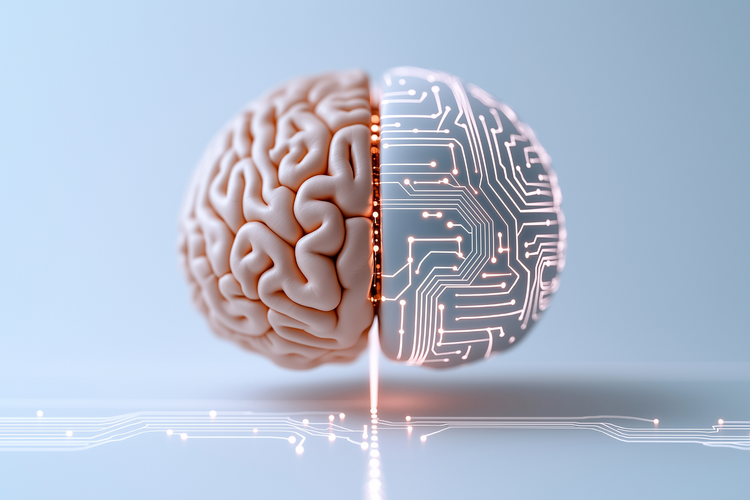
What Is the Future of Human-Computer Interaction With AI?
What Is the Future of Human-Computer Interaction With AI?
The future of human-computer interaction with AI is moving beyond buttons, menus, search bars, and static screens toward conversational, multimodal, agentic, ambient, and adaptive interfaces. Instead of only clicking through software, people will increasingly talk to systems, show them context, delegate tasks, collaborate with AI agents, use voice and vision together, interact through wearables and spatial devices, and expect software to understand intent across apps. This guide explains how AI is changing HCI, why interfaces are becoming more natural and proactive, what multimodal and agentic interaction means, how human control needs to evolve, what designers and businesses should prepare for, and why the best AI interface of the future will not be the one that dazzles the most. It will be the one that helps without turning your life into a haunted control panel.

What You'll Learn
By the end of this guide
Quick Answer
What is the future of human-computer interaction with AI?
The future of human-computer interaction with AI is the shift from people operating software manually to people collaborating with intelligent systems that can understand context, communicate naturally, take action, adapt to users, and work across tools.
Traditional HCI was built around commands, menus, icons, forms, search bars, dashboards, and clicks. AI changes the interface layer because users can increasingly express intent in natural language, use voice and images, show the AI what they mean, delegate tasks to agents, and receive contextual suggestions instead of navigating every step manually.
The plain-language version: AI is turning computers from tools you operate into systems you collaborate with. That sounds grand. It also means design has to grow up fast, because a bad button is annoying, but a bad AI agent can reschedule your week, email the wrong person, misread context, and still say “happy to help.”
Why AI Changes Human-Computer Interaction
AI changes HCI because it changes what the interface is supposed to do. In older software, the interface mostly helped users find functions and execute commands. With AI, the interface also needs to interpret intent, manage uncertainty, explain behavior, ask clarifying questions, collaborate over time, and sometimes take action on the user’s behalf.
That is a major shift. A spreadsheet toolbar does not need to understand what you meant. An AI assistant does. A calendar app does not need to infer the real goal behind “find a better time.” An AI scheduling agent does. A search box returns results. A multimodal assistant may look at your screen, understand the document you are editing, listen to your voice, remember prior context, and suggest the next step.
The future of HCI will not be one interface. It will be many interaction layers: text, voice, image, video, gesture, location, context, memory, agents, wearables, and spatial environments. The job of design will be to make all of that feel useful instead of turning everyday computing into a casino of pop-ups with a PhD.
Core principle: AI makes the interface less about finding buttons and more about managing intent, context, delegation, feedback, and trust.
The Future of AI-HCI at a Glance
The future of human-computer interaction with AI is not one shiny gadget. It is a stack of new interaction patterns.
| Interaction Shift | What It Means | Why It Matters | Example |
|---|---|---|---|
| Conversational UI | Users interact through natural language | Reduces the need to navigate complex menus | Ask an AI to summarize, rewrite, analyze, or plan |
| Multimodal input | AI understands text, voice, images, screens, video, and files | Users can show context instead of explaining everything | Point the camera at an object and ask what to do next |
| Agentic interaction | AI can complete multi-step tasks across systems | Shifts software from tool use to task delegation | Ask an agent to compare vendors and draft a recommendation |
| Adaptive UI | Interfaces change based on user context, skill, goals, or history | Software becomes more personalized and responsive | A design app surfaces tools based on what you are making |
| Ambient computing | AI assistance appears across devices and environments | Computing becomes less tied to one screen | A wearable assistant helps during a meeting or commute |
| Spatial interaction | AI works inside 3D, AR, VR, and physical spaces | Useful for design, training, simulation, and embodied work | Ask an AI to annotate a room layout in augmented reality |
| Human control | Users need visibility, consent, undo, approval, and override | AI systems can act, so control matters more | Approve before an AI sends an email or changes a file |
| Trust calibration | Interfaces help users know when to trust or question AI | Prevents overreliance and blind automation | AI shows confidence, sources, assumptions, and limitations |
The Key Ideas Behind the Future of AI-HCI
Definition
AI-HCI is about designing collaboration between humans and intelligent systems
The interface is no longer just a control panel. It becomes a coordination layer between user intent and AI capability.
Human-computer interaction with AI is the design of how people communicate, collaborate, delegate, correct, supervise, and make decisions with AI systems. It includes the visible interface, but also the interaction model underneath: what the AI can do, when it asks for input, how it explains itself, how it handles errors, and how much authority the user gives it.
This means future HCI is not only about screens. It is about relationships between users, systems, tasks, context, and agency. The more AI can infer, generate, automate, and act, the more the interface must support clarity, consent, correction, and trust.
AI-HCI design must answer
- What does the user want?
- What does the AI know and not know?
- What can the AI do safely?
- When should the AI ask for clarification?
- When should the user approve an action?
- How can the user inspect, correct, or undo the result?
- How does the system prevent overreliance?
Simple definition: AI-HCI is the design of how humans and AI systems understand each other, work together, and stay accountable.
Conversation
Conversational interfaces will become a default layer of software
Natural language lets users express goals without knowing the exact menu, command, or workflow.
Conversational interfaces are already changing how people use software. Instead of learning where every feature lives, users can ask for an outcome: summarize this report, clean this spreadsheet, compare these files, draft a response, build a timeline, find anomalies, or explain this chart.
The future will not eliminate graphical interfaces. It will layer conversation on top of them. Users will still need visual structure, previews, controls, and editable outputs. Conversation is powerful for intent. Screens are powerful for review. The best systems will combine both instead of pretending chat is a universal solvent.
Conversational interfaces are useful for
- Expressing intent
- Exploring options
- Editing content
- Explaining features
- Automating workflows
- Supporting beginners
- Working across complex systems
Conversation rule: Chat is best when the user knows the goal but not the steps. It is weakest when the user needs precise control and the system gets vague.
Multimodal
Multimodal AI will make interaction more natural
Users will increasingly interact with AI through text, speech, images, video, files, screens, gestures, and environmental context.
Multimodal AI lets users communicate with systems in more human ways. Instead of typing a long explanation, a user can upload a screenshot, point a camera, speak naturally, share a screen, highlight a document, or combine several modes at once.
This is a major change for HCI because it reduces translation work. Users no longer have to turn every real-world situation into a precise text prompt. They can show the system the problem. That matters for design, education, accessibility, troubleshooting, healthcare, field work, training, and creative tools.
Multimodal interaction may include
- Voice instructions
- Image understanding
- Screen awareness
- Video context
- File and document analysis
- Gesture or spatial input
- Sensor and location context
- Mixed reality annotations
Agents
Agentic interfaces will shift software from tool use to task delegation
AI agents can take multi-step actions across tools, which makes the interface more about supervision than direct operation.
Agentic interfaces are one of the biggest HCI changes ahead. Instead of asking AI to generate one answer, users will ask AI to complete tasks: research options, update records, schedule meetings, compare documents, build slides, prepare reports, troubleshoot software, or coordinate across apps.
That changes the interaction model. The user becomes less like a machine operator and more like a manager supervising a digital worker. That sounds efficient until the agent misunderstands the assignment. Then the interface needs approval flows, progress visibility, intermediate checkpoints, audit trails, and graceful failure handling.
Agentic interfaces need
- Clear task scope
- Permission boundaries
- Step-by-step visibility
- Approval before sensitive actions
- Undo and rollback
- Escalation when uncertain
- Logs and accountability
Agent rule: The more an AI can act, the more the interface must show what it is doing, why it is doing it, and how to stop it before it turns “helpful” into “incident report.”
Adaptive UI
Interfaces will adapt to user goals, skill, and context
AI can make software feel less static by changing help, layout, suggestions, and workflows based on what the user is trying to do.
AI can make interfaces more adaptive. A beginner might see guided explanations, templates, and suggestions. An expert might see shortcuts, automation controls, and fewer interruptions. A user working under time pressure might get a summarized action path. A user exploring creatively might get options, examples, and variations.
This could make software more accessible and powerful. But adaptive UI can also become confusing if the interface changes too much, hides important controls, or makes users feel like the product is reading their mind through a window they never agreed to open.
Adaptive UI may personalize
- Feature suggestions
- Navigation paths
- Explanations and help text
- Templates and defaults
- Automation levels
- Warnings and confirmations
- Dashboards and summaries
Ambient Computing
AI will move beyond the app window
Ambient AI assistance will appear across devices, environments, meetings, vehicles, wearables, and workspaces.
Ambient computing means AI becomes part of the environment rather than confined to a single app. It may appear in meetings, phones, glasses, cars, smart home devices, workplace systems, customer service workflows, and physical spaces.
The promise is contextual help: AI that understands what you are doing and assists at the right time. The risk is creepiness with a product roadmap. Ambient AI must be designed with clear consent, obvious controls, local processing where possible, strong privacy boundaries, and the ability to make the system shut up without filing a support ticket.
Ambient AI could support
- Meeting summaries
- Real-time translation
- Contextual reminders
- Field work assistance
- Smart workspace automation
- Wearable guidance
- Hands-free accessibility
Ambient rule: The best ambient AI is helpful when needed and invisible when not. The worst is a needy ghost with notification privileges.
Spatial Computing
AI will reshape spatial, wearable, and mixed-reality interfaces
AI can make AR, VR, and wearable devices more useful by understanding space, objects, scenes, and user intent.
Spatial computing and AI are natural partners. AI can understand what a person is looking at, where objects are, what task is happening, and what guidance might be useful. That could make AR and mixed reality more practical for training, design, repair, healthcare, logistics, navigation, and immersive work.
Wearables could also change HCI by making AI available without opening a laptop or phone. Glasses, earbuds, watches, and other devices may become interface surfaces for voice, visual context, translation, reminders, and task support. The hard part will be avoiding sensory confetti. Not every surface needs an overlay. Not every moment needs commentary.
Spatial AI interfaces may help with
- Training simulations
- Design review
- Hands-free work
- Real-time translation
- Navigation and wayfinding
- Medical and technical assistance
- Immersive collaboration
Enterprise UX
Enterprise software will become more workflow-centered
AI will reduce the need for users to jump between forms, dashboards, documents, emails, tickets, and databases.
Enterprise software is one of the biggest places AI-HCI will matter. Many workplace systems are still built around manual navigation: click into the ATS, update the CRM, open the spreadsheet, search the ticketing system, copy the data, write the email, create the report, repeat until morale leaves the building.
AI can sit above these systems as a workflow layer. Users may ask for outcomes instead of operating every tool directly. That could make enterprise software more usable, but only if permissions, data quality, audit trails, and approvals are designed properly.
Enterprise AI-HCI may improve
- Reporting and dashboards
- Knowledge search
- Data cleanup
- Workflow automation
- Customer support
- Recruiting and HR operations
- Finance and legal review
- Project management
Enterprise rule: AI should reduce workflow friction, not create a new layer of mysterious automation that everyone is afraid to touch.
Accessibility
AI could make computing more accessible, if designed responsibly
Voice, vision, summarization, translation, personalization, and adaptive assistance can reduce barriers for many users.
AI has major accessibility potential. It can turn speech into text, text into speech, images into descriptions, complex documents into summaries, instructions into step-by-step guidance, and interfaces into more personalized experiences.
For people with disabilities, language barriers, cognitive load challenges, low technical confidence, or limited time, AI can reduce friction. But accessibility should not be treated as a nice side effect. It needs to be designed intentionally, tested with real users, and made affordable enough not to become a luxury ramp.
AI accessibility can support
- Screen reading and image description
- Live captioning and transcription
- Voice control
- Plain-language explanations
- Translation and localization
- Cognitive load reduction
- Personalized learning support
- Hands-free interaction
Trust
Human control becomes more important as AI becomes more capable
AI interfaces must help users understand, supervise, correct, and override systems that can act on their behalf.
Trust is not built by making AI sound confident. In fact, confidence is part of the problem. AI systems can be fluent, persuasive, wrong, and oddly charming about it. Future interfaces need to help users calibrate trust: when to rely on AI, when to verify, and when to take control.
This is why human-AI interaction guidelines emphasize clarity, feedback, correction, context, and user control. AI should communicate what it can do, what it is doing, when it is uncertain, and what the user can change. The interface must make uncertainty visible without turning every task into a dissertation defense.
Trustworthy AI interfaces need
- Clear capability boundaries
- Confidence and uncertainty signals
- Sources and evidence where relevant
- Preview before action
- Easy correction
- Undo and rollback
- Human approval for high-risk steps
- Transparent data and memory controls
Trust rule: A good AI interface does not ask users to trust blindly. It helps them know when trust is earned, when verification is needed, and when the AI should sit down.
Risks
The future of AI-HCI could also make computing more manipulative
More natural interfaces can become more persuasive, more intimate, more intrusive, and harder to question.
AI interfaces can be helpful because they feel natural, personal, and responsive. Those same qualities can make them risky. A system that adapts to your behavior can support you, but it can also nudge, manipulate, upsell, distract, or exploit attention with surgical precision.
Ambient and multimodal interfaces also create privacy risks. If an AI can see your screen, hear your voice, remember your preferences, read your documents, and act across apps, the interface becomes a powerful access layer. That requires serious consent, data governance, security, and user control.
Major AI-HCI risks include
- Overreliance on AI suggestions
- Dark patterns and manipulative nudges
- Emotional dependency on AI companions
- Privacy invasion from always-on systems
- Confusing AI fluency with truth
- Loss of user skill and agency
- Automation errors at scale
- Unequal access to better AI interfaces
Risk rule: The more human an AI interface feels, the more carefully it must be designed to protect the actual human in the interaction.
What the Future of AI-HCI Means for Businesses and Careers
For businesses, AI-HCI matters because the interface is where AI value either becomes useful or dies in a confusing sidebar. A powerful model wrapped in a bad workflow is not transformation. It is expensive friction wearing a launch announcement.
Companies will need to rethink product design, software adoption, training, internal workflows, customer support, accessibility, and governance. The winners will not simply add chatbots to everything. They will redesign workflows around human intent, AI assistance, verification, permission, and measurable outcomes.
For careers, AI-HCI creates opportunities for UX designers, product managers, researchers, AI strategists, learning designers, accessibility specialists, workflow architects, responsible AI leads, and anyone who can translate human needs into usable AI systems. The future belongs to people who can design the handoff between humans and machines without making either side look ridiculous.
Practical Framework
The BuildAIQ AI-HCI Design Framework
Use this framework to evaluate AI products, agents, assistants, copilots, workflow tools, or future interfaces.
Common Mistakes
What people get wrong about the future of AI-HCI
Ready-to-Use Prompts for Understanding AI-HCI
AI-HCI explainer prompt
Prompt
Explain the future of human-computer interaction with AI in beginner-friendly language. Cover conversational interfaces, multimodal AI, agents, adaptive UI, ambient computing, spatial interfaces, accessibility, trust, and human control.
AI product UX audit prompt
Prompt
Audit this AI product experience: [DESCRIBE PRODUCT]. Evaluate user intent, interaction flow, modality choices, transparency, error recovery, trust signals, privacy controls, accessibility, and where AI helps or creates friction.
Agent interface design prompt
Prompt
Design an interface for an AI agent that performs [TASK]. Include task setup, permissions, step-by-step visibility, checkpoints, approval flows, failure handling, undo, audit logs, and user override controls.
Multimodal interface prompt
Prompt
Create a multimodal AI interface concept for [USE CASE]. Decide when users should use text, voice, images, files, screen sharing, camera input, gestures, or structured controls. Explain the UX tradeoffs.
AI trust and safety prompt
Prompt
Evaluate the trust and safety design of this AI interface: [DESCRIPTION]. Identify risks related to overreliance, automation errors, consent, privacy, explainability, uncertainty, manipulation, and user control.
Career roadmap prompt
Prompt
Create a learning roadmap for becoming skilled in AI human-computer interaction from a [BACKGROUND] background. Include UX research, human-AI interaction guidelines, AI product design, agent UX, accessibility, responsible AI, prototyping, and portfolio projects.
Recommended Resource
Download the AI-HCI Design Checklist
Use this placeholder for a free checklist that helps readers evaluate AI interfaces, agents, copilots, multimodal workflows, trust signals, user control, privacy, accessibility, and error recovery.
Get the Free ChecklistFAQ
What is human-computer interaction with AI?
Human-computer interaction with AI is the design of how people communicate, collaborate, supervise, correct, and make decisions with AI systems.
How will AI change user interfaces?
AI will make interfaces more conversational, multimodal, adaptive, agentic, contextual, and proactive. Users will increasingly express goals instead of manually navigating every step.
Will chatbots replace apps?
No. Chat will become an important interface layer, but apps, visual controls, dashboards, previews, forms, and structured workflows will still matter.
What is multimodal interaction?
Multimodal interaction means users and AI systems communicate through multiple input and output types, such as text, voice, images, video, files, screens, gestures, and spatial context.
What are agentic interfaces?
Agentic interfaces allow users to delegate tasks to AI agents that can take multi-step actions across tools, systems, or workflows.
Why does human control matter in AI interfaces?
Human control matters because AI systems can make mistakes, act on incomplete context, or automate the wrong thing. Users need approval flows, visibility, correction, undo, and override.
How will AI affect accessibility?
AI can improve accessibility through voice control, transcription, translation, image description, plain-language explanations, adaptive guidance, and hands-free interaction.
What are the biggest risks of AI-HCI?
Risks include overreliance, privacy invasion, manipulation, emotional dependency, automation errors, hidden data use, confusing interfaces, and loss of user agency.
What is the main takeaway?
The main takeaway is that AI will shift human-computer interaction from operating tools to collaborating with intelligent systems. The future interface must be natural, multimodal, adaptive, and agentic, but also transparent, controllable, private, and easy to correct.