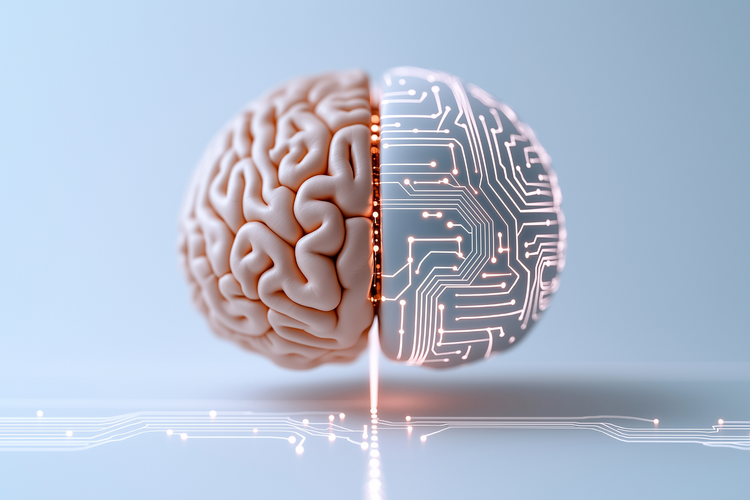
What’s an AI Model? Understanding the Brains Behind Artificial Intelligence
What Is an AI Model? The Difference Between GPT-4, Gemini, Claude & More
An AI model is the system behind an AI tool, trained on data to recognize patterns, generate outputs, make predictions, or complete specific tasks.

Optional image caption goes here.
Key Takeaways
- An AI model is the trained system that powers an AI tool, allowing it to recognize patterns, generate content, make predictions, or respond to prompts.
- AI models are trained on data, adjusted through learning processes, and then used to produce outputs during inference.
- GPT-4, Claude, Gemini, Midjourney, and other AI systems are different models or model families designed with different strengths, use cases, and capabilities.
- AI models can be powerful and useful, but they do not truly understand, think, or reason like humans. They produce outputs based on patterns.
Artificial intelligence tools can feel simple from the outside. You type a question into ChatGPT, upload a document to Claude, ask Gemini to summarize something, or give Midjourney a prompt for an image. A few seconds later, the tool produces an answer, image, summary, plan, or recommendation.
But the tool you see is not the whole system.
Behind every AI tool is an AI model.
An AI model is the trained system that allows artificial intelligence to recognize patterns, generate outputs, make predictions, classify information, or complete tasks. It is what turns data and instructions into results.
When people talk about GPT-4, Claude, Gemini, Llama, Midjourney, DALL-E, or other AI systems, they are often talking about models or model families. These models are trained on large amounts of data and designed to perform different kinds of work, such as writing, reasoning, coding, image generation, voice processing, search, analysis, or multimodal understanding.
Understanding what an AI model is matters because models are the engine behind AI tools. If you know how models work at a basic level, it becomes easier to understand what AI can do, why different tools produce different results, and why AI sometimes gets things wrong.
What Is an AI Model?
An AI model is a computer system trained to recognize patterns in data and use those patterns to produce outputs.
Those outputs might include:
- A prediction
- A recommendation
- A classification
- A summary
- A written response
- An image
- A translation
- A score
- A decision support suggestion
- A piece of code
For example, a spam detection model analyzes an email and predicts whether it belongs in your inbox or spam folder. A recommendation model predicts which video, product, or song you may like. A large language model generates text based on your prompt. An image generation model creates visuals based on a text description.
The model is not manually programmed with every possible answer. Instead, it is trained on examples. During training, it learns patterns and relationships in the data. Once trained, it can apply those patterns to new inputs.
This is what makes AI different from traditional software.
Traditional software follows explicit rules written by developers. An AI model learns patterns from data and uses those patterns to respond to new situations.
That does not mean the model understands the world like a human. It means it has learned statistical relationships that allow it to produce useful outputs.
AI Model vs. AI Tool: What's the Difference?
One of the easiest ways to get confused about AI is to mix up the model with the tool.
They are related, but they are not the same thing.
An AI model is the trained system underneath. It is the part that processes input and generates output.
An AI tool is the product or interface you use to interact with the model.
The same model can sometimes power multiple tools, and the same tool may use more than one model depending on the task.
This is why two AI apps can feel different even if they offer similar features. The model, interface, instructions, data access, safety settings, memory, integrations, and product design all shape the user experience.
For example, ChatGPT, Claude, and Gemini may all answer a writing prompt, but they may produce different tone, structure, depth, and reasoning because they are powered by different models and product systems.
The model matters, but it is not the only thing that matters.
How AI Models Learn From Data
AI models learn through training.
During training, the model is exposed to large amounts of data and adjusts its internal settings so it can identify patterns and produce better outputs.
The type of training data depends on the model's purpose.
A language model is trained on text. An image model is trained on images and captions. A speech recognition model is trained on audio and transcripts. A fraud detection model is trained on transaction data. A medical imaging model may be trained on scans labeled by experts.
The model uses that data to learn relationships.
For example:
- Which words tend to appear together
- What an object looks like in an image
- What transaction patterns may indicate fraud
- What customer behavior may suggest churn
- What symptoms may correlate with certain conditions
- What code patterns solve certain programming problems
- What kinds of responses usually follow certain instructions
The more relevant and high-quality the training data, the better the model may perform. But more data does not automatically mean better AI. If the data is biased, incomplete, outdated, or low quality, the model can learn flawed patterns.
This is one reason AI bias exists. A model does not learn from reality directly. It learns from the data it is given. If that data reflects human bias, missing context, or historical unfairness, the model may reproduce or amplify those problems.
Training data shapes what a model can do, what it struggles with, and where it may fail.
Training vs. Inference
To understand AI models, it helps to know the difference between training and inference.
Training is the learning phase.
During training, the model studies data, makes predictions, compares those predictions to expected results, and adjusts its internal parameters to improve. This can require enormous computing power, especially for large models.
Inference is the using phase.
During inference, a trained model receives a new input and produces an output. When you ask ChatGPT a question, generate an image in Midjourney, translate text, get a product recommendation, or receive a fraud alert, the model is performing inference.
A simple way to remember it:
Training is when the model learns. Inference is when the model applies what it learned.
This distinction matters because users usually interact with AI during inference, not training. When you ask an AI tool a question, it is not usually learning permanently from that single exchange in the same way it learned during training. It is using the trained model, the current prompt, available context, and any connected tools or memory features to produce a response.
That is also why AI models can respond quickly, even though building them required a massive training process.
What AI Models Can Do
AI models can support many kinds of tasks, depending on how they are designed and trained.
Some models are built to classify information. For example, they may decide whether an email is spam, whether a transaction looks suspicious, or whether an image contains a certain object.
Some models are built to predict outcomes. They may forecast demand, estimate travel time, predict customer behavior, or identify likely risks.
Some models are built to generate content. They may write text, produce images, create music, generate video, draft code, or summarize documents.
Some models are built to understand and transform language. They may translate text, answer questions, extract key points, analyze sentiment, or rewrite content.
Some models are built to work across multiple types of input. These are called multimodal models. They can process text, images, audio, video, documents, or other forms of information.
AI models can be useful because they operate at speed and scale. They can process more information than a person could manually review, and they can produce outputs quickly.
But they are not equally strong at every task.
A model trained for image generation is not the same as a model trained for financial forecasting. A chatbot model is not the same as a fraud detection model. A speech recognition model is not the same as a recommendation model.
The model's design, training data, architecture, size, and purpose all shape what it can do.
Common Types of AI Models
There are many types of AI models, but beginners should understand a few major categories.
Classification models
Classification models sort information into categories.
Examples include spam or not spam, approved or rejected, cat or dog, positive or negative sentiment, high risk or low risk.
These models are common in email filtering, medical imaging, fraud detection, moderation, customer service, and document processing.
Prediction models
Prediction models estimate what may happen next based on historical data.
They can be used for sales forecasting, inventory planning, weather prediction, financial risk, customer churn, traffic estimates, and demand forecasting.
These models do not predict the future with certainty. They estimate likely outcomes based on patterns.
Recommendation models
Recommendation models suggest items, content, products, or actions.
Streaming platforms, shopping sites, social media feeds, job boards, music apps, and news platforms all use recommendation models to personalize what users see.
These systems can be useful, but they also influence attention and behavior.
Generative models
Generative models create new outputs.
Large language models generate text. Image models generate visuals. Audio models can generate speech or music. Code models can generate or complete software code.
Generative AI is the category behind many of today's most visible AI tools.
Large language models
Large language models, or LLMs, are trained on large amounts of text and designed to understand and generate language. They power tools like ChatGPT, Claude, Gemini, and many AI writing, coding, research, and productivity assistants.
LLMs are one of the most important types of AI models today because language is connected to so much human work.
Multimodal models
Multimodal models can work with more than one type of data. For example, a multimodal model may process text, images, audio, video, and documents.
This is why newer AI tools can read screenshots, analyze charts, describe images, process uploaded files, or respond to voice input.
Multimodal AI is making models more useful because real-world work rarely comes in one format.
Large Language Models: GPT-4, Claude, Gemini, and More
Large language models are the models behind many of the AI assistants people use today.
GPT-4, Claude, Gemini, Llama, Mistral, and other language models are trained to process and generate text. They can answer questions, summarize information, explain concepts, draft content, write code, translate language, and help users reason through problems.
These models work by analyzing patterns in language.
They learn how words, phrases, facts, instructions, formats, and ideas tend to relate to one another. When a user enters a prompt, the model generates a response based on the prompt, the context window, its training, and any tools or systems connected to it.
Different language models have different strengths.
Some may be stronger at writing. Some may be better at coding. Some may handle long documents more effectively. Some may be tuned for speed, safety, reasoning, creativity, research, or enterprise use.
This is why choosing an AI tool is not only about picking the most famous name. It is about matching the model and product to the task.
For example:
- ChatGPT is often used as a flexible general-purpose assistant.
- Claude is often strong for long-form writing, analysis, and document work.
- Gemini is closely connected to Google's AI ecosystem and Workspace tools.
- Llama and Mistral are important in the open-source and open-weight AI ecosystem.
- Perplexity uses AI models in a search-focused experience.
These systems may all look similar from the outside, but the models and product design underneath can create very different experiences.
Image, Audio, Video, and Multimodal Models
Not all AI models work with text.
Image generation models can create visuals from prompts. Tools like Midjourney, DALL-E, Adobe Firefly, and other image systems use models trained on relationships between visual patterns and language descriptions.
Computer vision models can identify objects, read text in images, detect faces, analyze medical scans, inspect manufacturing defects, or help autonomous systems understand their environment.
Speech models can convert speech to text, generate synthetic voices, translate spoken language, or support voice assistants.
Video models can generate clips, edit footage, summarize visual content, or analyze movement and scenes.
Multimodal models combine several of these capabilities. They can work across text, images, audio, video, charts, screenshots, and documents.
This matters because most real-world information is not only text. Work happens across emails, files, spreadsheets, images, presentations, voice notes, dashboards, contracts, videos, and conversations.
As AI models become more multimodal, they become more useful in everyday workflows.
A user may be able to upload a chart and ask for an explanation, provide a screenshot and request feedback, submit a PDF and ask for a summary, or speak to an AI assistant and receive a useful response.
That shift is one reason AI tools are becoming more integrated into work, learning, and daily life.
Why Different AI Models Produce Different Results
If you ask the same question to ChatGPT, Claude, Gemini, and another AI assistant, you may get different answers.
That does not necessarily mean one is always right and the others are wrong. It means different models and tools are built differently.
Several factors affect the output.
Training data
Models are trained on different data sources, time periods, languages, formats, and content types. That affects what they know and how they respond.
Model architecture
Architecture refers to how the model is designed. Different architectures process information in different ways.
Model size and capability
Some models are larger or more capable than others. Larger models may handle more complex tasks, but size is not the only factor that matters.
Tuning and safety systems
After training, models are often fine-tuned or adjusted to make them more helpful, safer, or better aligned with user expectations. This can affect tone, refusal behavior, depth, and style.
Context window
The context window determines how much information the model can consider at once. A larger context window can help with long documents, complex instructions, and multi-step work.
Product interface
The tool around the model matters. An AI assistant may include browsing, file uploads, memory, integrations, coding tools, image generation, search, or workspace access.
This is why AI tools should be evaluated by use case, not just brand name.
The best model for creative writing may not be the best model for data analysis. The best tool for research may not be the best tool for image creation. The best model for long documents may not be the fastest model for quick drafting.
Why AI Models Can Make Mistakes
AI models can be powerful and still produce wrong answers.
This is one of the most important things to understand.
AI models generate outputs based on patterns, probabilities, training data, and context. They do not verify truth the way humans can through lived experience, real-world observation, or independent judgment.
Common reasons AI models make mistakes include:
- Missing or unclear context
- Outdated training data
- Biased or incomplete data
- Ambiguous prompts
- Weak reasoning on complex tasks
- Overconfidence in likely-sounding answers
- Confusion between similar concepts
- Lack of access to current information
- Misinterpretation of user intent
This is why AI hallucinations happen. A model may generate a response that sounds polished and confident, even when the answer is inaccurate or unsupported.
Different models have different levels of reliability, but no AI model should be treated as automatically correct.
For important work, users should verify facts, check sources, review reasoning, and apply human judgment.
AI models are useful because they can accelerate thinking and work. They become risky when people treat output quality as guaranteed.
An AI model is not the app you open. It is the trained system underneath the app that turns data, patterns, and prompts into useful outputs.
Why AI Models Matter
AI models matter because they are becoming part of the technology layer behind modern work and daily life.
They power search engines, recommendation systems, chatbots, writing tools, design tools, coding assistants, fraud detection systems, voice assistants, translation apps, navigation tools, medical analysis systems, productivity platforms, and workplace software.
The model determines much of what an AI system can do. It affects the quality of responses, the type of tasks supported, the speed of output, the level of reasoning, the ability to work with different file types, and the reliability of results.
Understanding AI models also helps people make better choices.
If you know what an AI model is, you can better evaluate:
- Which AI tool to use
- When to trust an output
- When to verify information
- Why two tools give different answers
- Why prompts matter
- Why data matters
- Why AI can be useful but still limited
- Why human oversight is still necessary
This is part of practical AI literacy.
You do not need to become a machine learning engineer to understand AI models. But you should know enough to recognize that AI tools are not magic boxes. They are systems built from models, data, training, infrastructure, and design decisions.
That knowledge makes you a more informed user.
Final Takeaway
An AI model is the trained system behind an AI tool.
It learns patterns from data and uses those patterns to make predictions, generate content, classify information, recommend options, or respond to prompts. Models power tools like ChatGPT, Claude, Gemini, Midjourney, recommendation engines, fraud detection systems, search tools, and many other AI-powered products.
Different models are built for different tasks. Some work with text. Some work with images. Some work with audio, video, code, numbers, or multiple types of information at once.
AI models can be fast, useful, and powerful. But they do not think like humans. They do not understand meaning the way people do. They can still make mistakes, reflect bias, or produce confident but inaccurate outputs.
That is why understanding AI models matters.
When you know what is happening underneath the tool, you can use AI more effectively, compare tools more intelligently, and stay clear-eyed about both the power and limits of artificial intelligence.
FAQ
What is an AI model?
An AI model is a trained system that learns patterns from data and uses those patterns to make predictions, generate outputs, classify information, or complete tasks. AI models power tools like ChatGPT, Claude, Gemini, Midjourney, recommendation systems, and fraud detection tools.
What is the difference between an AI model and an AI tool?
An AI model is the trained system that processes information and generates outputs. An AI tool is the product or interface you use to interact with that model, such as ChatGPT, Claude, Gemini, or Midjourney.
Is ChatGPT an AI model?
ChatGPT is an AI tool powered by OpenAI's GPT models. The tool is the chat interface, while the model is the system underneath that generates responses.
What are examples of AI models?
Examples of AI models include large language models, image generation models, recommendation models, classification models, prediction models, speech recognition models, computer vision models, and multimodal models.
Why do different AI models give different answers?
Different AI models give different answers because they may use different training data, architectures, tuning methods, safety systems, context windows, and product features. The same prompt can produce different results across ChatGPT, Claude, Gemini, and other tools.
Can AI models make mistakes?
Yes. AI models can make mistakes because they rely on patterns in data, not true human understanding. They may hallucinate, misunderstand prompts, use outdated information, reflect bias, or produce confident but inaccurate answers.