


AI vs. Human Intelligence: Breaking Down the Key Differences
AI and human intelligence are not the same kind of intelligence — just running at different speeds. Here is a clear explanation of how the two differ, where AI outperforms humans, and where human judgment still leads.
What AI Still Can't Do: Understanding Its Real Limitations
AI is powerful, but it is not capable of everything. It cannot truly understand meaning, make ethical judgments, feel emotion, or take responsibility. Understanding where AI falls short is not a reason to use it less. It is how you use it better.
What AI Can Do: The Real Capabilities Behind the Hype
AI is neither magic nor meaningless. It has a specific set of capabilities — pattern recognition, prediction, generation, summarization, classification, automation, personalization, and more. Understanding each one clearly is how you start using AI with real confidence.
What Is an AI Assistant? Chatbots, Copilots, and Agents Explained
AI assistants are becoming part of how we work, search, and communicate — but the category covers a lot of ground. This guide breaks down what AI assistants actually are, how chatbots, copilots, and agents differ, what they can and can't do, and how to use them effectively.
What Makes AI Different From A Google Search?
Google Search finds information. AI generates responses. They're not the same tool, and using them interchangeably leads to frustration and mistakes. This guide explains what each one actually does, when to reach for which, and why verification still matters, no matter which you use.
Why AI Seems to Be Everywhere Now: The Real Story Behind the Boom
AI seems to have appeared out of nowhere. It hasn’t. Here’s a clear, beginner-friendly look at the real forces behind the AI boom — and what they mean for you.
What Is a Prompt? The Way You Ask AI Matters More Than You Think
Every time you type something into ChatGPT, Claude, or any other AI tool, you're writing a prompt. The quality of what you type shapes the quality of what you get back. This article explains what prompts are, why they matter, and how to write better ones — no technical knowledge required.
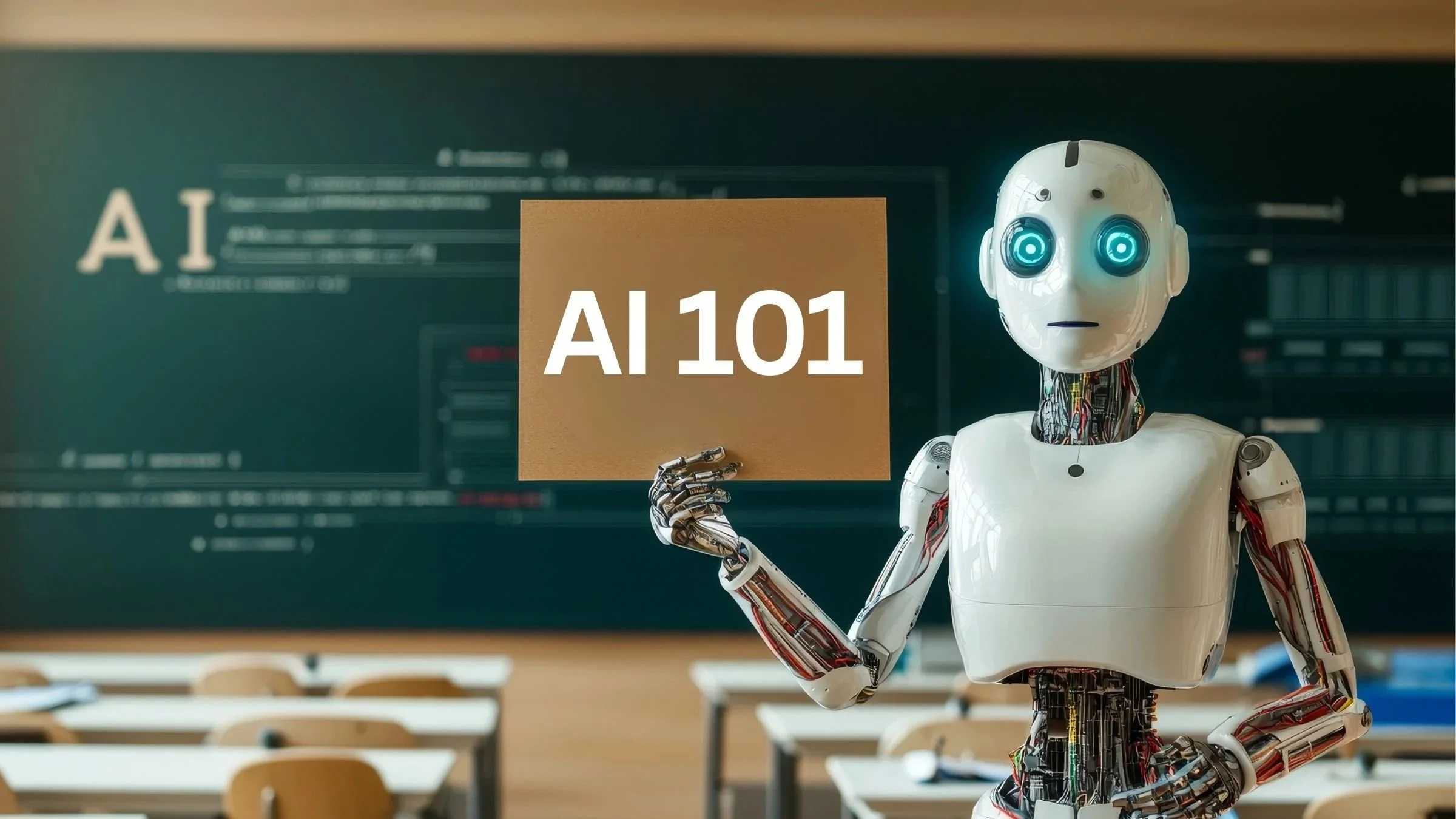
What Is AI? Artificial Intelligence Explained As Simply As Possible
Artificial intelligence isn’t magic, and it’s not a sentient robot hiding in your laptop. This guide breaks down what AI actually is, how it works at a high level, and what “intelligence” means in machine terms.
What Is a Copilot? How AI Assistants Are Showing Up in Everyday Tools
Copilots are AI assistants built into the tools people already use, from work apps to coding platforms. This article explains what copilots are, how they help, and why they are becoming part of everyday software.
What Is a Chatbot? The Beginner’s Guide to AI Conversations
Chatbots are one of the most familiar ways people interact with AI. This article explains what chatbots are, how they work, what makes AI chatbots different, and where they show up in everyday life.
What Makes AI Different From Google Search?
AI tools and Google Search both help people find information, but they work differently. This article explains how search engines retrieve links while AI systems generate, summarize, reason, and respond conversationally.
The Difference Between AI, Automation, Algorithms, and Software
AI, automation, algorithms, and software are related, but they are not the same thing. This article explains the differences in plain English so readers can understand what makes AI distinct from older technology.
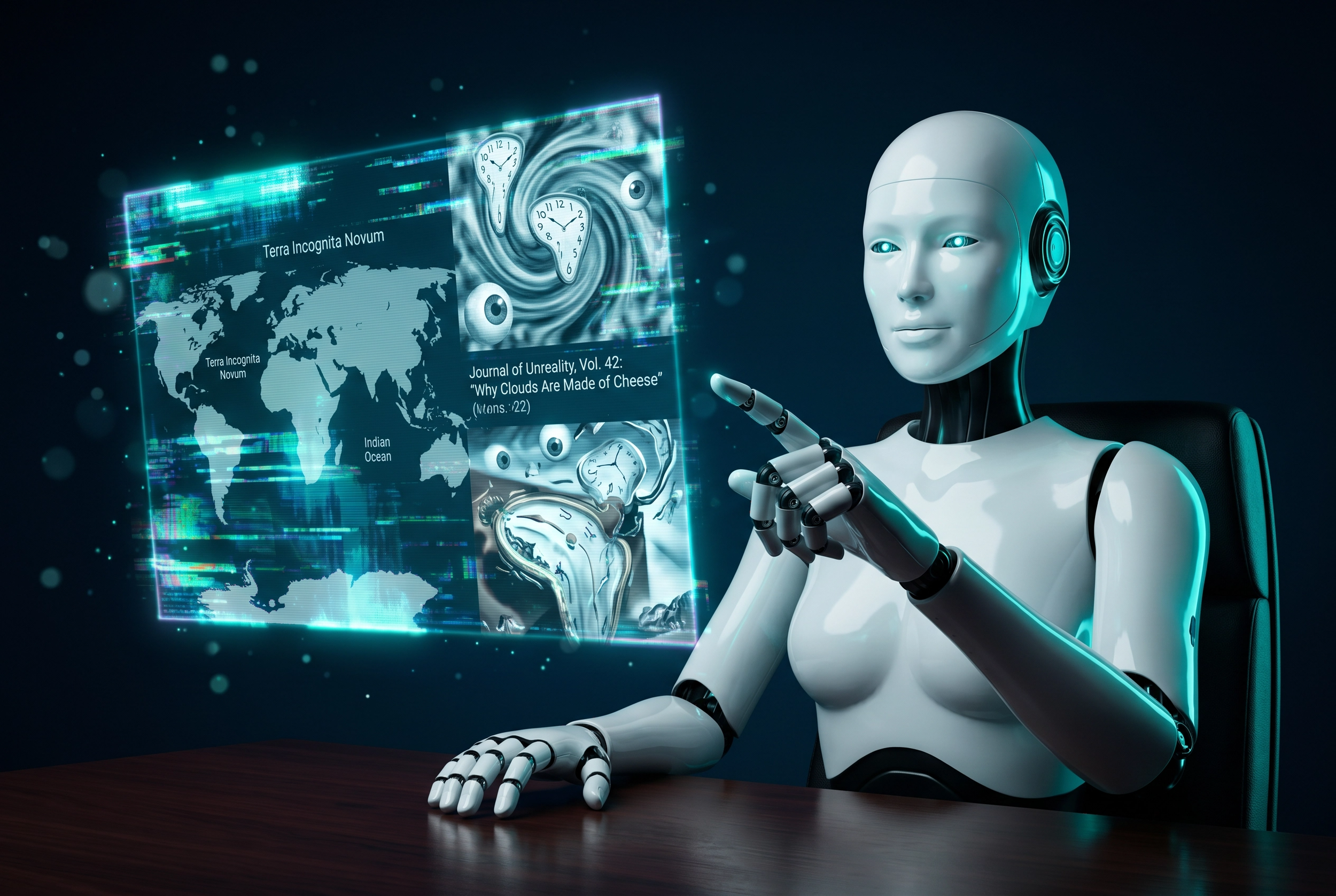
AI Hallucinations: Why AI Makes Things Up and What to Do About It
AI hallucinations happen when AI produces incorrect or unsupported information with confidence. This article explains why hallucinations happen, why they matter, and how users can spot, reduce, and fact-check them.
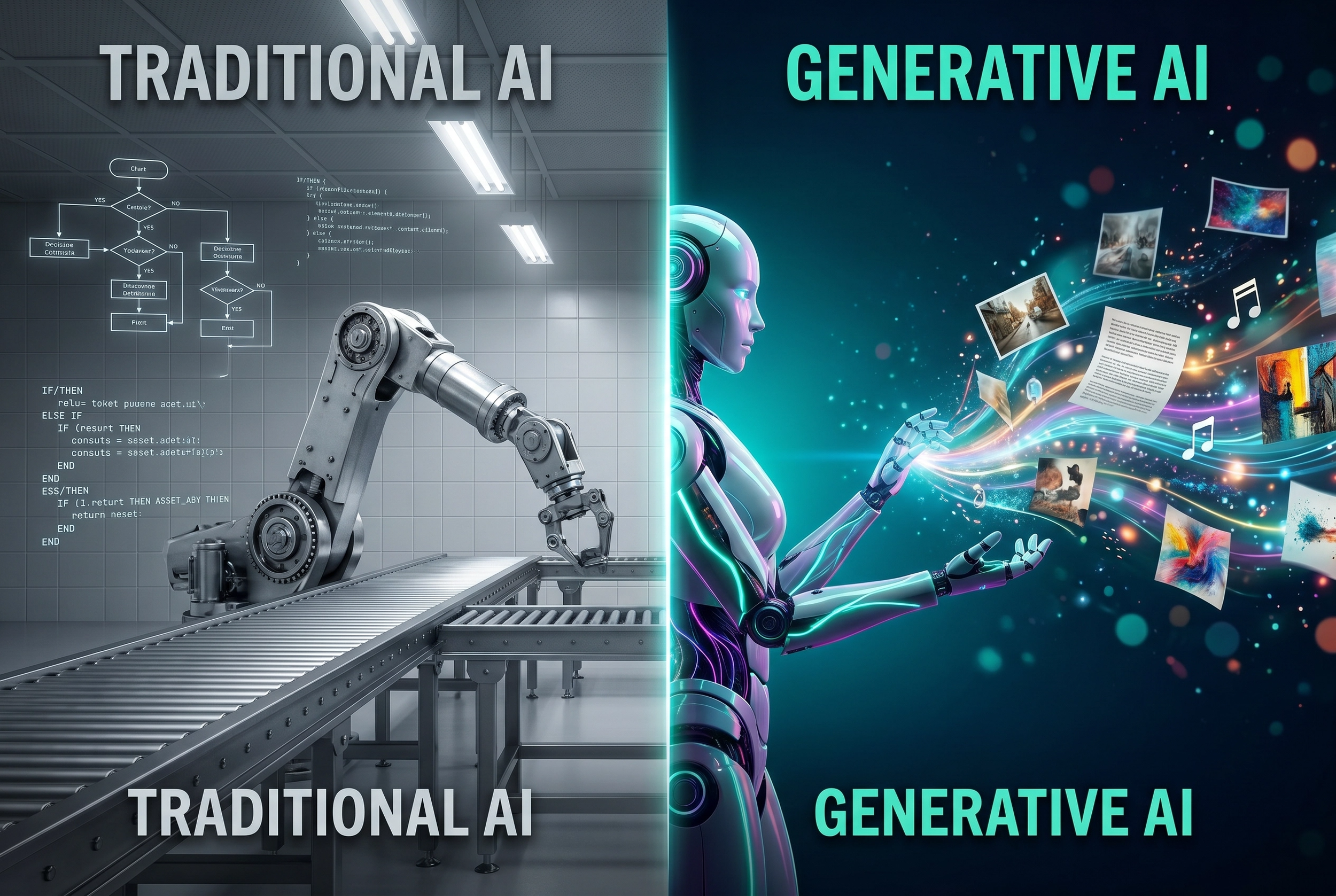
Generative AI vs. Traditional AI: What’s the Difference?
Traditional AI and generative AI are related, but they do different things. This article explains how traditional AI analyzes, predicts, and classifies, while generative AI creates text, images, code, audio, and more.
What AI Can Do: The Real Capabilities Behind the Hype
AI is powerful, but it’s not omniscient, consistent, or accountable. This article breaks down the real limitations of AI, including where it fails, why it hallucinates, and what it can’t reliably do.
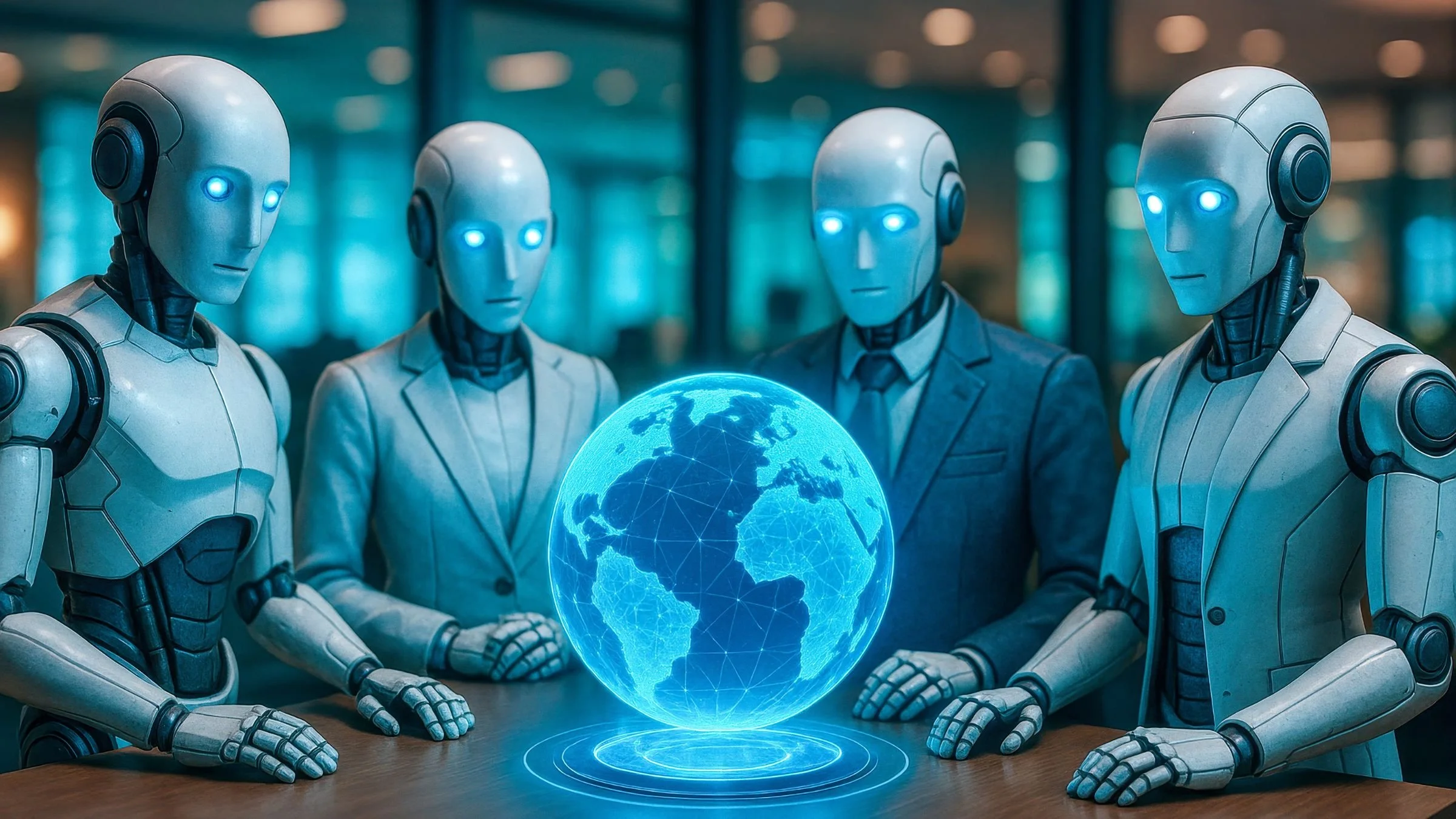
Is AI Taking Over the World? Dispelling the Common Myths & Misconceptions About AI
AI fears spread fast because they’re entertaining and because the tech is genuinely powerful. This article separates real AI risks from movie myths so you can think clearly instead of panicking.