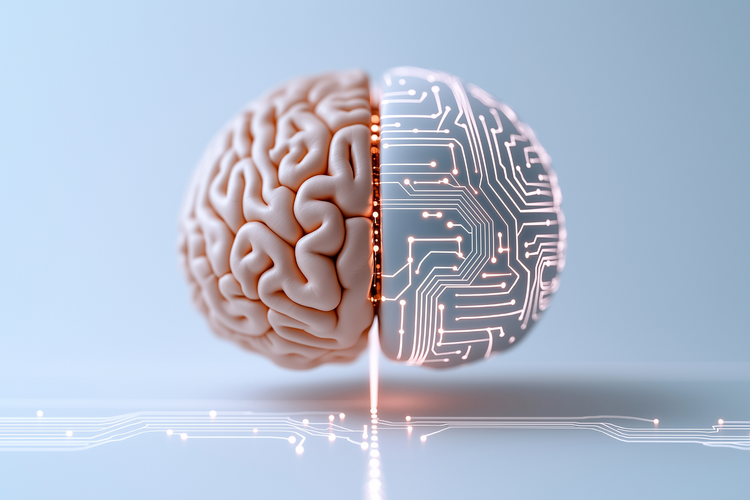
What AI Can Do: The Real Capabilities Behind the Hype
What AI Can Do: The Real Capabilities Behind the Hype
AI can analyze, summarize, generate, predict, recommend, automate, and recognize patterns at scale, but understanding what it can actually do is the key to using it well.

Optional image caption goes here.
Key Takeaways
- AI is especially strong at pattern recognition, prediction, summarization, content generation, data analysis, automation, and personalization.
- Today's AI does not think like a human, but it can complete many tasks that usually require human effort or decision support.
- AI is most useful when the task has clear inputs, enough context, and a defined goal.
- Understanding AI's real capabilities helps you use it practically without overhyping it or underestimating it.
Artificial intelligence is surrounded by extremes.
Some people describe AI as if it can solve every problem, replace every job, and transform every industry overnight. Others dismiss it as overhyped software that generates polished but unreliable answers.
Both views miss the point.
AI is neither magic nor meaningless. It is a powerful category of technology that can perform certain tasks extremely well, especially when those tasks involve data, patterns, language, prediction, repetition, generation, or scale.
The simplest way to understand what AI can do is this: AI can learn patterns from data and use those patterns to generate outputs, make predictions, classify information, recommend options, automate tasks, and support decisions.
That is a broad set of capabilities. It is also not the same as human understanding.
AI does not need consciousness, emotion, or human judgment to be useful. It can still help people write faster, analyze more information, organize messy inputs, summarize documents, identify trends, personalize experiences, detect risks, and automate repetitive work.
Understanding what AI can actually do helps you use it more effectively. It also helps you avoid two common mistakes: overtrusting AI because it sounds impressive, and underusing AI because you assume it is all hype.
The real advantage comes from knowing where AI is strong, where it is limited, and how to apply it with human judgment.
Why Understanding AI Capabilities Matters
Understanding AI capabilities matters because AI is becoming part of everyday tools, workplace software, education platforms, healthcare systems, financial services, search engines, creative apps, and business operations.
If you do not understand what AI can do, it becomes harder to evaluate tools, spot useful opportunities, question bad claims, or decide when AI belongs in a workflow.
AI is already being used to:
- Draft emails and documents
- Summarize meetings and files
- Recommend products and content
- Detect fraud
- Analyze customer behavior
- Generate images and videos
- Translate language
- Assist with coding
- Personalize learning
- Forecast demand
- Support medical imaging
- Automate customer support
- Organize knowledge
- Improve search results
These are not futuristic examples. They are current, practical uses of AI.
But AI capabilities are not unlimited. The fact that AI can generate a response does not mean the response is true. The fact that AI can recommend a decision does not mean the decision is fair. The fact that AI can automate a task does not mean it should be automated without oversight.
That is why the goal is not to believe every AI claim. The goal is to understand the real capabilities behind the hype.
AI is not powerful because it thinks like a human. It is powerful because it can process patterns, information, and tasks at a scale humans cannot match manually.
AI Can Recognize Patterns
Pattern recognition is one of AI's core strengths.
AI systems can analyze large amounts of information and identify patterns that may be difficult, time-consuming, or impossible for humans to detect manually.
This can include patterns in:
- Text
- Images
- Audio
- Video
- Numbers
- Transactions
- Customer behavior
- Medical scans
- Website activity
- Product usage
- Traffic data
- Sensor readings
- Business records
For example, a fraud detection system can identify unusual transaction patterns that may signal suspicious activity. A healthcare AI model can help detect patterns in medical images. A streaming platform can recognize viewing patterns and recommend shows. A hiring platform may analyze patterns in resumes or applications, although this must be handled carefully because bias and fairness risks are real.
AI pattern recognition works especially well when there is enough relevant data and a clear task.
A system trained on many examples of fraudulent and non-fraudulent transactions can learn signals associated with risk. A system trained on many labeled images can learn visual features associated with certain objects. A language model trained on large amounts of text can learn patterns in how words, instructions, concepts, and formats relate to each other.
This does not mean AI understands the pattern the way a human would.
It means the system can detect statistical relationships and use them to produce useful outputs.
That is one of the reasons AI can be so effective. It can process more examples than a person could review manually and find patterns at a scale humans cannot match.
AI Can Make Predictions
AI is widely used for prediction.
A prediction is not a guarantee. It is an estimate based on patterns in data.
AI systems can predict things like:
- What product a customer may buy
- Which email may be spam
- Whether a transaction may be fraudulent
- How long a delivery may take
- What route may be fastest
- Which students may need extra support
- Which customers may cancel a subscription
- How much inventory a store may need
- What content a user may watch next
- What financial risks may be emerging
Prediction is one of the reasons AI is valuable in business. Companies use AI to forecast demand, identify risk, personalize outreach, manage inventory, detect churn, optimize pricing, and improve planning.
It is also common in daily life.
When Google Maps estimates your arrival time, AI is helping predict travel conditions. When Netflix recommends a show, it is predicting what you might watch. When your bank flags a transaction, it is predicting whether that activity looks suspicious. When your email sorts messages, it is predicting what belongs in your inbox.
The strength of AI prediction depends on the quality of the data, the relevance of the model, and how stable the situation is.
AI can be very useful when past patterns are meaningful. It can struggle when conditions change, data is incomplete, or the future does not resemble the past.
That is why prediction should support judgment, not replace it.
AI Can Generate Text, Images, Code, and More
Generative AI is one of the most visible AI capabilities today.
Generative AI can create new outputs, including:
- Text
- Images
- Code
- Audio
- Video
- Music
- Summaries
- Designs
- Outlines
- Presentations
- Scripts
- Product descriptions
- Social posts
- Emails
- Reports
Tools like ChatGPT, Claude, Gemini, Midjourney, DALL-E, Adobe Firefly, Runway, and others have made generative AI widely accessible.
A user can ask for a blog outline, email draft, product description, image concept, code snippet, study guide, business plan, or slide structure and receive a usable starting point quickly.
This is valuable because it reduces the friction of starting.
Many people do not struggle because they have no ideas. They struggle because the first draft, first structure, or first version takes time. AI can help create a starting point that humans can edit, refine, fact-check, and improve.
But generation is not the same as truth or originality.
AI generates based on learned patterns. It can produce strong drafts, but it can also produce generic language, inaccurate claims, weak reasoning, or content that sounds better than it is.
The best use of generative AI is not to treat the output as final. It is to use AI as a drafting, brainstorming, editing, and production assistant, then apply human judgment.
AI can help create faster. Humans still decide what is accurate, useful, relevant, ethical, and worth publishing.
AI Can Summarize and Organize Information
AI is especially useful for summarizing and organizing information.
This is one of its most practical capabilities for work, school, research, and daily life.
AI can summarize:
- Articles
- Reports
- Meeting notes
- Transcripts
- Emails
- PDFs
- Research papers
- Customer feedback
- Legal documents
- Policies
- Long conversations
- Project updates
- Survey responses
It can also organize messy information into clearer formats, such as:
- Bullet points
- Tables
- Timelines
- Action plans
- Checklists
- FAQs
- Briefs
- Outlines
- Categories
- Summaries by theme
- Pros and cons
- Decision matrices
This capability matters because people are overwhelmed by information. Most professionals do not suffer from a lack of content. They suffer from too much content and not enough time to process it.
AI can help reduce that burden.
For example, AI can turn a long meeting transcript into action items, decisions, open questions, and owners. It can summarize a dense report into key findings. It can categorize customer feedback by theme. It can turn scattered notes into a project plan.
However, AI summaries should be reviewed.
The model may miss important nuance, overemphasize the wrong point, misunderstand technical details, or omit something critical. For low-stakes tasks, this may not matter much. For legal, medical, financial, academic, or strategic work, verification matters.
AI can help you process information faster. It should not be the only layer of review when the details matter.
AI Can Analyze Data and Find Insights
AI can help analyze data and identify insights.
This does not mean AI automatically replaces data analysts, researchers, or subject matter experts. It means AI can support analysis by helping users find patterns, summarize trends, compare information, generate hypotheses, and explain results.
AI can assist with:
- Identifying trends
- Comparing data points
- Finding outliers
- Categorizing feedback
- Summarizing survey results
- Explaining charts
- Generating formulas
- Creating reports
- Drafting insights
- Cleaning messy data
- Grouping similar responses
- Forecasting future outcomes
- Turning raw data into readable summaries
For example, a marketing team might use AI to analyze campaign performance and identify which channels are driving better engagement. A recruiter might use AI to summarize candidate pipeline trends. A store owner might use AI to review sales patterns and identify slow-moving products. A teacher might use AI to review student performance patterns and identify where a class needs more support.
AI is particularly helpful for people who are not data experts but still need to understand information.
It can translate data into plain English. It can help users ask better questions. It can suggest where to look next.
But AI analysis depends heavily on the quality of the input. If the data is messy, incomplete, biased, or poorly structured, the insights may be weak or misleading. AI can also misread charts, misunderstand fields, or overstate conclusions.
The safest approach is to use AI as an analysis assistant, not an unquestioned authority.
AI can help find the signal. Humans need to confirm what the signal means.
AI Can Automate Repetitive Tasks
AI can automate repetitive, time-consuming, and structured tasks.
This is one of the most valuable capabilities for businesses and professionals because much of modern work is filled with repeatable information tasks.
AI can help automate:
- Email drafting
- Data entry
- Document classification
- Meeting summaries
- Customer support responses
- Report generation
- Resume screening support
- Invoice processing
- Research summaries
- Social media scheduling
- Lead qualification
- CRM updates
- Ticket routing
- File organization
- Knowledge base responses
Automation does not always mean removing humans entirely. In many cases, the best workflow is human-in-the-loop automation, where AI completes the repetitive first pass and a person reviews, edits, approves, or escalates.
For example, an AI tool may draft a customer support response, but a human agent reviews it before sending. AI may summarize a contract, but a lawyer verifies the interpretation. AI may identify possible duplicate records, but an operations person confirms the merge.
This kind of automation can save time without sacrificing accountability.
AI automation is most useful when the task is frequent, rule-guided, low-to-medium risk, and easy to review. It becomes riskier when the task involves high-stakes decisions, sensitive personal data, ethical trade-offs, or complex human judgment.
The goal is not to automate everything. The goal is to automate the right things.
AI Can Personalize Experiences
AI is widely used for personalization.
Personalization means tailoring content, recommendations, messages, products, learning experiences, or services to a specific user based on data and behavior.
You see this in:
- Shopping recommendations
- Streaming suggestions
- Social media feeds
- Search results
- Ads
- Email marketing
- Learning apps
- Fitness apps
- News feeds
- Product recommendations
- Travel suggestions
- Financial tools
AI personalization works by analyzing user behavior and predicting what is likely to be relevant or engaging.
A retailer may recommend products based on what you viewed or bought. A learning app may adjust lessons based on your performance. A fitness app may suggest workouts based on your goals and activity. A streaming platform may recommend content based on your watch history.
Personalization can be helpful because it reduces friction. It can surface relevant options faster and make digital experiences feel more useful.
But personalization can also shape behavior.
The same systems that recommend helpful content can also narrow what you see, reinforce existing preferences, or optimize for engagement instead of quality. Social media feeds are one of the clearest examples. The algorithm may learn what keeps your attention, but that is not always the same as what is accurate, healthy, or important.
Personalization is powerful because it influences choices.
Understanding that influence helps you use AI-powered platforms more intentionally.
AI Can Understand and Process Language
Modern AI is especially strong at processing language.
Natural language processing, or NLP, allows AI systems to work with human language in written or spoken form. Large language models have expanded this capability dramatically by making AI tools better at generating, transforming, summarizing, and analyzing text.
AI can help with language-based tasks like:
- Answering questions
- Summarizing text
- Translating languages
- Rewriting content
- Drafting emails
- Extracting key points
- Analyzing sentiment
- Classifying documents
- Explaining complex topics
- Creating outlines
- Generating reports
- Writing code
- Turning notes into polished content
This is why AI is so useful for knowledge work.
A large percentage of professional work happens through language: emails, documents, meetings, reports, proposals, job descriptions, policies, presentations, instructions, research, and feedback. AI can help process and produce those language-heavy outputs faster.
But again, language fluency is not the same as understanding.
AI can produce a strong-sounding answer without fully understanding the topic. It can summarize a document but miss context. It can rewrite text but change meaning. It can answer a question but include inaccurate information.
Language is one of AI's strongest capabilities, but it still requires review.
The better the prompt, context, and source material, the better the output tends to be.
AI Can Support Decision-Making
AI can support decision-making by organizing information, identifying patterns, comparing options, forecasting outcomes, and surfacing risks.
It can help people think through decisions by answering questions like:
- What are the main options?
- What are the pros and cons?
- What risks should I consider?
- What data matters most?
- What patterns are showing up?
- What assumptions am I making?
- What are possible next steps?
- What trade-offs are involved?
This can be useful in business strategy, hiring, marketing, finance, operations, education, healthcare, and personal planning.
For example, AI can help a manager compare candidates against role requirements, but the hiring decision should remain human-led. AI can help a business owner compare pricing strategies, but the owner still needs to consider brand, customers, margins, and market conditions. AI can help a student choose a study plan, but the student still needs to evaluate what works for them.
AI is strongest as a decision-support tool.
It can expand options, structure thinking, and highlight patterns. It can help people avoid missing obvious considerations. It can reduce the time spent organizing information before a decision.
But AI should not be treated as the decision-maker in high-stakes situations.
Humans need to define the goal, understand the context, evaluate the trade-offs, consider ethics, and take responsibility for the outcome.
AI Can Help People Learn Faster
AI can be a powerful learning tool.
It can explain topics in simple language, create study plans, generate practice questions, summarize reading material, translate concepts, compare ideas, and adjust explanations based on the learner's level.
AI can help with learning by:
- Explaining difficult concepts
- Creating examples
- Generating quizzes
- Summarizing notes
- Translating technical language
- Building study schedules
- Role-playing practice conversations
- Giving feedback on writing
- Breaking large topics into smaller lessons
- Creating personalized learning paths
For example, a student can ask AI to explain photosynthesis at a middle school level, then at a college level. A professional can ask AI to build a 30-day plan for learning Excel, prompt writing, public speaking, or basic Python. A language learner can practice conversation and ask for corrections.
This kind of personalized support is valuable because people learn differently. AI can make learning more flexible and accessible.
However, learners still need to verify information and avoid using AI as a shortcut that replaces thinking. If AI simply gives answers without the learner engaging with the material, learning becomes shallow.
AI works best as a tutor, explainer, practice partner, and study assistant. It should support learning, not replace the effort required to understand.
Where AI Works Best
AI works best when the task is clear, the context is strong, and the output can be reviewed.
It is especially useful for tasks that involve:
- Large amounts of information
- Repetitive processes
- Pattern recognition
- Drafting and brainstorming
- Classification
- Summarization
- Translation
- Prediction
- Personalization
- Routine decision support
- Structured workflows
AI tends to be less reliable when tasks require deep emotional intelligence, moral judgment, sensitive decisions, real-world accountability, or highly specific expertise without enough context.
This does not mean AI cannot help in those areas. It means AI should be used more carefully.
For example, AI can help draft a difficult message, but a human should decide whether the tone is appropriate. AI can summarize a legal document, but a lawyer should verify the meaning. AI can suggest medical questions to ask a doctor, but it should not replace medical care.
The best AI use cases combine AI's speed and scale with human judgment.
That combination is where AI becomes most valuable.
What AI Capabilities Mean for You
AI capabilities matter because they affect how people work, learn, create, and make decisions.
For professionals, AI can reduce repetitive work, speed up drafting, help analyze information, improve communication, and support better planning.
For students, AI can explain concepts, create study tools, summarize material, and provide personalized practice.
For creators, AI can help generate ideas, create drafts, edit content, design visuals, and repurpose work.
For business owners, AI can support marketing, sales, customer service, operations, research, and product development.
For everyday users, AI can help with planning, budgeting, travel, shopping, learning, writing, and organizing life.
The most important skill is knowing how to match AI to the right task.
You do not need to use AI for everything. You need to understand where it helps, where it struggles, and how to guide it.
That means learning how to write clear prompts, provide context, verify outputs, protect sensitive information, and keep human judgment involved.
AI is most useful when you treat it as a capable assistant, not an unquestionable authority.
Final Takeaway
AI can do a lot.
It can recognize patterns, make predictions, generate text and images, summarize information, analyze data, automate repetitive tasks, personalize experiences, process language, support decisions, and help people learn faster.
These capabilities are already changing work, education, business, creativity, and daily life.
But AI's strengths are not the same as human intelligence. AI does not need to think, feel, or understand like a person to be useful. It works by learning patterns from data and applying those patterns to new inputs.
That makes AI powerful.
It also means AI needs direction, context, verification, and oversight.
The real value of AI comes from understanding what it can actually do and using those capabilities responsibly. Not every task needs AI. Not every AI output should be trusted. But when the task fits, AI can help people work faster, think more clearly, organize information, generate ideas, and do more with less friction.
The hype will keep moving. The real advantage is learning how to use the capabilities underneath it.
FAQ
What can AI do?
AI can recognize patterns, make predictions, generate content, summarize information, analyze data, automate repetitive tasks, personalize experiences, process language, support decisions, and help people learn faster.
What is AI best at?
AI is best at tasks involving large amounts of data, pattern recognition, repetition, prediction, summarization, classification, generation, and structured workflows. It performs especially well when the task is clear and the output can be reviewed.
Can AI create content?
Yes. Generative AI can create text, images, code, audio, video, summaries, outlines, and designs. However, AI-generated content should still be reviewed for accuracy, originality, tone, and quality.
Can AI make decisions?
AI can support decision-making by organizing information, identifying patterns, comparing options, and surfacing risks. However, humans should remain responsible for important decisions, especially in high-stakes areas like healthcare, hiring, finance, law, and safety.
Can AI understand language?
AI can process and generate language very effectively, but it does not understand meaning the way humans do. It identifies patterns in text and produces responses based on training data, prompts, and context.
How should beginners think about AI capabilities?
Beginners should think of AI as a powerful assistant for pattern-based tasks, drafting, summarizing, analyzing, predicting, organizing, and automating. It is useful, but it still needs human guidance, verification, and judgment.