AI and Creative Labor: Artists, Writers, Voice Actors, and the Fight Over Training Data
AI and Creative Labor: Artists, Writers, Voice Actors, and the Fight Over Training Data
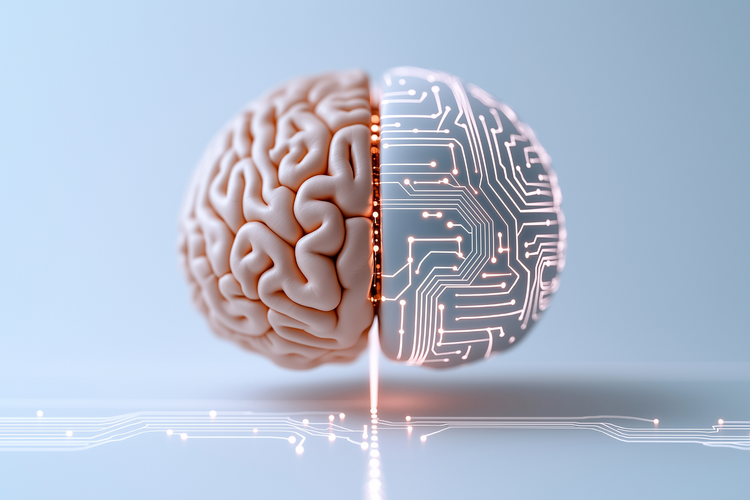
Generative AI did not appear out of a glittering cloud of math. It was trained on human work: writing, art, music, code, images, performances, voices, videos, and years of creative labor. This guide explains why artists, writers, voice actors, musicians, designers, and other creative workers are fighting over training data, consent, compensation, attribution, style imitation, synthetic media, and the future value of human creativity.

What You'll Learn
By the end of this guide
Quick Answer
Why are creators fighting AI training data?
Creators are fighting AI training data because many generative AI systems were built using massive amounts of human-created work, often without clear consent, attribution, compensation, or an easy way to opt out.
Artists worry their work was used to train image generators that can imitate their style. Writers worry their books, articles, scripts, blogs, and journalism helped train systems that now generate competing text. Voice actors worry their voices can be cloned or replaced. Musicians worry about synthetic songs, voice imitation, and training on recordings. Designers and commercial creatives worry that clients will use AI to reduce budgets, flatten skill value, or create derivative work without hiring professionals.
The fight is not simply “artists hate AI.” Many creatives use AI. The fight is about power: who gets to use whose work, who gets paid, who gets credited, who controls likeness and style, and who absorbs the economic damage when creative labor becomes training material for tools that compete against it.
Why This Fight Exists
Generative AI models require enormous amounts of training data. For creative AI systems, much of the value comes from learning patterns in human-made work: prose, illustration, photography, animation, music, voice, acting, design, code, scripts, video, and more.
Creators argue that their work is not just “data.” It is labor. It is training, practice, lived experience, cultural context, professional skill, personal style, and economic value. When AI companies ingest that work at scale and then sell tools that generate new outputs, creators ask a reasonable question: why is our labor treated as raw material while someone else gets the platform valuation?
AI companies often argue that training models is transformative, that large-scale learning is different from copying, that innovation requires broad access to data, and that AI tools can help creators rather than replace them. Creators respond that “transformative” should not mean “we transformed your livelihood into a subscription product.” The room gets tense. Understandably.
What Training Data Means for Creative Work
Training data is the material used to teach AI models patterns. For creative AI, that can include images, captions, books, articles, scripts, code, songs, recordings, videos, performances, design files, voice samples, and other human-made work.
The AI model may not store every training example like a normal database. It learns statistical relationships from the data. But that does not eliminate the ethical and labor issue. A model can still learn from a person’s style, genre, patterns, voice, phrasing, composition, or creative decisions, then generate output that competes in the same market.
This is why the debate is bigger than whether a model “copied” one work exactly. The question is whether creative workers should have control over large-scale use of their work, especially when that use creates commercial products that may reduce demand for the people whose work made the system useful.
Plain English: Training data is not just fuel. For creative AI, it is often unpaid human craft converted into machine capability.
AI and Creative Labor Risk Table
Creative labor risk looks different depending on the medium, market, and how AI is used.
| Creative Group | Main AI Risk | Why It Matters | Fairer Practice |
|---|---|---|---|
| Artists & illustrators | Style imitation, dataset scraping, market substitution | AI can generate “in the style of” work that competes with living artists | Consent, opt-outs, licensing, no style exploitation, attribution |
| Writers | Training on books, articles, scripts, journalism, blogs, or professional writing | AI can produce competing text without crediting the writing labor behind it | Licensed corpora, attribution systems, publisher agreements, usage limits |
| Voice actors | Voice cloning and synthetic performance replacement | Voices are personal, biometric, expressive, and economically valuable | Explicit consent, usage limits, residuals, clone disclosure, contract protections |
| Musicians | Training on recordings, synthetic songs, voice imitation, style mimicry | AI can imitate sound, genre, vocals, and production patterns | Licensing, performer consent, metadata, royalty models, anti-impersonation rules |
| Actors & performers | Digital replicas, synthetic likeness, background replacement, unauthorized reuse | Image, likeness, movement, voice, and performance can be reused without fair control | Clear consent, time limits, compensation, role-specific contracts |
| Designers & commercial creatives | Budget compression, derivative outputs, client misuse, devaluation | Clients may expect faster, cheaper output while undervaluing strategy and craft | AI usage clauses, process transparency, premium human direction, rights review |
| Photographers | Training on images, synthetic stock, likeness misuse, fake editorial imagery | AI can replace stock demand, mimic aesthetics, or create misleading images | Licensing, provenance, disclosure, model releases, synthetic media labels |
How AI Affects Different Creative Workers
Visual Art
Artists and illustrators are fighting style extraction
Image generators can produce polished visuals quickly, but many artists argue those systems learned from their work without permission.
Visual artists were among the first creative groups to push back hard against generative AI because image models can produce work that resembles specific styles, genres, portfolios, and artistic communities.
The concern is not that AI makes images. Artists have always used tools. The concern is that models may be trained on artists’ work without permission, then used by clients to generate similar output without hiring or crediting the original artists. That is not creative democratization to the people whose rent depends on commission work. That is “thanks for the training data, now compete with the blender we made from it.”
Artist concerns include
- Training datasets containing artwork without permission
- Prompts asking for work in a living artist’s style
- Clients replacing commissions with AI-generated alternatives
- Difficulty proving which work was used in training
- Loss of attribution and discoverability
- Flooding markets with cheap derivative imagery
Writing
Writers are fighting over books, articles, scripts, and voice
Language models are trained on text, which means writers are central to the value of generative AI.
Writers are affected because language models depend on text. That text may include books, articles, scripts, journalism, web pages, essays, fan fiction, academic writing, technical documentation, marketing copy, and other written work.
Writers worry that AI systems can learn from their labor, reproduce their patterns, summarize their work, generate competing content, and reduce demand for human writing. The concern is especially sharp for journalism, publishing, screenwriting, copywriting, technical writing, translation, and content production.
Writer concerns include
- Books and articles used without consent
- AI-generated summaries reducing traffic to original work
- Clients replacing writers with AI-generated drafts
- Style imitation or author-like outputs
- Search and platform changes that reduce discovery
- Pressure to produce more work faster for less money
Key point: Writing is not just content. It is reporting, judgment, taste, research, structure, lived experience, and accountability. AI can generate text. That does not mean it has done the work.
Voice
Voice actors face cloning, impersonation, and synthetic replacement
AI voice tools can clone, simulate, or generate performances, which creates major consent and labor issues.
Voice actors face a uniquely personal version of the AI labor problem because a voice is both creative performance and biometric identity. A synthetic voice can imitate tone, accent, rhythm, age, character, emotion, and delivery.
That raises serious questions: who owns a voice clone? Can a client use old recordings to create future performances? Can a performer consent to one project without consenting to endless reuse? Should synthetic voice work carry residuals? What happens when a performer’s voice is used in content they would never have agreed to?
Voice actor concerns include
- Cloning without explicit permission
- Contracts that quietly grant broad synthetic rights
- Replacement of entry-level voice work
- Use of voice clones in unwanted or harmful content
- No residuals or usage limits
- Difficulty detecting unauthorized synthetic voice use
Voice rule: A voice is not clip art. It is identity, performance, labor, and reputation wrapped in sound.
Music
Musicians are dealing with synthetic songs, voice imitation, and training disputes
AI music tools can generate compositions, vocals, lyrics, and soundalikes that challenge existing rights and revenue models.
AI music systems can generate songs, lyrics, melodies, beats, vocal performances, and production styles. That creates complicated questions around copyright, performer rights, publicity rights, licensing, sampling, imitation, and platform enforcement.
Musicians are not only worried about famous artists being cloned. They are also worried about background music markets, sync licensing, demo work, session work, composition, jingle creation, stock audio, and lower-budget music production being automated or devalued.
Musician concerns include
- Training on recordings without consent
- Synthetic vocals resembling real performers
- AI-generated music competing in stock and licensing markets
- Unclear ownership of AI-generated songs
- Difficulty detecting imitation or training influence
- Pressure to accept lower fees because AI can generate drafts quickly
Commercial Creative
Designers and commercial creatives face budget compression
AI can accelerate creative workflows, but clients may use it to undervalue strategy, taste, craft, and direction.
Commercial creatives may use AI productively for mood boards, concept exploration, copy variations, prototyping, storyboarding, research, and production support. But they also face clients who assume AI means creative work should be faster, cheaper, and less strategic.
This is one of the quieter AI labor risks: the work does not disappear overnight. It gets compressed. Timelines shrink. Budgets fall. Expectations rise. The creative professional becomes a human cleanup crew for machine-generated slop, but with worse margins. A glamorous future, obviously.
Commercial creative concerns include
- Clients requesting AI-generated work without rights review
- Reduced budgets for design, copy, illustration, and production
- Confusion over ownership and licensing of AI-assisted outputs
- Pressure to deliver more concepts faster
- Devaluation of taste, judgment, and creative direction
- Risk of using outputs trained on protected or disputed material
Performance
Actors and performers are fighting digital replica rights
AI can create synthetic likenesses, background performers, digital doubles, and reused performances, raising serious consent and compensation questions.
For performers, AI raises questions about likeness, movement, voice, facial expression, body scans, digital doubles, and synthetic performances. A scan captured for one project could potentially be reused in another context unless contracts clearly limit use.
The central issue is control. Performers need to know when their likeness is captured, how it will be used, how long it can be used, whether it can be modified, whether it can be used after death, whether it can appear in new content, and how they will be paid.
Performer concerns include
- Digital body or face scans reused beyond the original project
- Background performers replaced by synthetic extras
- AI-generated performances without new compensation
- Use of likeness in contexts performers would reject
- Contracts granting broad rights without clear explanation
- Difficulty tracking downstream reuse
The Style Imitation Problem
Style imitation is one of the most emotionally charged parts of the AI creative labor debate. People may argue that style itself cannot be owned in the same way a specific artwork can be. But creators argue that their style is not random decoration. It is the result of years of practice, experimentation, cultural influence, professional development, and market recognition.
When users ask AI to create work “in the style of” a living artist, writer, musician, or performer, the output may not copy a specific work, but it can still exploit the creator’s market identity. This matters because style is often how creative professionals get hired.
The legal questions around style can be complicated. The ethical question is easier to understand: if a client wants a living artist’s recognizable style, why not hire that artist?
Creative labor rule: Inspiration is part of art. Industrialized style extraction is something else. The difference is scale, consent, market impact, and power.
Synthetic Media, Deepfakes, and the Authenticity Problem
Generative AI can create synthetic images, voices, videos, music, avatars, and performances. Some of this is useful. Synthetic media can support accessibility, translation, dubbing, prototyping, education, entertainment, and creative experimentation.
But synthetic media also creates risks: impersonation, fake endorsements, nonconsensual likeness use, political manipulation, fake evidence, reputational harm, and confusion about what is real. For creative workers, synthetic media can also blur authorship and performance rights.
Disclosure matters. Provenance matters. Consent matters. A synthetic voice or likeness should not be passed off as a real person. AI-generated content should not quietly replace human performance when identity, trust, or rights are involved.
The Labor Market Impact: Replacement, Compression, and New Expectations
The impact of AI on creative labor will not look the same for everyone. Some creative workers will use AI to work faster, pitch better, prototype more, and expand services. Others may lose work as clients automate drafts, stock assets, narration, background design, basic copy, concept art, editing, translation, or production support.
The most immediate risk may not be total replacement. It may be compression. Fewer hours. Smaller budgets. Faster deadlines. More revisions. Less credit. Lower rates. More pressure to deliver “AI-assisted” work without sharing the savings or protecting rights.
Creative professionals should not ignore AI. But “adapt or disappear” is a lazy slogan when the underlying issue is market power. The question is not whether creatives should learn tools. Many will. The question is whether companies can build tools on creative labor, sell them back to the market, and leave the people who created the underlying value fighting over scraps in the comments section.
What This Means for Businesses Using AI-Generated Creative Work
Businesses using AI-generated creative assets need to think beyond speed and cost. The legal and ethical risks can include unclear ownership, training data disputes, style imitation, likeness misuse, brand trust issues, copyright claims, contractual conflicts, and reputational blowback.
If a company uses AI to generate ad campaigns, product images, voiceovers, music, social content, illustrations, or scripts, it should know which tools were used, what rights the tool grants, whether outputs are safe for commercial use, whether the prompt asked for imitation, whether any person’s likeness or voice was involved, and whether the final work needs human review.
The cheap asset can become expensive very quickly if it creates a rights problem. Stunning how “free” works like that.
Practical Framework
The BuildAIQ Fair AI Creative Labor Framework
Use this framework to evaluate whether an AI creative workflow respects human creators, performers, and rights holders instead of treating them like invisible scaffolding for a very shiny machine.
Common Mistakes
What people get wrong about AI and creative labor
Quick Checklist
Before using AI-generated creative work
Ready-to-Use Prompts for Creative Labor Risk Review
Creative rights review prompt
Prompt
Act as a responsible AI and creative rights reviewer. Evaluate this AI-generated creative workflow: [WORKFLOW]. Identify risks related to training data, creator consent, style imitation, copyright, likeness, attribution, compensation, disclosure, and commercial use.
Client AI usage clause prompt
Prompt
Draft a plain-English client contract clause for AI-assisted creative work. Include disclosure, permitted tools, prohibited style imitation, ownership limits, third-party rights, human review, and approval requirements.
Creator consent review prompt
Prompt
Analyze this AI product from a creator consent perspective: [PRODUCT DESCRIPTION]. Consider whether training data, output style, likeness, voice, creative work, or performance rights may require permission, licensing, attribution, opt-out, or compensation.
Voice clone policy prompt
Prompt
Create a voice cloning policy for a company using AI-generated audio. Include explicit consent, scope of use, time limits, compensation, disclosure, prohibited uses, revocation rights, storage, and approval workflow.
AI disclosure prompt
Prompt
Help me write an AI disclosure statement for this creative project: [PROJECT]. Make it clear, concise, and appropriate for clients/audiences. Explain what AI was used for, what humans created or reviewed, and any limitations.
Human creative value prompt
Prompt
Help me explain the value of human creative direction in an AI-assisted workflow. Focus on strategy, taste, cultural judgment, originality, emotional intelligence, audience understanding, ethics, rights review, and final accountability.
Recommended Resource
Download the AI Creative Labor Rights Checklist
Use this placeholder for a free checklist that helps creators, agencies, brands, and businesses review AI-generated creative work for consent, compensation, attribution, style imitation, likeness rights, disclosure, and commercial risk.
Get the Free ChecklistFAQ
Why are artists and writers upset about AI?
Many artists and writers are concerned that their work was used to train AI models without meaningful consent, attribution, or compensation, and that the resulting tools can generate outputs that compete with their labor.
Is AI trained on copyrighted work?
Some AI models may be trained on datasets that include copyrighted work, licensed work, public web content, user-generated content, or other materials. The legal and ethical questions depend on the data source, jurisdiction, use case, and specific model practices.
Is using AI art stealing?
Not every use of AI art is the same. The ethical concerns depend on how the model was trained, whether the prompt imitates a living artist, whether the output is used commercially, whether someone’s likeness or style is exploited, and whether creators had consent or compensation.
Can AI copy an artist’s style?
AI tools can generate outputs that resemble styles, genres, techniques, or visual patterns associated with specific artists or communities. Whether that is legally actionable depends on context, but it can still raise ethical and labor concerns.
Why are voice actors concerned about AI?
Voice actors are concerned because AI can clone or simulate voices, potentially replacing paid performances or using someone’s voice in contexts they did not approve. Voice cloning raises consent, identity, compensation, and reputation concerns.
Can businesses safely use AI-generated creative work?
Businesses can use AI-generated creative work more safely by reviewing tool terms, avoiding living-creator imitation, getting consent for likeness or voice use, documenting workflows, disclosing AI use when appropriate, and using human review before publication.
Should AI companies pay creators for training data?
Many creators argue that AI companies should license work, compensate creators, provide attribution, offer opt-outs, and make training data more transparent. AI companies and policymakers are still debating what fair compensation models should look like.
What is the difference between inspiration and AI style imitation?
Human inspiration usually involves interpretation, context, transformation, and individual judgment. AI style imitation can operate at massive scale, often without consent, and may directly compete with the creator whose style is being requested.
How can creators protect themselves?
Creators can review contract language, avoid granting broad AI rights unintentionally, use licensing terms, document original work, add AI usage clauses to client agreements, monitor unauthorized uses where possible, and stay informed about opt-out tools and legal developments.