What AI Still Can't Do: Understanding Its Real Limitations
What AI Still Can't Do: Understanding Its Real Limitations
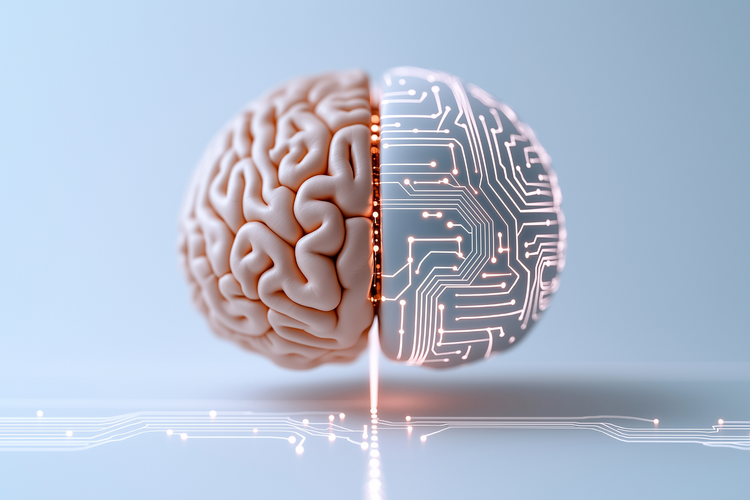
AI can generate, analyze, summarize, and automate at impressive speed, but it still has major limitations in understanding, judgment, emotion, creativity, truth, and real-world context.

Optional image caption goes here.
Key Takeaways
- AI can process patterns and generate useful outputs, but it does not truly understand meaning, context, or the world the way humans do.
- AI does not have consciousness, emotions, lived experience, personal judgment, or a moral compass.
- AI can make mistakes, hallucinate information, reflect bias, and produce confident answers that are incomplete or wrong.
- Understanding AI's limitations helps you use it more effectively, verify its outputs, and keep human judgment involved where it matters.
Artificial intelligence can write articles, summarize documents, generate images, translate languages, analyze data, answer questions, draft emails, recommend products, and automate tasks that used to take people much longer to complete.
That can make AI feel more capable than it really is.
AI is powerful, but it is not human. It does not understand the world the way people do. It does not have consciousness, lived experience, emotion, moral judgment, or personal responsibility. It can produce impressive outputs, but it can also make mistakes, invent information, misunderstand context, reflect bias, and sound confident when it is wrong.
Understanding what AI still cannot do is just as important as understanding what it can do.
This is not about dismissing AI. It is about using it well. The more clearly you understand AI's limitations, the better you can decide when to trust it, when to question it, and when human judgment needs to stay firmly involved.
Why AI Limitations Matter
AI limitations matter because AI is increasingly used in work, education, healthcare, hiring, finance, customer service, media, government, and daily life.
When AI is used for low-stakes tasks, mistakes may be easy to fix. If an AI tool suggests a weak email subject line, you can rewrite it. If it gives you a bland meal plan, you can ignore it. If it summarizes an article poorly, you can reread the source.
But when AI is used in high-stakes settings, its limitations become much more serious.
An AI system involved in hiring can reinforce bias. A medical AI tool can miss context a clinician would notice. A financial model can flag risk incorrectly. A chatbot can give misleading information. A recommendation system can shape what people see, believe, buy, or watch.
The issue is not that AI is useless. The issue is that AI is often useful enough to be trusted too quickly.
That is why AI literacy matters. People need to understand what these systems can do, what they cannot do, and what kind of oversight is necessary.
AI should support human thinking. It should not quietly replace human responsibility.
AI Does Not Truly Understand Meaning
One of the biggest misconceptions about AI is that it understands what it says.
It does not understand meaning the way humans do.
Large language models can generate fluent, helpful, and detailed responses because they have learned patterns in language. They can identify relationships between words, phrases, topics, formats, and instructions. They can predict what kind of response is likely to fit a prompt.
That is different from understanding.
A person understands language through experience, memory, emotion, context, culture, and physical life in the world. Humans know that words are connected to real people, places, objects, consequences, and feelings.
AI does not have that same connection.
It can explain grief without grieving. It can write about leadership without leading anyone. It can describe a place without visiting it. It can discuss fairness without having values. It can produce a sentence that sounds meaningful without experiencing meaning itself.
This distinction is important because AI can sound more capable than it is.
A polished answer can create the impression of understanding. But fluent language is not the same as comprehension. AI can generate the form of an answer without fully grasping the reality behind it.
That is why AI outputs still need human review, especially when accuracy, nuance, or context matters.
AI Still Struggles With Common Sense
AI has improved dramatically, but common sense remains one of its hardest problems.
Common sense is the everyday understanding people use to navigate the world. It includes basic expectations about objects, people, time, cause and effect, social behavior, physical limits, and practical consequences.
Humans build common sense through lived experience. We learn that glass can break, food can spoil, people may be upset even if they say they are fine, and a plan that looks good on paper can fail because of timing, politics, weather, money, or human behavior.
AI does not experience the world directly in that way.
It learns patterns from data, not from living in the world. That means it can sometimes miss things that seem obvious to people. It may misread a situation, give impractical advice, overlook physical constraints, or fail to understand why something is socially inappropriate.
This is especially visible when AI is asked to solve messy real-world problems.
A prompt like "create a plan for launching a product" may produce a polished plan. But the plan may ignore budget limits, internal politics, staffing capacity, customer trust, legal review, market timing, or the fact that people do not behave like clean spreadsheet rows.
AI can help structure a problem. It can generate options. It can surface considerations. But it does not naturally know what will work in the real world unless the right context is provided and a human evaluates the result.
AI Does Not Have Real-World Experience
AI does not have lived experience.
It has never managed a team, cared for a child, lost a job, sat in a tense meeting, negotiated a contract, taught a classroom, built a business, dealt with grief, felt pressure, or made a decision with personal consequences.
This matters because much of human intelligence comes from experience.
People learn not only from information, but from consequences. We remember what happened when a decision went poorly. We adjust after difficult conversations. We develop instincts from repeated exposure to real situations. We learn what people mean when they do not say everything directly.
AI does not have instincts in that human sense.
It can analyze patterns from examples of human experience, but it does not experience those things itself. It can describe what burnout feels like, but it has never been burned out. It can suggest how to manage conflict, but it has never had to rebuild trust with someone. It can generate parenting advice, but it has never had to calm a child at 2 a.m.
This does not mean AI cannot be helpful. It can be useful for drafting, planning, summarizing, brainstorming, and organizing thoughts. But its advice should be filtered through human judgment.
The more personal, complex, emotional, or consequential the situation is, the more important lived experience becomes.
AI Cannot Feel Emotions or Empathy
AI can imitate emotional language. It cannot feel emotion.
When an AI chatbot says, "I'm sorry you're going through that," it is generating a socially appropriate response based on language patterns. It is not feeling concern. It does not care in the human sense. It does not experience sadness, compassion, joy, anger, fear, guilt, or love.
This is one of the clearest differences between AI and human intelligence.
Human emotions are connected to biology, memory, relationships, identity, and experience. Emotions influence how people make decisions, build trust, form relationships, create meaning, and respond to the world.
AI does not have an inner emotional life.
That matters in any situation where empathy is not just language, but responsibility. A therapist, teacher, caregiver, manager, doctor, recruiter, mediator, or friend is not simply producing the right words. They are interpreting emotion, reading context, building trust, and taking responsibility for how their response affects another person.
AI can support emotionally sensitive work. It can help draft a difficult message, organize thoughts, suggest ways to communicate, or provide general information. But it should not be mistaken for a person who understands or cares.
A convincing emotional response is not the same as empathy.
AI Cannot Make Ethical Judgments on Its Own
AI does not have a moral compass.
It can analyze ethical frameworks, compare trade-offs, summarize policies, identify risks, or simulate different perspectives. But it does not have values, conscience, accountability, or responsibility.
Ethical judgment requires more than rule-following.
Humans often make ethical decisions by considering fairness, harm, rights, dignity, duty, relationships, context, and consequences. These decisions are rarely simple. The right answer may depend on values, power dynamics, competing interests, and the people affected.
AI can support this process, but it cannot own it.
This is especially important when AI is used in high-stakes decisions. Hiring, lending, healthcare, education, policing, insurance, legal services, and government benefits all involve decisions that can affect people's lives.
An AI system might rank candidates, flag risk, recommend action, or summarize evidence. But the responsibility for the decision belongs to humans and institutions.
AI should not be used as a way to outsource accountability.
If a company says, "The algorithm made the decision," that is not an ethical answer. People designed the system, selected the data, chose the model, approved the workflow, and deployed the tool. Human responsibility does not disappear because software was involved.
AI Can Generate, But It Does Not Create Like Humans
AI can generate impressive content. It can write essays, produce images, compose music, draft scripts, create logos, design layouts, and generate ideas.
But AI creativity is different from human creativity.
AI creates by learning patterns from existing data and generating new combinations based on those patterns. It can imitate styles, remix ideas, produce variations, and accelerate creative workflows.
Human creativity is shaped by intention, emotion, memory, culture, taste, identity, constraints, and lived experience. People create because they want to express something, solve something, challenge something, explore something, or make something meaningful.
AI does not have desire, purpose, or personal perspective.
That does not mean AI-generated work has no value. AI can be a useful creative tool. It can help brainstorm directions, draft rough concepts, generate alternatives, break creative blocks, and speed up production. Many people use AI effectively as part of a creative process.
But the human role remains important.
Humans decide what is original, relevant, tasteful, meaningful, accurate, ethical, and worth publishing. Humans bring point of view. Humans understand audience, timing, culture, and emotional effect.
AI can help generate options. Humans decide what deserves to exist.
AI Can Be Confident and Still Be Wrong
One of AI's most practical limitations is that it can produce wrong answers with confidence.
This is often called an AI hallucination.
A hallucination happens when an AI system generates information that sounds plausible but is false, unsupported, misleading, or fabricated. It might invent a statistic, misstate a law, summarize a document incorrectly, create fake citations, confuse people or events, or answer a question it does not actually have enough information to answer.
This happens because AI is designed to generate likely outputs, not to guarantee truth.
A language model may produce a sentence that fits the pattern of a good answer, even if the facts are wrong. The response may sound polished, detailed, and authoritative. That can make errors harder to notice.
This is one of the biggest risks for everyday users.
People are more likely to trust information when it is written clearly and confidently. AI can produce that style even when the substance is weak.
The solution is not to avoid AI altogether. The solution is to verify.
For important information, users should check sources, ask for citations, compare against reliable references, and use human expertise. This is especially important for legal, medical, financial, academic, technical, or high-stakes professional work.
AI can help you move faster. It should not replace fact-checking.
AI Depends on Data and Context
AI is only as useful as the data, context, and instructions it has access to.
If the training data is biased, incomplete, outdated, or low quality, the model can produce flawed outputs. If the prompt is vague, the response may be generic. If important context is missing, the AI may fill in gaps incorrectly.
This is why AI can perform well in one situation and poorly in another.
For example, an AI tool may write a decent generic job description. But without knowing the company, level, reporting structure, role priorities, compensation range, location, hiring goals, and team context, it may produce something that looks polished but misses what the role actually needs.
The same is true in strategy, marketing, education, healthcare, finance, and personal advice.
AI does better when it has:
- Clear instructions
- Relevant context
- Reliable source material
- Specific goals
- Defined constraints
- Human review
This is why prompting matters. A better prompt does not make AI truly understand, but it gives the model better direction and reduces unnecessary guessing.
Context is not a bonus. It is part of the work.
AI Struggles Outside Its Training and Instructions
AI systems are strongest when tasks are clearly defined and similar to patterns they have seen before.
They are weaker when situations are unfamiliar, ambiguous, highly contextual, or outside the data and instructions they were trained on.
This is sometimes called brittleness.
An AI system may perform well in controlled conditions but fail when the real world changes. A model trained on one type of data may struggle with another. A tool designed for one workflow may behave unpredictably when used for something else.
For example, a customer service AI may answer common questions well but struggle with unusual cases. A vision model may identify objects accurately in normal lighting but fail with poor image quality. A forecasting model may work during stable market conditions but perform poorly during major disruptions.
This limitation matters because real life is not always predictable.
Humans are often better at adapting to unfamiliar situations because we can combine experience, judgment, intuition, context, and values. AI can help, but it does not automatically know when the situation has changed enough to make its usual patterns unreliable.
That is why human oversight is especially important in edge cases, exceptions, and high-stakes decisions.
AI Cannot Take Responsibility
AI cannot be accountable.
It cannot explain itself in a human moral sense. It cannot apologize with understanding. It cannot repair harm. It cannot accept consequences. It cannot be held responsible for a bad decision in the way a person or organization can.
This is one of the most important limitations in business and society.
If an AI system gives harmful advice, rejects a qualified job candidate, misclassifies a medical scan, flags an innocent transaction, or produces biased output, the responsibility does not belong to the AI. It belongs to the people and organizations that designed, selected, deployed, monitored, or relied on it.
This is why "the AI said so" is not enough.
Human accountability must remain part of AI use.
Organizations need policies, review processes, escalation paths, audits, documentation, and clear ownership. Individuals need to understand when to question AI outputs and when to involve a qualified human.
AI can support decisions, but it should not become a shield against responsibility.
The more powerful AI becomes, the more important accountability becomes.
What These Limitations Mean for You
Understanding AI's limitations helps you use it better.
It helps you avoid two extremes: blindly trusting AI because it sounds intelligent, or dismissing it because it is imperfect.
The better approach is practical and clear-eyed.
Use AI for tasks where it performs well:
- Summarizing information
- Drafting first versions
- Brainstorming ideas
- Organizing notes
- Analyzing patterns
- Creating outlines
- Generating options
- Explaining concepts
- Automating repetitive work
- Supporting research
Use caution when tasks require:
- Current facts
- Legal judgment
- Medical advice
- Financial decisions
- Emotional support
- Ethical trade-offs
- Safety decisions
- Hiring or lending decisions
- Complex human context
- Personal or sensitive information
AI is most useful when people understand both its strengths and its limits.
That means reviewing outputs, providing context, verifying important claims, protecting private information, and keeping human judgment involved where the stakes are high.
The goal is not to avoid AI. The goal is to use it with enough understanding to stay in control.
AI is powerful because it can process patterns at scale. It is limited because patterns are not the same as understanding, judgment, or responsibility.
Final Takeaway
AI can do a lot, but it still cannot do everything.
It cannot truly understand meaning. It does not have common sense in the human sense. It does not have lived experience, emotions, empathy, ethics, consciousness, or accountability. It can generate impressive content, but it does not create from personal intention. It can produce confident answers, but it can still be wrong.
These limitations do not make AI useless.
They make AI something that needs to be used intelligently.
AI is best understood as a powerful support system: fast, scalable, useful, and increasingly capable, but still dependent on data, context, instructions, and human oversight.
The most effective AI users are not the people who trust it blindly. They are the people who know how to guide it, question it, verify it, and decide when human judgment matters more.
Understanding what AI still cannot do is not a reason to fall behind.
It is how you use AI better.
FAQ
What can AI not do?
AI cannot truly understand meaning, feel emotions, have empathy, make ethical judgments on its own, take responsibility, or understand the world through lived experience. It can also make mistakes, hallucinate information, and struggle with context.
Does AI understand what it says?
No. AI can generate language that sounds meaningful, but it does not understand meaning the way humans do. It identifies patterns in data and produces responses based on those patterns.
Can AI feel emotions?
No. AI can imitate emotional language, but it does not feel emotions. It has no consciousness, body, personal experience, or inner emotional life.
Can AI make ethical decisions?
AI can analyze ethical questions or follow programmed rules, but it does not have values, conscience, or moral responsibility. Humans must remain accountable for ethical decisions involving AI.
Why does AI get things wrong?
AI gets things wrong because it relies on patterns in data, not true understanding. It may have missing context, biased data, outdated information, unclear instructions, or weak reasoning on complex tasks.
Should humans still review AI outputs?
Yes. Human review is important, especially for high-stakes tasks involving legal, medical, financial, hiring, education, safety, or ethical decisions. AI can support decision-making, but it should not replace human judgment.