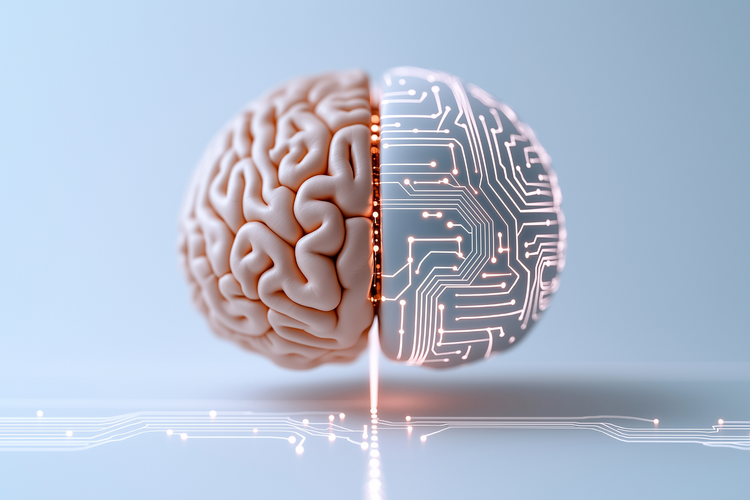
What Are AI Simulations and Synthetic Environments?
What Are AI Simulations and Synthetic Environments?
AI does not always need to learn from the real world directly. Sometimes it learns from a simulated version of the real world, a digital twin, a synthetic dataset, a generated game-like environment, or a virtual lab where an agent can practice decisions before anyone lets it near the expensive machinery. This guide explains what AI simulations and synthetic environments are, how they work, why they matter for robotics, autonomous systems, science, training data, and world models, and where the gap between simulated success and real-world chaos still likes to make a dramatic entrance.

What You'll Learn
By the end of this guide
Quick Answer
What are AI simulations and synthetic environments?
AI simulations are virtual systems that let AI models or agents train, test, and make decisions inside controlled environments before operating in the real world. Synthetic environments are artificially created digital worlds, datasets, scenarios, or simulations designed to mimic, extend, or generate conditions that AI can learn from.
They are used to train robots, autonomous vehicles, game agents, safety systems, industrial digital twins, medical models, scientific AI, and AI agents. Instead of waiting for real-world examples, developers can generate rare events, edge cases, dangerous scenarios, or complex environments on demand.
The plain-language version: simulations are AI’s practice arena. Synthetic environments are the custom-built worlds where the model can fail, learn, retry, and embarrass itself privately before someone gives it access to a warehouse robot.
Why AI Simulations and Synthetic Environments Matter
AI learns from experience. The problem is that real-world experience can be expensive, slow, dangerous, incomplete, biased, private, or simply unavailable. You cannot crash thousands of real cars, break real factory equipment, run risky medical experiments, or let a robot practice dropping glassware in someone’s kitchen until it “figures things out.”
Simulations solve part of that problem by creating controlled environments where AI systems can practice. Synthetic environments take that further by generating scenarios, data, worlds, and conditions that may be hard to collect in the real world.
This matters because the next generation of AI will not only answer questions. It will act. It will operate software, move robots, design products, simulate systems, optimize factories, test scientific hypotheses, and make decisions in complex environments. Those systems need practice grounds.
Core principle: Simulations let AI learn from controlled failure. Real-world failure is expensive. Simulated failure is tuition.
AI Simulation Types Table
AI simulations and synthetic environments are not one thing. They are a family of tools that help models learn, test, and operate across different kinds of worlds.
| Type | What It Means | Used For | Main Risk |
|---|---|---|---|
| Physics simulation | A virtual environment that models movement, force, collisions, lighting, sensors, and materials | Robotics, autonomous vehicles, manufacturing, industrial AI | Physics may not match the real world closely enough |
| Synthetic data | Artificially generated data used to train or test AI systems | Computer vision, healthcare, robotics, fraud detection, rare events | Fake data can replicate bias or miss real complexity |
| Digital twins | Virtual replicas of real systems, assets, buildings, factories, cities, or supply chains | Operations, maintenance, planning, optimization, testing | The twin may become outdated or incomplete |
| World models | AI systems that learn how environments evolve and how actions affect them | Agents, robotics, simulation, planning, video generation | The model may learn a distorted version of reality |
| Generated environments | AI-created interactive worlds or scenarios for agents to explore | Embodied AI, games, training agents, testing behavior | Generated worlds may be unrealistic or unstable |
| Scenario simulation | Controlled “what if” situations used for stress testing | Safety testing, finance, healthcare, logistics, emergency planning | Scenarios can miss unexpected real-world edge cases |
| Agent sandboxes | Contained environments where AI agents can use tools safely | Workflow automation, software agents, security testing | Sandbox behavior may not predict real deployment behavior |
The Main Types of AI Simulations and Synthetic Environments
Definition
AI simulations are virtual practice grounds for models and agents
A simulation lets AI interact with a controlled version of a system, environment, workflow, or world.
An AI simulation is a virtual environment where an AI system can observe, act, make decisions, and receive feedback. The environment might represent a road, warehouse, factory, hospital workflow, financial market, software system, video game, molecule, city, or robot training space.
The point is to let AI practice. A model can try actions, see consequences, learn from mistakes, and repeat many times without the cost or danger of real-world trial and error.
AI simulations can help with
- Training AI agents through repeated practice
- Testing rare or dangerous scenarios
- Generating data when real data is limited
- Evaluating safety before deployment
- Optimizing operations before making physical changes
- Studying systems that are too complex to test manually
Simulation rule: The value of a simulation is not that it is fake. The value is that it lets AI learn from failure without turning reality into the test lab.
Synthetic Worlds
Synthetic environments are generated worlds built for AI training and testing
They can be manually designed, procedurally generated, physics-based, AI-generated, or based on real-world replicas.
A synthetic environment is an artificial setting created for AI systems to learn or be tested. It might look like a video game, a virtual warehouse, a simulated street, a digital factory, a generated 3D world, or a software sandbox.
These environments are especially useful when real-world data is hard to collect. For example, autonomous vehicle systems need to understand rare events like pedestrians stepping into traffic, unusual weather, emergency vehicles, road debris, or strange lighting. Waiting for all of those events to happen naturally is not exactly a business plan. It is a weather-dependent scavenger hunt.
Synthetic environments can include
- Virtual cities for autonomous driving
- Warehouses for robot navigation
- Factory floors for industrial automation
- Homes for domestic robot training
- Generated game-like worlds for agents
- Software sandboxes for AI tool-use testing
Synthetic Data
Synthetic data gives AI examples it may not have enough of in the real world
Artificially generated data can fill gaps, create rare cases, protect privacy, and speed up model training.
Synthetic data is artificially generated data used to train or test AI systems. It can include images, videos, sensor readings, medical records, financial transactions, text, 3D scenes, customer conversations, and edge-case examples.
This is useful when real data is scarce, sensitive, expensive, biased, or incomplete. A hospital may not have enough examples of a rare condition. A robot company may need thousands of labeled images of objects in different lighting conditions. A fraud model may need examples of new attack patterns. Synthetic data can help fill those gaps.
Synthetic data is useful when
- Real data is limited or expensive
- Privacy restricts access to real records
- Rare events are underrepresented
- Manual labeling would be too slow
- Models need edge-case testing
- Simulated environments can generate labeled data automatically
Data rule: Synthetic data is not automatically better data. It is useful data only when it reflects the right patterns, edge cases, and constraints.
Digital Twins
Digital twins let AI test decisions on virtual replicas of real systems
A digital twin is a living model of a real asset, building, process, machine, city, or supply chain.
A digital twin is a virtual representation of a real system. It might model a building, factory, energy grid, hospital, logistics network, aircraft engine, retail store, or city. When connected to real-time data, the twin can help teams monitor operations, simulate changes, predict failures, and test optimizations.
AI makes digital twins more powerful because models can identify patterns, recommend actions, detect anomalies, and predict future states. Instead of testing a factory layout change in the actual factory, teams can test it virtually first.
Digital twins can help with
- Predictive maintenance
- Factory and warehouse optimization
- Energy efficiency modeling
- Building operations and space planning
- Supply chain stress testing
- City planning and traffic simulation
Physical AI
Robotics depends on simulation because the real world is expensive and rude
Robots can practice navigation, grasping, movement, safety, and object interaction inside virtual environments.
Robotics is one of the clearest use cases for AI simulation. Robots need to learn how to move, see, grasp, avoid obstacles, recover from mistakes, and operate safely around humans. Training only in the real world is slow and risky.
Simulation lets robots practice many variations of a task: different objects, lighting, surfaces, layouts, sensor noise, obstacles, and human behavior. This can generate huge amounts of training data while reducing physical wear, safety risk, and cost.
Robotics simulations can train models to
- Navigate warehouses, homes, hospitals, or factories
- Pick up and manipulate objects
- Avoid people and obstacles
- Recover from failed grasps or movement errors
- Use reinforcement learning safely
- Test sensors, cameras, and robot control policies
Robotics rule: A robot that fails in simulation is annoying. A robot that fails in a warehouse can become a very expensive Roomba with liability issues.
Autonomy
Autonomous systems need simulated edge cases before real-world deployment
Self-driving cars, drones, delivery robots, and autonomous machines require extensive scenario testing.
Autonomous systems must operate in unpredictable environments. Roads have weather, pedestrians, construction, emergency vehicles, bad signage, weird shadows, and drivers who appear to have learned traffic laws from a cereal box.
Simulation helps developers test thousands or millions of scenarios that would be impossible or unsafe to collect manually. This is especially useful for edge cases: rare but important situations where mistakes can be costly.
Autonomous system simulations test
- Unusual weather and lighting
- Pedestrian and cyclist behavior
- Sensor failures and noisy inputs
- Construction zones and unusual road layouts
- Emergency maneuvers
- Rare but high-risk scenarios
World Models
World models help AI predict how environments change
A world model learns a representation of an environment and how actions affect future states.
A world model is an AI system that learns how an environment works. It can predict what might happen next, simulate possible actions, and help agents plan before acting. This is important for robotics, games, autonomous systems, video generation, and AI agents that need to understand cause and effect.
World models are a major frontier because they move AI closer to learning through interaction. Instead of only predicting the next word, a system may learn how objects move, how environments respond, and what consequences follow from actions.
World models can help AI
- Predict future states of an environment
- Plan actions before taking them
- Train agents in generated environments
- Understand cause and effect better
- Simulate physical or virtual worlds
- Generate interactive environments from prompts
World model rule: A language model predicts text. A world model tries to predict consequences. That is a much bigger, stranger, and more consequential game.
Science
Scientific AI uses simulations to explore systems too complex to test directly
Simulations can help model molecules, climate, materials, cells, epidemics, physics, and complex systems.
Science has always used simulations: climate models, molecular dynamics, physics models, disease spread models, and engineering simulations. AI can accelerate this work by learning approximations, generating hypotheses, predicting outcomes, and helping researchers search large possibility spaces.
In biology and chemistry, AI simulations may help researchers explore molecules, proteins, drug interactions, materials, and lab experiments. In climate and energy, simulations can help test scenarios before real-world infrastructure decisions are made.
Scientific simulations can support
- Drug discovery and molecular modeling
- Materials design and battery chemistry
- Climate and weather modeling
- Epidemiology and public health planning
- Physics and engineering research
- Lab automation and experiment planning
Testing
Simulations are useful for training, but they are just as important for evaluation
Synthetic environments can test whether AI systems behave safely and reliably across many scenarios.
Simulations are not only for teaching AI what to do. They are also for testing what AI does under pressure. Developers can create scenarios where the system faces unusual inputs, conflicting goals, adversarial conditions, or safety-critical decisions.
This is especially important for AI agents and physical AI systems. A model that works in normal cases may fail in edge cases. Synthetic environments can expose those failures before deployment.
Simulation-based evaluation can test
- Safety under unusual conditions
- Robustness to sensor noise or missing data
- Performance across diverse environments
- Failure recovery behavior
- Tool-use boundaries for AI agents
- Unexpected interaction effects between systems
Evaluation rule: A model that performs well in one polished demo has not proven reliability. It has proven it can survive a beauty pageant.
Reality Gap
The sim-to-real gap is the biggest challenge
AI can perform well in simulation and still fail when moved into the messy real world.
The sim-to-real gap is the difference between performance in a simulated environment and performance in the real world. A robot might grasp objects perfectly in simulation, then struggle when real objects are slightly slippery, oddly shaped, reflective, damaged, or moved by a human who apparently stores chaos in their elbows.
This gap exists because simulations are simplified. They may not capture every material property, lighting condition, sensor artifact, human behavior, mechanical vibration, software delay, or environmental variable.
Ways teams reduce the sim-to-real gap
- Using more realistic physics and sensor models
- Randomizing textures, lighting, object positions, and conditions
- Validating simulation results against real-world performance
- Combining synthetic data with real data
- Testing across many environments
- Continuously updating simulations with real-world feedback
Risks
Synthetic environments can create false confidence if they are poorly designed
A simulation can make AI look ready when it has only learned to win inside an artificial world.
The danger of synthetic environments is not that they are artificial. The danger is that people may forget they are artificial. If a simulation leaves out important real-world complexity, the model may learn brittle behavior that fails when deployed.
Synthetic data can also reinforce bias, create fake diversity, miss rare edge cases, or make models overfit to generated patterns. A beautiful simulation is not automatically a truthful simulation. Sometimes it is just a very confident diorama.
Major risks include
- Simulations that fail to capture real-world complexity
- Synthetic data that reproduces bias or errors
- Models overfitting to artificial environments
- Insufficient real-world validation
- Hidden safety failures in edge cases
- Overclaiming readiness based on simulated performance
Reality rule: Simulated success is not real-world proof. It is a promising rehearsal that still needs opening night.
What AI Simulations Mean for Businesses and Careers
For businesses, AI simulations can reduce cost, speed up testing, improve safety, and help teams make better decisions before committing resources in the real world. This is especially valuable in manufacturing, logistics, robotics, construction, architecture, healthcare, aerospace, retail operations, supply chain planning, energy, and physical product design.
Instead of testing one expensive real-world option, companies can test many synthetic scenarios. A warehouse team can simulate layout changes. A factory can test robot paths. A healthcare team can model patient flow. A retailer can simulate demand patterns. A city can test traffic changes. An AI agent can practice tool use inside a sandbox before touching live systems.
For careers, this creates demand for people who understand simulation design, synthetic data quality, digital twins, AI evaluation, robotics workflows, operations modeling, and domain-specific validation. The future is not only prompt engineers and model builders. It is also simulation designers, synthetic data strategists, AI test environment builders, and people who can tell when the model only looks smart because the fake world was too easy.
Practical Framework
The BuildAIQ AI Simulation Review Framework
Use this framework to evaluate an AI simulation, synthetic environment, digital twin, synthetic dataset, or world model claim.
Ready-to-Use Prompts for Understanding AI Simulations
Simulation explainer prompt
Prompt
Explain this AI simulation use case in beginner-friendly language: [USE CASE]. Cover what is being simulated, what the AI learns, what data is used, what real-world problem it solves, and what validation is needed.
Synthetic environment review prompt
Prompt
Evaluate this synthetic environment: [DESCRIPTION]. Identify what it models well, what real-world complexity may be missing, what edge cases should be added, and how to validate the simulation against reality.
Synthetic data quality prompt
Prompt
Review this synthetic data strategy: [STRATEGY]. Assess data realism, diversity, bias risk, labeling quality, privacy benefits, edge-case coverage, and whether real-world validation is sufficient.
Digital twin strategy prompt
Prompt
Create a digital twin strategy for [SYSTEM/PROCESS]. Include what data is needed, what should be modeled, how AI could be used, what decisions the twin should support, and how to keep the twin accurate over time.
Sim-to-real risk prompt
Prompt
Identify sim-to-real risks for this AI system: [SYSTEM]. Explain where simulation may fail to match reality, what validation tests are needed, and how to reduce transfer failure before deployment.
AI agent sandbox prompt
Prompt
Design a safe sandbox environment for testing this AI agent workflow: [WORKFLOW]. Include allowed tools, restricted actions, test scenarios, failure cases, monitoring, approval gates, and criteria for moving to live deployment.
Recommended Resource
Download the AI Simulation Review Checklist
Use this placeholder for a free checklist that helps readers evaluate synthetic environments, digital twins, synthetic data, world models, and simulation-based AI claims.
Get the Free ChecklistFAQ
What are AI simulations?
AI simulations are virtual environments or models that allow AI systems to train, test, plan, or make decisions in controlled conditions before operating in the real world.
What are synthetic environments?
Synthetic environments are artificially created digital worlds, scenarios, datasets, or simulations used to train and evaluate AI systems.
How are AI simulations used in robotics?
Robotics simulations let robots practice movement, navigation, object manipulation, perception, and safety behaviors in virtual environments before real-world deployment.
What is synthetic data?
Synthetic data is artificially generated data used to train or test AI models. It can help fill gaps when real data is limited, sensitive, expensive, or missing rare examples.
What is a digital twin?
A digital twin is a virtual model of a real system, asset, process, building, machine, city, or supply chain that can be used for monitoring, simulation, prediction, and optimization.
What is the sim-to-real gap?
The sim-to-real gap is the difference between how well an AI system performs in simulation and how well it performs in the real world.
What are world models?
World models are AI systems that learn how environments evolve and how actions affect future states, helping agents plan, simulate, and understand consequences.
Are synthetic environments reliable?
They can be useful, but they must be validated against real-world performance. A synthetic environment that misses important complexity can create false confidence.
What is the main takeaway?
The main takeaway is that AI simulations and synthetic environments help models learn safely and at scale, but simulated success must always be validated against real-world conditions.