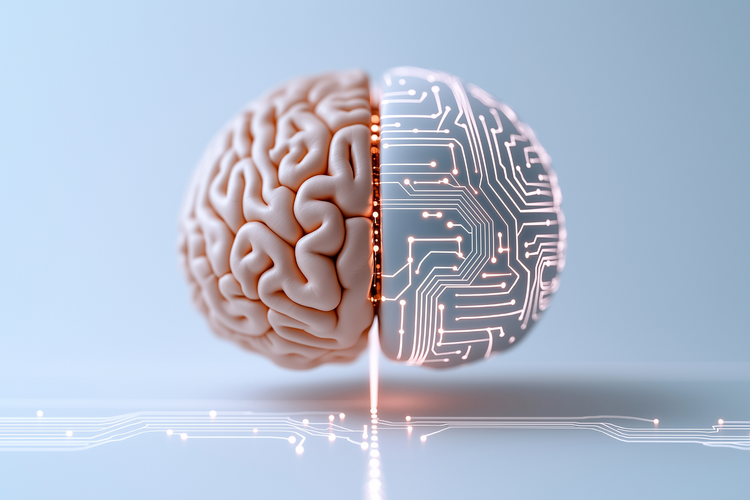
What Is Embodied AI? How Robots Are Learning to Understand the Physical World
What Is Embodied AI? How Robots Are Learning to Understand the Physical World
Embodied AI is artificial intelligence placed inside a physical or simulated body so it can perceive, move, interact, and learn from the world around it. Instead of only processing text, images, or data inside a screen, embodied AI must deal with space, motion, objects, force, timing, uncertainty, humans, and the tiny betrayal known as a chair leg in the wrong place. This guide explains what embodied AI is, how robots learn physical understanding, why sensors and simulation matter, what vision-language-action models are changing, where embodied AI is useful, where it still fails, and why giving AI a body makes intelligence much more powerful and much harder to control.

What You'll Learn
By the end of this guide
Quick Answer
What is embodied AI?
Embodied AI is artificial intelligence that operates through a body, either physical or simulated, and learns by perceiving, moving, acting, and interacting with an environment. In robotics, embodied AI helps machines understand space, objects, motion, physical constraints, human instructions, and the consequences of actions.
Unlike a chatbot, embodied AI cannot only “know” things in text. It must use sensors, cameras, depth perception, touch, motors, grippers, wheels, arms, or simulated bodies to understand what is happening and decide what to do next.
The plain-language version: embodied AI is AI with a body and a job in the real world. It has to understand not just what a cup is, but where the cup is, how heavy it might be, how to grip it, whether it is full, whether a person is nearby, and how not to fling it into the moral void.
Why Embodied AI Matters
Embodied AI matters because most of the world is not a text box. AI can already write, summarize, code, analyze, and generate images. But physical work requires something else: sensing, moving, reacting, manipulating, navigating, balancing, timing, and understanding consequences in real environments.
This is why embodied AI sits at the center of the next robotics wave. NVIDIA describes embodied AI as AI integrated into physical systems, including robots, humanoids, autonomous vehicles, factories, and warehouses, so those systems can perceive, reason, and act in real-world environments. It also describes physical AI as autonomous systems that can perceive, understand, reason, and perform complex actions in the physical world. [oai_citation:1‡NVIDIA](https://www.nvidia.com/en-us/glossary/embodied-ai/?utm_source=chatgpt.com)
The business stakes are enormous. Embodied AI could help robots work in warehouses, factories, hospitals, farms, labs, construction sites, homes, and disaster zones. But it also raises safety and governance issues because mistakes are no longer limited to bad text. A bad embodied AI decision can move machinery, hit objects, block exits, mishandle tools, or hurt people. The pixels have left the building.
Core principle: Embodied AI is not just AI plus hardware. It is intelligence under physical constraint, where every decision has location, timing, force, risk, and consequences.
Embodied AI at a Glance
Embodied AI combines perception, reasoning, learning, control, and action. If one part fails, the whole system can look brilliant for three seconds and then gently headbutt a filing cabinet.
| Component | What It Means | Why It Matters | Example |
|---|---|---|---|
| Body | The robot, simulated agent, vehicle, drone, arm, gripper, or machine that acts | The body determines what the AI can sense and do | A humanoid robot, warehouse robot, or robotic arm |
| Sensors | Cameras, lidar, depth sensors, microphones, touch sensors, force sensors, GPS, and more | The AI needs information about the environment | A robot detecting nearby objects and people |
| Perception | Understanding objects, space, motion, obstacles, and context | The robot must know what is happening before acting | Recognizing a cup, table, hand, and spill risk |
| World model | An internal representation of the environment and how it changes | Supports prediction and planning | Knowing that pushing a box may move it or knock it over |
| Planning | Choosing steps to complete a goal | Real tasks require sequencing | Open cabinet, find mug, grasp mug, place mug on counter |
| Control | Executing movement through motors, wheels, joints, arms, or grippers | Plans must become safe physical motion | Applying enough grip force to lift an object without crushing it |
| Learning | Improving from demonstrations, simulation, feedback, or trial and error | Robots need to adapt beyond hand-coded instructions | Learning a better grasp after repeated failures |
| Safety | Preventing harmful, unauthorized, or unstable actions | Physical action creates real risk | Stopping before colliding with a person |
The Key Ideas Behind Embodied AI
Definition
Embodied AI is intelligence that learns through perception and action
It studies AI systems that understand the world by interacting with it, not just by analyzing static data.
Embodied AI refers to AI systems that operate in a body or environment where actions matter. That body can be a physical robot, a robotic arm, a drone, an autonomous vehicle, a simulated agent, or even a smart facility with sensors and automated systems.
The defining feature is interaction. Embodied AI receives sensory input, makes decisions, acts, observes what happened, and adjusts. This feedback loop is what separates embodied intelligence from purely digital AI. The system does not only predict the next word. It predicts what might happen if it moves, grasps, turns, pushes, steps, or waits.
Embodied AI studies
- How AI understands physical environments
- How robots perceive objects, people, and spaces
- How machines plan and execute actions
- How AI learns from trial, error, feedback, and demonstrations
- How simulation can train physical systems safely
- How humans and robots can interact safely
Simple definition: Embodied AI is AI that learns and acts through a body, using perception and movement to understand the physical world.
Embodiment
The body changes what intelligence means
A system’s body determines what it can sense, where it can move, what it can manipulate, and what risks it creates.
The body is not just a container for intelligence. It shapes intelligence. A wheeled robot understands space differently from a humanoid robot. A drone understands motion differently from a robotic arm. A surgical robot needs precision. A warehouse robot needs navigation. A home assistant needs manipulation, social awareness, and the emotional maturity not to bulldoze a laundry basket.
Embodiment forces AI to deal with constraints. A robot has limited reach, strength, battery life, sensor coverage, speed, balance, and dexterity. It cannot simply “choose” the best answer. It has to perform an action its body can actually execute.
The body affects
- What the AI can perceive
- How it moves through space
- What objects it can manipulate
- How much force it can apply
- How safe it is around humans
- How it learns from the environment
Perception
Embodied AI depends on perception, not just recognition
Robots need to detect objects, understand spatial relationships, track motion, estimate depth, and interpret context.
Perception is how embodied AI turns sensor data into understanding. A robot might use cameras, depth sensors, lidar, microphones, tactile sensors, force sensors, GPS, or inertial sensors. But raw sensor data is not enough. The system has to infer what the data means.
A robot does not simply need to identify “table.” It needs to understand where the table is, how high it is, what is on top of it, whether something is fragile, whether a person is reaching toward it, and whether moving near it creates risk.
Embodied perception includes
- Object recognition
- Depth estimation
- 3D scene understanding
- Motion tracking
- Obstacle detection
- Human pose and intent recognition
- Material and surface understanding
- Sensor fusion across multiple inputs
Perception rule: Seeing an object is not the same as understanding what can be done with it. Embodied AI needs affordances, not just labels.
World Models
World models help robots predict what will happen next
Embodied AI needs internal representations of objects, space, physics, cause and effect, and changing environments.
A world model is an internal representation of how the environment works. It helps an AI system predict what might happen if it takes an action. If the robot pushes an object, will it slide, fall, roll, spill, or refuse to move because reality has chosen violence?
World models are important because embodied AI must plan under uncertainty. It needs to understand that objects persist when hidden, surfaces support weight, people move unpredictably, doors swing, liquids spill, and soft objects deform. Without some model of cause and effect, a robot becomes a very expensive random-action generator.
World models help robots understand
- Object permanence
- Spatial relationships
- Cause and effect
- Physical constraints
- Motion over time
- Human behavior patterns
- How actions change the environment
Action
Embodied AI must turn decisions into safe movement
Action requires planning, control, timing, force, balance, dexterity, and real-time adjustment.
Embodied AI has to convert goals into movements. If a robot needs to pick up a box, it must identify the box, move near it, position its gripper, apply the right force, lift, balance, avoid obstacles, and place it safely. Every step can fail.
This is why control is central to embodied AI. The system needs to continuously adjust movement based on feedback. If the object slips, the robot must respond. If a person steps into the path, it must stop or reroute. If the floor changes, it must adapt. The physical world does not wait for a model to finish thinking. Rude, but consistent.
Action and control involve
- Motion planning
- Trajectory control
- Balance and locomotion
- Grip force and manipulation
- Real-time correction
- Collision avoidance
- Emergency stopping
- Recovery from failed actions
Action rule: In embodied AI, a correct plan is not enough. The body has to execute it safely in a world that keeps changing its mind.
Learning
Embodied AI learns from interaction, not only from static datasets
Robots can learn from demonstrations, imitation, reinforcement learning, teleoperation, trial and error, and shared fleet data.
Embodied AI needs learning methods that handle action and consequence. A robot can learn by watching humans, being remotely controlled, practicing in simulation, receiving rewards, correcting mistakes, or sharing data across robot fleets.
This is harder than training on internet text because robot data is expensive. Every physical trial takes time, energy, hardware, maintenance, and safety planning. A language model can process billions of words. A robot collecting billions of physical actions would need a warehouse, a budget, and possibly a therapist.
Embodied AI learning methods include
- Imitation learning from demonstrations
- Reinforcement learning from rewards
- Self-supervised learning from sensory data
- Teleoperation data from human operators
- Simulation-based training
- Few-shot adaptation to new tasks
- Fleet learning across many robots
Simulation
Simulation lets embodied AI practice before touching reality
Virtual environments help robots learn, test, fail, and improve without breaking physical hardware or endangering people.
Simulation is essential because embodied AI needs huge amounts of physical experience, but real-world training is slow and risky. In simulation, robots can practice thousands or millions of scenarios: collisions, grasping, navigation, lighting changes, object variations, rare hazards, crowded environments, and unusual edge cases.
NVIDIA’s robotics materials emphasize physically accurate simulation, synthetic data, accelerated computing, and robotic foundation models as part of modern robot development. These tools help teams train and test autonomous machines before deployment, reducing cost and risk. [oai_citation:2‡NVIDIA](https://www.nvidia.com/en-us/industries/robotics/?utm_source=chatgpt.com)
Simulation helps with
- Generating synthetic training data
- Testing rare or dangerous scenarios
- Training reinforcement learning policies
- Reducing hardware damage
- Creating digital twins of real environments
- Stress-testing safety systems
- Improving robot performance before deployment
Simulation rule: Simulation is where robots can fail cheaply. Reality is where the invoice arrives.
VLA Models
Vision-language-action models connect perception, instructions, and movement
VLA models help robots interpret what they see, understand what humans ask, and translate that into physical actions.
Vision-language-action models are one of the most important developments in embodied AI. They connect visual perception, language understanding, and motor action. Instead of training a robot only for one narrow task, researchers want systems that can interpret a scene, understand an instruction, plan a response, and act.
Google DeepMind’s Gemini Robotics work is an example of this direction. Gemini Robotics is described as bringing Gemini’s reasoning and world understanding into the physical world, enabling robots to perform tasks through vision, language, and action. DeepMind has also described models focused on embodied reasoning, where a system interprets visual and spatial information before acting. [oai_citation:3‡WIRED](https://www.wired.com/story/googles-gemini-robotics-ai-model-that-reaches-into-the-physical-world?utm_source=chatgpt.com)
VLA models can help robots
- Understand natural language instructions
- Interpret visual scenes
- Connect objects with possible actions
- Plan multi-step physical tasks
- Transfer skills across different robot bodies
- Explain or revise actions based on feedback
Human Interaction
Embodied AI needs to understand humans in shared spaces
Robots must be predictable, safe, useful, and socially aware enough to work near people without becoming moving liability furniture.
Embodied AI systems often operate around people: patients, warehouse workers, factory teams, customers, drivers, pedestrians, caregivers, or family members. That means they need to recognize human presence, understand instructions, avoid collisions, respect personal space, and communicate uncertainty.
Human-robot interaction is not about making robots seem charming. It is about making their behavior understandable and safe. A useful robot should signal intent, slow down around people, ask for clarification, accept correction, and stop when confused.
Human-robot interaction includes
- Natural language instructions
- Gesture and intent recognition
- Social navigation
- Trust and transparency
- Collaborative task planning
- Safety signals and stop controls
- Human approval for risky actions
Interaction rule: A robot does not need to be adorable. It needs to be legible. Humans should know what it is doing, why, and how to stop it.
Use Cases
Embodied AI could reshape physical work
The strongest use cases are often repetitive, measurable physical workflows in structured or semi-structured environments.
Embodied AI is most useful when physical tasks can be defined, measured, and constrained. Warehouses, factories, labs, hospitals, farms, retail stores, airports, construction sites, and logistics networks are natural targets because they involve repeated physical processes.
Homes are harder. Homes are unstructured, personal, cluttered, weirdly lit, full of fragile objects, and governed by household laws that no robot can fully understand, such as “that chair is decorative and also emotionally important.”
Embodied AI use cases include
- Warehouse picking, packing, sorting, and transport
- Manufacturing assembly and inspection
- Hospital delivery, logistics, and care support
- Surgical assistance and medical robotics
- Agricultural harvesting and monitoring
- Retail inventory scanning and shelf management
- Construction inspection and site mapping
- Autonomous vehicles and drones
- Home cleaning and assistive robots
- Disaster response and hazardous environment work
Limits
Embodied AI is still hard because reality refuses to be a benchmark
Physical systems must handle uncertainty, hardware limits, safety risks, changing environments, and costly failures.
Embodied AI has made major progress, but real-world deployment remains difficult. Robots struggle with unusual objects, cluttered spaces, lighting changes, slippery surfaces, soft materials, fragile items, moving people, sensor failures, battery limits, and tasks that require delicate human judgment.
A robot demo can look magical under controlled conditions and still fail in ordinary deployment. The real test is not whether a robot can complete a task once. The test is whether it can complete that task safely, repeatedly, across many environments, with clear recovery behavior when something goes wrong.
Major limitations include
- Limited robot training data
- Expensive hardware and maintenance
- Difficulty generalizing across environments
- Sensor noise and perception failures
- Manipulation challenges with soft or fragile objects
- Sim-to-real transfer problems
- Safety requirements around humans
- Weak recovery from unexpected failures
Reliability rule: A robot that succeeds once is a clip. A robot that succeeds safely across messy conditions is a system.
Risks
Embodied AI creates higher-stakes safety risks because it can act physically
When AI has a body, safety must cover movement, force, proximity, cybersecurity, permissions, and human oversight.
Embodied AI safety is more serious than chatbot safety because errors can create physical consequences. A robot may collide with people, damage property, mishandle tools, block pathways, expose sensitive spaces, or be hacked and controlled maliciously.
Safety also depends on deployment context. A warehouse robot, surgical robot, delivery drone, autonomous vehicle, and home assistant need different standards. The common requirement is layered control: perception safeguards, motion limits, permissions, monitoring, emergency stops, cybersecurity, audit logs, and human override.
Embodied AI risks include
- Physical injury or property damage
- Unsafe movement around people
- Manipulation of dangerous tools or materials
- Cybersecurity vulnerabilities
- Privacy risks from always-on sensors
- Bias in perception or human interaction
- Labor displacement and workplace surveillance
- Unclear accountability after failure
What Embodied AI Means for Businesses and Careers
For businesses, embodied AI points toward automation beyond screens. It could improve physical operations, reduce dangerous work, address labor shortages, increase throughput, support inspection, and make facilities more adaptive.
But the real business challenge is not buying a robot. It is redesigning work around safe human-machine collaboration. Companies need process maps, physical environment audits, safety procedures, exception handling, maintenance plans, monitoring systems, employee training, and clear accountability. Otherwise, “robotics strategy” becomes “we bought a very expensive intern with wheels.”
For careers, embodied AI creates opportunities in robotics operations, AI implementation, automation strategy, simulation design, robot training data, safety testing, human-robot interaction, industrial design, technical program management, and responsible AI governance. Domain experts will matter because robots need to understand real workflows, not just glossy lab tasks.
Practical Framework
The BuildAIQ Embodied AI Evaluation Framework
Use this framework to evaluate embodied AI systems, robotics products, physical AI claims, or automation opportunities.
Common Mistakes
What people get wrong about embodied AI
Ready-to-Use Prompts for Understanding Embodied AI
Embodied AI explainer prompt
Prompt
Explain embodied AI in beginner-friendly language. Cover what it means, how it differs from chatbots, why the body matters, how robots perceive and act, and why physical-world learning is difficult.
Robot capability evaluation prompt
Prompt
Evaluate this embodied AI or robotics system: [SYSTEM DESCRIPTION]. Assess perception, movement, manipulation, environment requirements, safety controls, human oversight, reliability, and deployment readiness.
Physical workflow automation prompt
Prompt
Assess whether embodied AI could automate this physical workflow: [WORKFLOW]. Consider task structure, object variation, environment complexity, safety risk, human interaction, cost, maintenance, and ROI.
Simulation strategy prompt
Prompt
Design a simulation strategy for training an embodied AI system to perform [TASK]. Include synthetic data, digital twins, edge cases, sensor noise, physics accuracy, sim-to-real validation, and safety testing.
Robot safety audit prompt
Prompt
Create a safety audit for an embodied AI system used in [ENVIRONMENT]. Include collision risks, force limits, human proximity, sensor failures, cybersecurity, privacy, emergency stops, monitoring, and incident response.
Embodied AI career roadmap prompt
Prompt
Create a learning roadmap for someone who wants to work in embodied AI from a [BACKGROUND] background. Include robotics basics, computer vision, simulation, reinforcement learning, safety, human-robot interaction, and portfolio project ideas.
Recommended Resource
Download the Embodied AI Evaluation Checklist
Use this placeholder for a free checklist that helps readers evaluate robotics demos, embodied AI systems, physical workflow automation opportunities, safety controls, and deployment readiness.
Get the Free ChecklistFAQ
What is embodied AI?
Embodied AI is artificial intelligence that operates through a physical or simulated body and learns through perception, movement, action, and interaction with an environment.
How is embodied AI different from regular AI?
Regular AI may process text, images, or data without acting in the world. Embodied AI uses sensors and actions to interact with physical or simulated environments.
Is embodied AI the same as robotics?
Not exactly. Robotics is one major application of embodied AI, but embodied AI can also include simulated agents, autonomous vehicles, drones, smart machines, and sensor-rich environments.
Why does the body matter in AI?
The body determines what the AI can sense, reach, move, manipulate, and control. It shapes what the system can learn and what risks it creates.
What are vision-language-action models?
Vision-language-action models connect visual perception, language understanding, and physical action so robots can interpret scenes, follow instructions, and act in the world.
How do robots learn physical tasks?
Robots can learn from human demonstrations, teleoperation, reinforcement learning, simulation, real-world trial and error, and shared data from robot fleets.
Why is embodied AI hard?
Embodied AI is hard because the physical world is dynamic, uncertain, expensive, and risky. Robots must handle sensors, movement, force, objects, humans, and unexpected failures.
What are the risks of embodied AI?
Risks include physical harm, property damage, unsafe movement, privacy invasion, cybersecurity vulnerabilities, workplace surveillance, labor displacement, and unclear accountability.
What is the main takeaway?
The main takeaway is that embodied AI gives artificial intelligence a way to perceive and act in the physical world, making it more useful for real tasks but also much harder to train, evaluate, and govern safely.