What Is Neuromorphic Computing?
What Is Neuromorphic Computing?
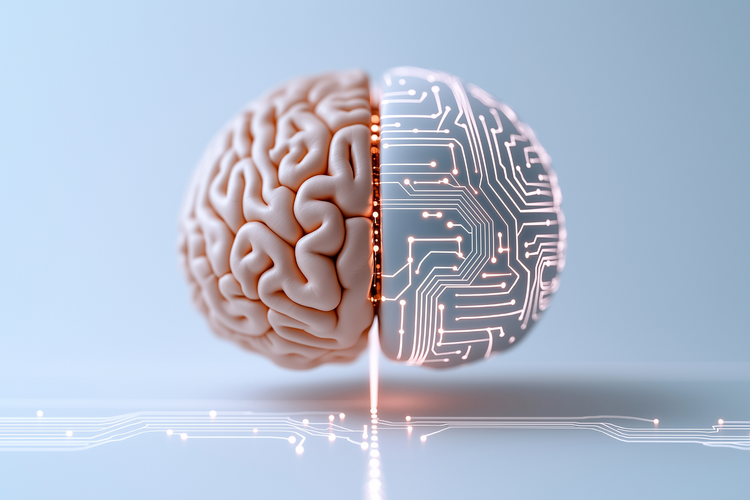
Neuromorphic computing is a brain-inspired approach to computer design that uses hardware and software modeled around neurons, synapses, spikes, parallel processing, and event-driven computation. Instead of pushing every task through traditional CPU or GPU architectures, neuromorphic systems try to process information more like biological nervous systems: efficiently, asynchronously, and only when meaningful signals appear. This guide explains what neuromorphic computing is, how spiking neural networks work, why chips like Intel Loihi matter, how neuromorphic computing differs from regular AI hardware, where it could be useful, where it still falls short, and why “brain-like computing” is exciting but not the same thing as building a tiny silicon philosopher.

What You'll Learn
By the end of this guide
Quick Answer
What is neuromorphic computing?
Neuromorphic computing is a computing approach inspired by the structure and behavior of biological brains. It uses artificial neurons, synapses, spikes, and event-driven processing to build systems that can process information more efficiently than traditional architectures for certain tasks.
Instead of constantly moving data back and forth between separate memory and processing units, neuromorphic systems often try to bring memory and computation closer together. Instead of processing everything on a fixed clock, many neuromorphic systems respond only when events occur, similar to how biological neurons fire when signals cross a threshold.
The plain-language version: neuromorphic computing is brain-inspired hardware and software built for efficient, adaptive, event-driven intelligence. It does not mean the machine is conscious. It means engineers borrowed some useful architectural ideas from nervous systems and left the existential crisis in the lab where it belongs.
Why Neuromorphic Computing Matters
Neuromorphic computing matters because modern AI is powerful, but expensive. Large models need enormous compute, memory, energy, and cooling. GPUs are excellent for today’s deep learning, but the demand for AI compute keeps growing like it found an unlimited corporate card.
Neuromorphic computing offers a different path. Instead of scaling only by making bigger dense compute systems, it explores brain-inspired architectures that process information through spikes, local memory, parallelism, and event-driven activity. For certain workloads, especially sensory processing, robotics, real-time adaptation, and edge AI, that could mean major gains in energy efficiency and latency.
The excitement comes from a simple observation: the human brain is extraordinarily energy-efficient compared with today’s AI infrastructure. It is not a perfect model for computing, and it is definitely not a blueprint you can copy-paste into silicon, but it does suggest that intelligence does not have to look like rows of GPUs sweating in a data center.
Core principle: Neuromorphic computing matters because AI’s next bottleneck is not only intelligence. It is power, latency, adaptability, and where computation can physically happen.
Neuromorphic Computing at a Glance
Neuromorphic computing is easier to understand once you separate the biological inspiration from the engineering choices.
| Concept | What It Means | Why It Matters | Example |
|---|---|---|---|
| Artificial neuron | A computing unit inspired by biological neurons | Forms the basic unit of many neuromorphic systems | A neuron that fires when input crosses a threshold |
| Synapse | A connection between artificial neurons with adjustable weight | Stores learned relationships or signal strength | A connection that becomes stronger after repeated activity |
| Spike | A brief event or pulse used to transmit information | Enables event-driven computation | A sensor event triggering a spike |
| Spiking neural network | A neural network that communicates through spikes over time | More closely resembles biological neural signaling | A low-power vision system processing motion events |
| Event-driven processing | Computation happens when meaningful events occur | Can save energy by avoiding constant processing | A chip responding only when a sensor detects change |
| In-memory or near-memory compute | Processing happens close to where data is stored | Reduces expensive data movement | Synaptic weights stored near computation units |
| Neuromorphic chip | Hardware designed for brain-inspired computation | Can run spiking networks efficiently | Intel Loihi 2 or IBM TrueNorth-style research chips |
| Edge AI | AI processing on local devices instead of cloud servers | Benefits from low-power, real-time computation | Robots, drones, sensors, wearables, or smart cameras |
The Key Ideas Behind Neuromorphic Computing
Definition
Neuromorphic computing designs machines around brain-inspired principles
The goal is to build computing systems that process information more like nervous systems than traditional digital computers.
Neuromorphic computing is a hardware and software design approach inspired by biological nervous systems. It tries to mimic useful aspects of the brain, such as event-driven signaling, distributed memory, parallel computation, adaptation, and low-power processing.
The goal is not to copy the brain perfectly. Biological brains are wildly complex, chemically messy, and not exactly kind enough to include documentation. Neuromorphic computing borrows useful design ideas and implements them in silicon, software, or hybrid systems.
Neuromorphic computing studies
- Artificial neurons and synapses
- Spiking neural networks
- Event-driven hardware
- Low-power AI processing
- On-chip learning
- Sensor-driven intelligence
- Brain-inspired robotics and edge AI
Simple definition: Neuromorphic computing is brain-inspired computing that uses neuron-like and synapse-like systems to process information efficiently.
Brain Inspiration
The brain is massively parallel, adaptive, and energy-efficient
Neuromorphic computing borrows ideas from neuroscience to rethink how computation can happen.
Brains do not operate like traditional computers. They process information through networks of neurons connected by synapses. Signals are distributed, parallel, adaptive, and often event-driven. Many neurons remain quiet until relevant activity occurs.
Neuromorphic computing takes inspiration from those principles. Instead of separating memory and processing as cleanly as conventional architectures do, neuromorphic systems often store information locally in synapse-like connections. Instead of constantly computing everything, they may only activate when inputs change.
Brain-inspired principles include
- Massive parallelism
- Event-driven activity
- Local memory and computation
- Adaptive learning
- Temporal processing
- Low-power signaling
- Graceful handling of noisy inputs
Spiking Networks
Spiking neural networks communicate through pulses over time
Unlike conventional neural networks that pass continuous values layer by layer, spiking networks use timed events called spikes.
Spiking neural networks, or SNNs, are central to many neuromorphic systems. In an SNN, neurons communicate by firing spikes, which are brief events that occur at specific times. The timing and pattern of spikes can carry information.
This is different from most deep learning systems, where neural networks pass continuous numerical activations through layers. Spiking networks are more biologically inspired and can be more energy-efficient because computation happens when spikes occur, not constantly.
Spiking neural networks are useful for
- Temporal signal processing
- Event-based vision
- Sensor data streams
- Low-power edge AI
- Robotics control
- Adaptive systems
- Brain-inspired learning research
Spike rule: In spiking networks, timing matters. A signal is not just “how much,” but “when.” The clock becomes part of the message.
Event-Driven Compute
Neuromorphic systems compute when events happen
Event-driven processing can reduce wasted computation by activating only when meaningful changes occur.
Traditional computers often operate on fixed clocks, processing instructions whether or not something meaningful has changed. Neuromorphic systems can be event-driven: computation occurs when spikes or input events arrive.
This matters for real-world sensing. A smart camera, robot, or wearable device does not always need to process every pixel at every moment. It may only need to respond when motion, sound, pressure, or another signal changes. Event-driven processing can reduce power use and latency.
Event-driven computing can help with
- Low-power sensors
- Real-time perception
- Motion detection
- Robotics and drones
- Always-on monitoring
- Edge devices with limited battery
Architecture
Neuromorphic computing reduces the distance between memory and computation
Many neuromorphic systems are designed to avoid constantly shuttling data between separate memory and processor units.
One major cost in conventional computing is moving data. In traditional von Neumann-style architectures, memory and processing are separate. Data often travels back and forth between storage and compute units, which consumes time and energy.
Neuromorphic architectures often try to place memory and computation closer together. Synapse-like connections can store weights locally, and neuron-like units can process signals near where those signals are stored. This can reduce bottlenecks for certain workloads.
This matters because
- Data movement is energy expensive
- AI workloads often require massive memory access
- Edge devices have limited power budgets
- Local computation can reduce latency
- Sensor systems benefit from immediate response
Architecture rule: In neuromorphic computing, efficiency often comes from putting memory and computation closer together. Less data commuting. Fewer tiny traffic jams in silicon.
Hardware
Neuromorphic chips are designed for spiking, parallel, low-power computation
These chips are built differently from CPUs and GPUs because they are optimized for brain-inspired workloads.
Neuromorphic chips are specialized processors designed to run neural and synaptic computations efficiently. They may include many small cores, local memory, spike-based communication, programmable neuron models, and support for on-chip learning.
These chips are not simply GPUs with brain-themed branding. They are built around different assumptions: sparse activity, event-driven processing, parallelism, and local memory. That makes them promising for certain tasks, but not automatically better for every AI workload.
Neuromorphic chips may support
- Spiking neural networks
- Asynchronous event processing
- On-chip learning rules
- Low-power inference
- Sensor fusion
- Robotics control
- Real-time adaptive systems
Research Chips
Intel Loihi helped make neuromorphic computing more concrete
Loihi and Loihi 2 are research chips designed to support spiking neural networks, on-chip learning, and event-driven computation.
Intel’s Loihi chips are among the best-known neuromorphic research systems. Loihi was designed to advance spiking neural network research in silicon, while Loihi 2 introduced new features, improved performance, and support for the open-source Lava software framework.
Intel has also built larger neuromorphic systems such as Hala Point, a research system based on Loihi 2 chips, to explore larger-scale brain-inspired computing. These systems are not mainstream replacements for GPUs today, but they help researchers test what neuromorphic hardware can do at larger scale.
Loihi-style systems are important because they
- Give researchers real neuromorphic hardware to test
- Support spiking neural network experiments
- Explore low-power and low-latency AI
- Enable research into on-chip learning
- Connect hardware research with software frameworks
- Help move neuromorphic computing beyond theory
Research rule: Neuromorphic chips are not magic GPU replacements. They are experimental platforms for a different computing paradigm.
Learning
Training neuromorphic systems is still one of the hard parts
Spiking neural networks do not always fit neatly into the same training pipelines used for conventional deep learning.
Training neuromorphic systems is more complicated than simply taking a standard neural network and dropping it onto a brain-inspired chip. Spikes are discrete events, which can make conventional gradient-based training harder.
Researchers use several approaches. Some convert trained artificial neural networks into spiking neural networks. Others use surrogate gradients, local learning rules, or on-chip adaptation. Each approach has tradeoffs in accuracy, efficiency, biological plausibility, and hardware compatibility.
Neuromorphic learning methods include
- Training spiking neural networks directly
- Converting conventional neural networks into spiking networks
- Using surrogate gradient methods
- Local learning rules inspired by synaptic plasticity
- On-chip learning and adaptation
- Hybrid systems combining conventional and neuromorphic methods
Edge AI
Neuromorphic computing could be especially useful at the edge
Low-power, event-driven computing is attractive for devices that need to sense, react, and learn locally.
Neuromorphic computing is especially interesting for edge AI: AI that runs locally on devices rather than relying on cloud servers. Edge devices often have strict limits around battery life, heat, latency, bandwidth, and privacy.
A neuromorphic sensor or chip could process events locally, respond quickly, and use less energy. That is valuable for robots, drones, smart cameras, wearables, industrial sensors, autonomous vehicles, and environmental monitoring systems.
Edge AI benefits could include
- Lower power usage
- Faster local response
- Reduced cloud dependence
- Lower bandwidth needs
- Better privacy for local sensing
- Always-on intelligence for small devices
Edge rule: Neuromorphic computing makes the most sense where intelligence needs to be fast, local, adaptive, and stingy with power.
Use Cases
Neuromorphic computing is promising for sensing, robotics, and real-time adaptation
The strongest use cases are often event-driven, low-power, time-sensitive, and sensor-heavy.
Neuromorphic computing is unlikely to replace mainstream AI hardware across the board in the near term. Its most promising applications are specific: systems that benefit from low power, low latency, temporal processing, and event-based sensing.
That makes it especially relevant for robotics, autonomous systems, smart sensors, prosthetics, drones, industrial monitoring, always-on devices, and future forms of adaptive edge intelligence.
Potential use cases include
- Event-based vision systems
- Robotics perception and control
- Drones and autonomous vehicles
- Wearables and health sensors
- Industrial anomaly detection
- Audio and speech event detection
- Smart cameras and surveillance systems
- Brain-machine interface research
- Low-power environmental monitoring
- Adaptive edge AI devices
Limits
Neuromorphic computing is promising, but still far from mainstream AI infrastructure
The field faces challenges in software, training, benchmarks, tooling, developer adoption, and commercial maturity.
Neuromorphic computing has enormous potential, but it is not yet a mainstream replacement for CPUs, GPUs, or AI accelerators. The software ecosystem is less mature, training spiking models is challenging, benchmarks are harder to compare, and many use cases remain research-heavy.
There is also a translation problem. Most AI developers know TensorFlow, PyTorch, CUDA, transformer models, and GPU-based workflows. Neuromorphic computing requires different mental models, tools, algorithms, and hardware assumptions. That adoption gap matters.
Major limitations include
- Immature software ecosystems
- Harder training workflows
- Limited developer familiarity
- Benchmarking challenges
- Unclear commercial use cases in some domains
- Hardware availability and standardization issues
- Difficulty competing with GPU ecosystems
- Risk of overhyped “brain-like” claims
Limit rule: Neuromorphic computing is not “the next GPU” by default. It is a specialized architecture with specific strengths, specific headaches, and a very dramatic marketing vocabulary.
What Neuromorphic Computing Means for Businesses and Careers
For businesses, neuromorphic computing is not something most teams need to deploy tomorrow. But it is worth tracking if your work touches robotics, edge AI, autonomous systems, energy-constrained devices, industrial sensing, smart infrastructure, or future AI hardware strategy.
The business value is not “brain-like” branding. The value is efficiency. If neuromorphic systems can process real-time sensor data with far less power, that could unlock AI in places where cloud models or GPU-heavy systems are impractical: small devices, remote environments, mobile robots, drones, and always-on sensors.
For careers, neuromorphic computing sits at the intersection of AI, neuroscience, hardware engineering, robotics, signal processing, edge computing, and machine learning research. It is not the easiest AI path, but it is one of the most interesting for people who care about what comes after today’s GPU-heavy AI stack.
Practical Framework
The BuildAIQ Neuromorphic Computing Evaluation Framework
Use this framework to evaluate neuromorphic computing claims, products, research papers, or future investment opportunities.
Common Mistakes
What people get wrong about neuromorphic computing
Ready-to-Use Prompts for Understanding Neuromorphic Computing
Neuromorphic computing explainer prompt
Prompt
Explain neuromorphic computing in beginner-friendly language. Cover artificial neurons, synapses, spikes, spiking neural networks, event-driven processing, neuromorphic chips, and how it differs from GPUs.
Spiking neural networks prompt
Prompt
Explain spiking neural networks in simple terms. Compare them with traditional artificial neural networks and explain why spike timing, event-driven processing, and low-power computation matter.
Neuromorphic use case prompt
Prompt
Evaluate whether neuromorphic computing makes sense for this use case: [USE CASE]. Consider power limits, latency needs, sensor data, edge deployment, training complexity, software maturity, and alternatives like GPUs or edge AI chips.
Hardware comparison prompt
Prompt
Compare neuromorphic chips, GPUs, CPUs, and AI accelerators for [TASK]. Explain differences in architecture, compute style, energy efficiency, latency, programmability, ecosystem maturity, and deployment readiness.
Research paper prompt
Prompt
Summarize this neuromorphic computing paper: [PASTE ABSTRACT OR PAPER]. Explain the research question, hardware or model used, benchmark results, energy claims, limitations, and practical implications.
Learning roadmap prompt
Prompt
Create a learning roadmap for neuromorphic computing from a [BACKGROUND] background. Include neuroscience basics, spiking neural networks, hardware architecture, edge AI, robotics, signal processing, and beginner projects.
Recommended Resource
Download the Neuromorphic Computing Cheat Sheet
Use this placeholder for a free cheat sheet that helps readers understand artificial neurons, synapses, spikes, SNNs, event-driven chips, Loihi, edge AI, and neuromorphic use cases.
Get the Free Cheat SheetFAQ
What is neuromorphic computing?
Neuromorphic computing is a brain-inspired approach to computing that uses artificial neurons, synapses, spikes, and event-driven processing to build more efficient computing systems.
How is neuromorphic computing different from regular computing?
Traditional computing often separates memory and processing and runs on fixed instruction cycles. Neuromorphic computing tries to process information through distributed, event-driven, neuron-like systems with memory and computation closer together.
What is a spiking neural network?
A spiking neural network is a neural network that communicates using timed pulses called spikes. It is more biologically inspired than many conventional artificial neural networks.
Does neuromorphic computing mean AI is conscious?
No. Neuromorphic computing is brain-inspired, but that does not mean the system is conscious, sentient, or human-like.
What are neuromorphic chips used for?
Neuromorphic chips are used in research and emerging applications involving low-power AI, event-based sensing, robotics, edge devices, adaptive systems, and spiking neural networks.
What is Intel Loihi?
Intel Loihi is a neuromorphic research chip designed to support spiking neural networks, event-driven computation, programmable neuron models, and on-chip learning research.
Will neuromorphic chips replace GPUs?
Not in the near term. GPUs remain dominant for mainstream AI training and inference. Neuromorphic chips are promising for specific workloads where low power, event-driven sensing, and real-time adaptation matter.
Why is neuromorphic computing important for AI?
It could help make AI more energy-efficient, responsive, adaptive, and deployable on edge devices where power and latency matter.
What is the main takeaway?
The main takeaway is that neuromorphic computing is a brain-inspired approach to building more efficient AI hardware and software. It is promising for low-power, event-driven intelligence, but still early and not a universal replacement for today’s AI infrastructure.