

What Is a Vector Database? The Memory System Behind Modern AI Apps
Vector databases store mathematical representations of meaning so AI apps can retrieve relevant information quickly. This article explains what vector databases are, how they support RAG, and why they matter for modern AI tools.
What Are Embeddings? How AI Turns Meaning Into Math
Embeddings are numerical representations of meaning that help AI compare words, documents, images, and other data. This article explains what embeddings are and why they power semantic search, recommendations, clustering, and retrieval.

What Are Tokens in AI? The Tiny Pieces That Shape Cost, Memory, and Output
Tokens are the chunks of text AI models process when reading and generating responses. Here we explain what tokens are, why they affect cost and context windows, and how they shape AI output.
What Is an AI API? How Developers Connect to AI Models
An AI API lets developers connect apps, websites, and workflows to AI models. This article explains how AI APIs work, why they matter, and how they make AI features available inside real products.
What Is Multimodal AI? How AI Handles Text, Images, Audio & More at Once
Multimodal AI can process more than one type of input, including text, images, audio, video, and documents. This article explains how multimodal AI works and why it makes AI tools more useful in real-world tasks.
What Is Fine-Tuning? How AI Models Are Customized for Specific Tasks
Fine-tuning customizes an existing AI model for a more specific task, tone, domain, or workflow. This article explains how fine-tuning works, when it makes sense, and why it can improve AI performance for specialized use cases.
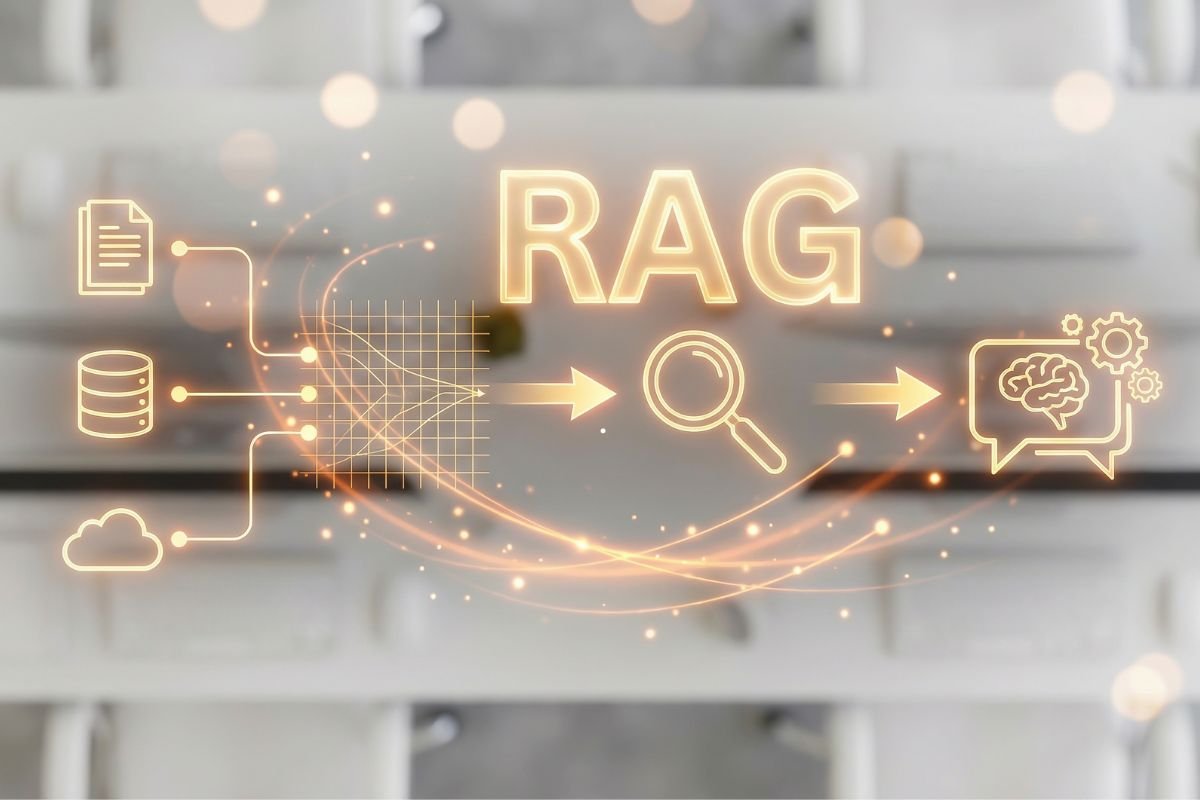
What Is Retrieval-Augmented Generation (RAG)
Retrieval-augmented generation helps AI answer using external information instead of relying only on what it learned during training. This article explains how RAG works and why it matters for chatbots, knowledge bases, and business AI tools.
What Is a Copilot? How AI Assistants Are Showing Up in Everyday Tools
Copilots are AI assistants built into the tools people already use, from work apps to coding platforms. This article explains what copilots are, how they help, and why they are becoming part of everyday software.
What Is an AI Assistant? Chatbots, Copilots, and Agents Explained
AI assistants can answer questions, help with tasks, summarize information, draft content, and connect to tools. This article explains the difference between chatbots, copilots, and agents in beginner-friendly language.
What Is a Chatbot? The Beginner’s Guide to AI Conversations
Chatbots are one of the most familiar ways people interact with AI. This article explains what chatbots are, how they work, what makes AI chatbots different, and where they show up in everyday life.
What Makes AI Different From Google Search?
AI tools and Google Search both help people find information, but they work differently. This article explains how search engines retrieve links while AI systems generate, summarize, reason, and respond conversationally.
The Difference Between AI, Automation, Algorithms, and Software
AI, automation, algorithms, and software are related, but they are not the same thing. This article explains the differences in plain English so readers can understand what makes AI distinct from older technology.
Why Everyone Needs to Learn AI Now
AI is becoming part of work, school, business, creativity, and daily life. This article explains why learning AI is no longer just for technical people and why basic AI fluency is quickly becoming a practical advantage.
AI Hallucinations: Why AI Makes Things Up and What to Do About It
AI hallucinations happen when AI produces incorrect or unsupported information with confidence. This article explains why hallucinations happen, why they matter, and how users can spot, reduce, and fact-check them.
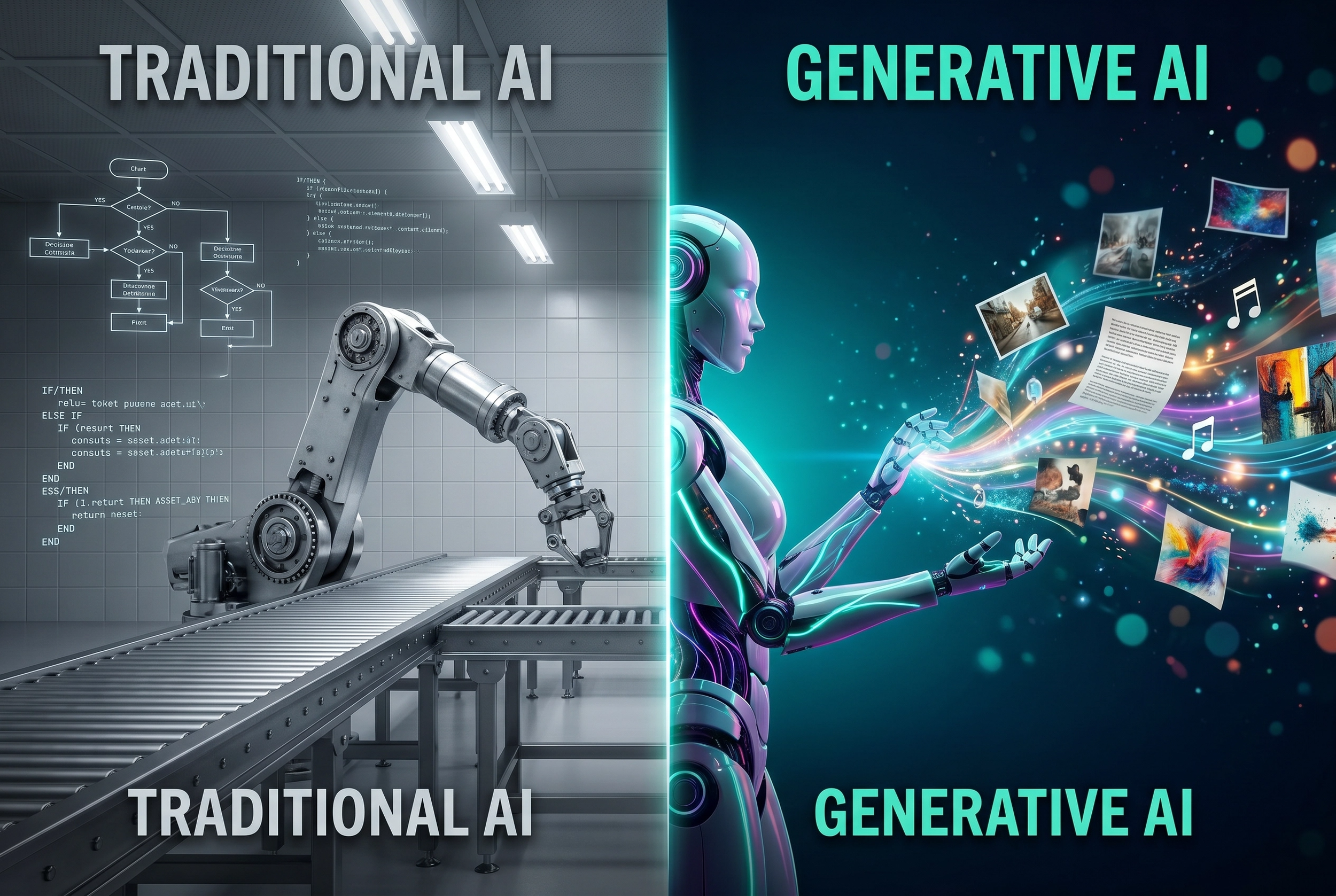
Generative AI vs. Traditional AI: What’s the Difference?
Traditional AI and generative AI are related, but they do different things. This article explains how traditional AI analyzes, predicts, and classifies, while generative AI creates text, images, code, audio, and more.
What AI Can Do: The Real Capabilities Behind the Hype
AI is powerful, but it’s not omniscient, consistent, or accountable. This article breaks down the real limitations of AI, including where it fails, why it hallucinates, and what it can’t reliably do.

Corporate AI Governance and Accountability: Internal Frameworks, Audits, and Liability
Explore the global AI governance landscape, from the EU AI Act to the divergent approaches of the US and China, and the challenge of regulating a technology that outpaces law.